Guest: Darius Mirshahzadeh WHY.os: Better Way – Simplify – Trust
Darius Mirshahzadeh has spent his career building companies, leading teams, and helping entrepreneurs scale with purpose. As a serial entrepreneur, bestselling author, investor, and Executive Managing Partner at MOTHER, he has led organizations worth hundreds of millions of dollars. But despite his success, he eventually discovered that achievement alone was not enough. This conversation reveals what happened when the life he built no longer matched who he wanted to become.
This episode shows how Darius lives the WHY of Better Way. People with this WHY naturally question existing systems and look for more useful solutions. Through his HOW of Simplify, Darius removes unnecessary complexity so people can move forward. Through his WHAT of Trust, he creates relationships where people feel supported, valued, and confident enough to build something meaningful together.
You’ll learn:
Why success, money, and impressive titles can still leave you feeling unfulfilled — and what Darius learned actually matters.
How to know when grit is helping you—and when it’s keeping you stuck in a path that no longer aligns with your values.
How Darius’s WHY.os—Better Way, Simplify, Trust—shows up in the way he builds businesses, teams, and relationships.
If you have ever wondered whether there is a better way to build a business, lead people, or create a meaningful life, this episode is filled with honest lessons you can use. Listen to hear how Darius discovered that success without alignment is not really success.
00:58 – Understanding the WHY of Better Way
03:58 – Darius Learns His WHY.os
06:35 – Growing Up as a Leader and Competitor
12:13 – College, Wrestling, and Seeing the World
15:30 – How Darius Landed a White House Internship
20:56 – Learning to Succeed by Refusing to Quit
30:02 – Building a Company With 1,000 Employees
35:11 – The Moment Darius Knew He Had to Leave
39:17 – The Game of Success Versus Real Life
46:58 – Rebuilding His Life From the Inside
57:37 – Moving From Advising Into Private Equity
01:02:16 – The Best Advice Darius Has Received
Listen to the Episode Here!
How Finding a Better Way Changed Darius Mirshahzadeh’s Life and Leadership
Success can look perfect from the outside while feeling completely different on the inside. Darius Mirshahzadeh knows that better than most. After building and leading one of the fastest-growing mortgage companies in America, earning national recognition as one of Glassdoor’s top CEOs, and creating significant financial success, he reached a point where something no longer felt right.
On this episode of Beyond Your WHY, Dr. Gary Sanchez discusses Darius’ WHY.os: Better Way – Simplify – Trust. A person’s WHY is the deeper motivation behind how they naturally think and act. Their WHY.os adds HOW they bring that motivation to life and WHAT others can consistently count on them to deliver. Throughout Darius’ story, these three patterns appear again and again.
Building Better, Not Just Bigger
Long before leading large organizations, Darius was already looking for ways to improve everything around him. Whether he was wrestling, serving as class president, or starting businesses while still in college, he naturally searched for smarter systems instead of simply accepting what already existed.
That mindset followed him into entrepreneurship. Rather than becoming passionate about mortgages themselves, Darius became interested in building organizations. His real focus was creating stronger cultures, developing leaders, and helping companies perform better.
“I didn’t care about mortgages. That was the widget. I wanted to build leaders.”
That statement reflects his Better Way WHY. The business was the vehicle, but improving people, leadership, and company culture became the work that gave him energy.
Why Simplicity Creates Scale
One of the strongest themes in the conversation is Darius’ belief that complexity can stop growth. He shares how Apple’s design philosophy changed the way he thought about innovation. The company took incredibly complex technology and made it simple enough for almost anyone to use.
This is where his HOW of Simplify becomes clear. Darius naturally looks for ways to remove steps, reduce confusion, and make an outcome easier to understand. He applies this thinking to products, leadership, company culture, investing, and personal growth.
“People buy simplicity. People buy outcomes that they understand.”
For Darius, simple does not mean basic or shallow. It means taking something complex and making it useful. When people understand a process, they are more likely to trust it, use it, and move forward with it.
When Success Stops Feeling Like Success
Darius eventually helped build a company with around 1,000 employees. He was highly rated as a CEO and had achieved the kind of business success many entrepreneurs chase for decades. But the mortgage industry was cyclical, and its repeated highs and lows came with a heavy personal cost.
When interest rates changed, Darius sometimes had to reduce the team. He went through several rounds of layoffs and watched people he cared about lose their jobs. His company said that people mattered, but the business model repeatedly forced him into decisions that felt out of alignment with that belief.
After another difficult round of layoffs, Darius sat alone in his car. Without planning to say it, the words came out: “I’m quitting.” He gave himself one year to decide whether leaving was truly the right move. Eleven months later, he stepped down.
For someone with a Better Way WHY and a WHAT of Trust, the decision makes sense. Darius could no longer ignore the gap between the values he wanted to live and the outcomes the business required. He needed a better way to build, lead, and serve.
The Game Versus Real Life
One of the strongest moments in the episode comes when Darius explains the difference between “the game” and real life. The game includes titles, recognition, money, awards, status, and public success. Those things can be enjoyable, but they are not what matters most to him now.
“The game is title and business and ego and accolades. Real life is relationships.”
Real life, in his view, is built through family, close friendships, love, trust, and the people who know him beyond his public accomplishments. When his identity was tied to the game, he constantly compared himself to other entrepreneurs and punished himself for every decision that did not appear perfect.
His WHAT of Trust appears strongly in this part of the story. Trust is not only something Darius wants to create with others. It is something he has had to rebuild within himself. That required learning to value his relationships and character more than his title.
Rebuilding From the Inside
Leaving the company did not immediately solve everything. From the outside, Darius still appeared successful. Internally, he struggled with anxiety, comparison, regret, and harsh self-talk.
A major shift began after he listened to The Power of One More by Ed Mylett. One idea forced him to consider which emotions he was allowing to control his life. He realized fear, anger, envy, and pressure occupied far more space than joy, love, and connection.
He decided to try living differently for one day. He focused on giving one more hug, expressing one more kind thought, and being more present with his family. That day went so well that he tried it again the next day. Then he repeated it.
“I’ve white-knuckled the hell out of this thing called life.”
Darius began questioning whether force, pressure, and constant achievement were truly the best ways to live. His Better Way WHY turned inward. Instead of only improving companies and systems, he began looking for a better way to relate to himself.
Through meditation, awareness, and intentional changes in his thinking, his anxiety dropped significantly. He did not stop working hard or pursuing meaningful goals. He stopped believing that he had to punish himself to achieve them.
Learning the System Before Improving It
Darius does not believe Better Way thinking means changing everything simply to be different. When entering a new field, he first looks for the proven system. He talks with people who have already succeeded, studies the existing path, and learns how the pieces work together.
Only after he understands the system does he decide what should be improved. This approach has shaped his work in mortgage lending, consulting, private equity, and investing.
“If I don’t know the system, I have to learn the system. Until I learn the system, I can’t have an opinion on how to do it.”
This is an important distinction. Better Way is not random change. It is improvement with a purpose. Darius uses his HOW of Simplify to understand what matters, remove unnecessary steps, and create a path that people can follow and trust.
Building With Trust
Darius says trust has always been central to how he builds teams. He knows that one person cannot scale a company alone. Real growth requires people who trust one another enough to take ownership, share responsibility, and act without being controlled at every step.
His WHAT of Trust is what others can count on him to bring. He wants to be the person who keeps his word, stands beside entrepreneurs, and creates partnerships that are not based on short-term extraction.
That belief now shapes his work with MOTHER. His focus is on entrepreneurs backing entrepreneurs and building companies with patience, care, and long-term thinking. It is another expression of his Better Way WHY: finding a more human approach to capital, leadership, and growth.
Advice for Building a Better Life
Darius closes the conversation by sharing three pieces of advice that have guided different stages of his life. First, be careful about accepting advice from people who have not accomplished what you are trying to do. Their fear or limited experience may shape what they tell you.
Second, he points to Winston Churchill’s reminder that success is going from failure to failure without losing enthusiasm. Darius has lived that lesson. Whether he was wrestling, selling mortgages, building companies, or starting again, he expected difficulty and continued learning.
Finally, he shares a lesson from Carl Jung: until people make the unconscious conscious, it can control their lives while they call it fate. That idea now shapes how Darius thinks about personal awareness and living in alignment with his natural gifts.
Darius’ story shows what the WHY of Better Way can look like in real life. He improves systems, simplifies complexity, and builds relationships rooted in trust. More importantly, he has learned that the search for a better way sometimes requires changing the way a person defines success.
Listen to the full episode of Beyond Your WHY with Dr. Gary Sanchez to hear Darius Mirshahzadeh’s complete story and learn how his WHY.os has shaped his leadership, decisions, and life.
Meet the Guest
Darius Mirshahzadeh did not build his career in a boardroom. He built it in the trenches as a serial entrepreneur, operator, and leader who has lived every chapter of the entrepreneurial experience and gained the wisdom to know what actually matters.
As Executive Managing Partner of MOTHER, Darius brings the kind of credibility that cannot be faked. He was ranked #9 on Glassdoor’s Top CEOs in America and led TMS to become an Inc. 5000 company, ranking #40 in the country. He has raised $250 million to invest in and scale high-growth companies.
Darius is a graduate of the Stagen Integral Leadership Program and a Birthing of Giants alumnus at MIT. He is also the bestselling author of The Core Value Equation, a guide for building culture-centered organizations that scale with integrity.
He hosts The Greatness Machine, a top 100 podcast where he interviews accomplished people who are living their purpose. He also served as a TEDx curator at the De Young Museum in San Francisco.
At MOTHER, Darius represents the firm’s belief that entrepreneurs backing entrepreneurs changes everything. He believes patient capital with a genuine heart can outperform extraction and that strong businesses are built by people who care about their teams, partners, and legacy.
Guest: John Mackey WHY.os: Better Way – Challenge – Contribute
John Mackey is the co-founder and former CEO of Whole Foods Market, where he spent more than four decades growing a single natural foods store into one of the most influential grocery companies in the world. Along the way, he changed how millions of people think about food, business, and leadership. Today, he’s the co-founder and CEO of Love.Life, a company dedicated to helping people live healthier, happier, and longer lives.
This episode matters because John lives the WHY of Better Way. Throughout his life, he has been driven to improve whatever he touches—from the way we eat to the way businesses serve people. Through his HOW of Challenge, he questions assumptions that others simply accept. Through his WHAT of Contribute, he creates solutions that improve the lives of others.
You’ll learn:
Why constantly looking for a better way led John to build Whole Foods.
How one devastating flood inspired the principles behind Conscious Capitalism.
Why business should create value for everyone—not just shareholders.
How choosing growth over comfort has shaped every chapter of John’s life.
If you’ve ever believed there has to be a better way to live, lead, or build a business, this conversation will leave you inspired.
Watch the Full Episode Here!
Episode Highlights
00:00 – Meet John Mackey 04:18 – Growing up and searching for meaning 11:30 – The questions that shaped his life 18:00 – Starting Whole Foods with a different vision 28:00 – The flood that changed everything 39:00 – The birth of Conscious Capitalism 53:00 – Why business should serve all stakeholders 1:06:00 – Love.Life and John’s next mission 1:14:00 – Final advice for living with purpose
Listen to the Episode Here!
How John Mackey Found a Better Way to Build Business, Health, and a Meaningful Life
Some people build companies.
John Mackey built a movement.
Long before Whole Foods became one of the most recognizable grocery brands in America, John wasn’t studying business. He was studying philosophy, religion, psychology, literature, and asking questions most college students never ask.
“Why am I here?” “What’s the purpose of life?”
That search eventually led him to discover something else. There had to be a better way. A better way to eat. A better way to run a business. A better way to lead. A better way to live.
That simple idea became the foundation for everything that followed.
Whole Foods Started With a Different Way of Thinking
When John moved into a vegetarian co-op in Austin, something changed. He realized food wasn’t simply fuel. It was nourishment.
That shift in perspective sparked a passion that eventually became Whole Foods Market.
Instead of opening another grocery store, John wanted to create a place where people could find healthier food and better information about living well.
The first version didn’t work. It was too limited. Too small. Too restrictive.
So he improved it.
He merged with another natural foods store, opened the first Whole Foods Market, and continued refining the concept year after year.
That perfectly reflects the WHY of Better Way.
People with this WHY are rarely satisfied with “good enough.”
They’re constantly asking:
“How can this work better?” “How can we improve this?” “What could make a bigger difference?”
The Flood That Changed His Leadership
One of the most powerful stories in the episode isn’t about business success. It’s about disaster.
Less than a year after opening the first Whole Foods Market, a massive flood filled the store with nearly nine feet of water.
The business was effectively wiped out. But something remarkable happened. Customers volunteered to help clean up. Employees stayed without pay until the store reopened. Suppliers extended credit. Investors contributed more capital. Even the bank found a way to help them survive. That experience forever changed how John viewed business.
He realized a successful company isn’t built around shareholders alone. It’s built around relationships.
Years later, that insight became the foundation of Conscious Capitalism—the belief that businesses create the greatest impact when they serve customers, employees, suppliers, investors, and the communities around them.
It wasn’t an idea born in a classroom. It was a lesson learned through adversity.
Success Was Never the Goal
Many entrepreneurs dream of selling their company. John never built Whole Foods with that goal in mind. His focus was always on creating something better.
Even after growing Whole Foods into a multibillion-dollar company and leading its acquisition by Amazon, he wasn’t finished. Instead of retiring, he launched Love.Life.
Why?
Because he believes our healthcare system can be better. Our nutrition can be better. Our lives can be better.
That’s what people with the WHY of Better Way naturally do. When one problem is solved, they begin looking for the next opportunity to improve something that matters.
Every Day Is Another Chance to Grow
One of the most personal moments in the conversation comes near the end.
John talks about learning to see people through the eyes of love instead of judgment.
He admits it’s something he still practices every day—even during competitive pickleball games.
When he catches himself becoming frustrated, he reminds himself that every new moment offers another opportunity to choose differently.
That philosophy reflects something deeper than optimism. It reflects continual growth. For John, improvement isn’t just about companies. It’s about becoming a better human being.
The Better Way in Action
Throughout the conversation, John’s WHY.os appears over and over again.
His WHY of Better Way drives him to improve systems, industries, and even himself.
His HOW of Challenge helps him question assumptions and refuse to accept that things have to stay the way they’ve always been.
His WHAT of Contribute ensures those improvements create value for other people.
Whether he’s talking about food, business, leadership, health, or personal growth, the goal is always the same:
Leave things better than he found them. That may be John’s greatest lesson. The biggest impact doesn’t come from accepting the world as it is. It comes from believing there’s a better way—and having the courage to build it.
If you’re ready to rethink business, leadership, health, and purpose, don’t miss this episode of Beyond Your WHY with Dr. Gary Sanchez.
Meet the Guest
John Mackey is the legendary entrepreneur who changed the way America eats. He is the co-founder and longtime CEO of Whole Foods Market, which he grew over 44 years from a single natural foods store in Austin, Texas into a 540-store, multibillion-dollar pioneer in organic and natural groceries, employing more than 100,000 team members across the U.S., U.K., and Canada. Under his leadership, Whole Foods helped mainstream healthy, sustainable food and was ultimately acquired by Amazon in a $13+ billion deal.
Beyond Whole Foods, John co-founded the Conscious Capitalism movement and co-authored the bestselling book Conscious Capitalism: Liberating the Heroic Spirit of Business. He’s also the author of Conscious Leadership and The Whole Story: Adventures in Love, Life, and Capitalism.
Today, John is the co-founder and CEO of Love.Life, an ambitious health and wellness company that combines nourishing food, holistic medical care, and precision wellness therapies to help people live happier, healthier, and longer lives.
Guest: Robert Glazer WHY.os: Better Way – Make Sense – Contribute
Robert Glazer is a bestselling author, leadership expert, and founder of a $35 million global company recognized by Inc. and Fortune as one of the best places to work. Known for his books Elevate and Friday Forward, Robert joins Dr. Gary Sanchez to talk about his newest book, The Compass Within—and how knowing your core values can guide better decisions in work and life.
In this episode, you’ll learn:
How to identify your “core values” and use them to make choices that actually fit who you are.
Why high achievers lose direction when they ignore their values—and how to get back on track.
How to lead effectively when your WHY is “Better Way,” without overwhelming yourself or your team.
Listen to this episode of Beyond Your WHY with Dr. Gary Sanchez to learn how to stop chasing what’s next and start building a life that actually feels right.
00:00 Introduction to the Better Way Why 02:14 The Dual Nature of Better Way 04:11 Balancing Innovation and Team Dynamics 08:46 Understanding Core Values 10:02 The Compass Within: A New Approach to Values 13:24 The Story of Jamie: Core Values in Action 18:10 The Impact of Core Values on Decision Making 19:50 Navigating Challenges with Core Values 24:00 The Importance of Awareness in Leadership 27:46 Getting Back on Track with Core Values 31:42 Writing the Compass Within 36:35 Conclusion and Call to Action
Listen to Full Episode Here!
The Compass Within: How Robert Glazer Finds a Better Way to Lead, Live, and Stay True to What Matters
When “Better” Becomes Too Much
Robert Glazer knows a thing or two about success. He’s the founder of a $35 million global company, a Wall Street Journal and USA Today bestselling author, and a recognized voice in leadership and performance. His work has been featured in Forbes, Inc., and Entrepreneur — and he’s even appeared on The Dr. Oz Show. But what makes Robert stand out isn’t just his business track record — it’s how he connects success to self-awareness and values. In his conversation with Dr. Gary Sanchez on the Beyond Your WHY podcast, Robert opens up about his WHY — “Better Way” — and how it’s shaped everything from his leadership style to his latest book, The Compass Within.
The “Better Way” personality is all about improvement — never satisfied, always tinkering, constantly asking, “What if we did this differently?” But Robert’s learned that constantly chasing “better” can also be a trap. “If I try to make everything better,” he says, “I won’t actually make things better.” It’s the paradox that so many high achievers face — progress at the cost of peace. And in this episode, Robert breaks down how he’s learned to balance the two through one simple but powerful idea: knowing and living by your core values.
Core Values Aren’t Fluff — They’re Your Filter
At the heart of Robert’s message is this: your core values aren’t lofty ideals or motivational poster quotes. They’re your non-negotiables — the principles that quietly guide every decision you make. “A great core value helps you make better decisions,” he explains. “It’s the instruction manual you didn’t get.”
Robert’s process for finding those values isn’t about picking words like integrity or family off a list. It’s about reflection — looking at what’s mattered most in your life, when you’ve felt proud, and when you’ve felt completely out of alignment. He says your values usually form early, often in childhood, and stick with you even if you don’t realize it. And when you go against them? You feel it. “You might get out of the tunnel,” Robert says, “but your car will be pretty beat up.”
His new book, The Compass Within, takes that idea and turns it into a story — literally. Instead of writing another how-to guide, he wrote a parable about a man named Jamie, a rising professional who’s stuck in all the wrong places — his job, his relationship, his environment. Through a mentor, Jamie learns to identify what truly matters to him and starts making changes that bring him back to himself. It’s storytelling with a purpose — simple, relatable, and painfully real for anyone who’s ever hit success but still felt off.
The Three Decisions That Shape Everything
Robert says every major turning point in life comes down to what he calls “the Big Three”: your partner, your vocation, and your community. These are the areas where values alignment (or misalignment) shows up the loudest. If any one of them is out of sync, the dissonance creeps in — in your mood, your motivation, even your physical health. He jokes that you can’t live in a place like Newcastle, where people go to the bar at 4 p.m. every day, if your top value is health. You’ll either give in or feel like an outsider.
That’s the power of knowing your internal compass — it keeps you from drifting toward a life that doesn’t fit. “You don’t always get credit when your values line up with the current,” Robert says. “The real test is when your boat is going upstream.” Whether it’s choosing the right team to work with or the kind of person you marry, those “Big Three” choices shape every part of who you become.
Leading from Values, Not from Vibes
As a CEO, Robert learned that leadership without self-awareness creates chaos. His advice? Don’t copy other leaders. Lead from your own values. “You either lead from your values with awareness or without it — and there’s a massive difference,” he says.
He also encourages leaders to teach their teams how to “manage them.” If your value is trust, tell your team exactly what earns it and what breaks it. If you’re a “Better Way” type who constantly has new ideas, give people permission to push back. That clarity doesn’t just make you easier to work with — it makes you more authentic. And when people understand what drives you, they can actually follow you.
The Real Takeaway
Robert Glazer’s message is simple but profound: success without alignment eventually cracks. When you know your values, every decision — personal or professional — gets easier. You stop chasing what looks good and start choosing what feels right.
As Robert puts it, “It’s hard to make good decisions without self-awareness… and it’s hard to make bad ones with it.”
If you’ve ever felt stuck, burnt out, or unsure whether your “better way” is still serving you, this episode is worth a listen.
👉 Listen to the full conversation with Dr. Gary Sanchez and Robert Glazer on the Beyond Your WHY Podcast — and find your own compass within.
Get to Know Robert!
Robert Glazer is the founder and chairman of the board of Acceleration Partners, a global leader in partnership marketing. He also cofounded and chaired BrandCycle, which was acquired by Stack Commerce/TPG in 2021. A serial entrepreneur and award-winning executive, Robert is passionate about helping individuals and organizations elevate their performance. Under his leadership, Acceleration Partners garnered numerous accolades, including Glassdoor’s Employees’ Choice Awards, Entrepreneur’s Top Company Culture, Inc.’s Best Place to Work, and Fortune’s Best Small & Medium Workplaces. Robert himself was twice named to Glassdoor’s list of Top CEOs for Small and Medium Companies in the U.S., ranking #2.
Robert shares his insights through Friday Forward, a weekly inspirational newsletter reaching over two hundred thousand readers in more than one hundred countries. He is also the #1 Wall Street Journal, USA Today, and international bestselling author of seven books, including Elevate, Friday Forward, Elevate Your Team, and How to Thrive In The Virtual Workplace. Additionally, Robert hosts the Elevate Podcast, a top 1 percent show on business, performance, and leadership with over three million downloads globally.
His work has been featured in outlets such as Harvard Business Review, The Today Show, Business Insider, Fast Company, Inc., Forbes, and Entrepreneur. Robert speaks to audiences around the world on topics of leadership, culture, and personal and professional development and has also spoken on the TEDx stage. Outside work, Robert enjoys skiing, cycling, reading, traveling, spending quality time with his family, and overseeing home renovation projects.
To learn more about his writing, speaking, or partnerships opportunities, please visit robertglazer.com.
Guest: Jerome Myers WHY.os: Contribute – Make Sense – Trust
In this episode of the Beyond Your Why podcast, Dr. Gary Sanchez explores the WHY of Contribute through the experiences of Jerome Myers, a former award-winning engineer turned business strategist. Myers shares his journey from a young boy inspired by a garbage man’s work ethic to becoming a leader who strives to make a significant impact on the world. His story takes us from a fascination with engineering to a realization that his true passion lies in solving problems within businesses and making a meaningful difference in people’s lives. Myers discusses his corporate experiences, including leading a division from scratch to $20 million in revenue, and his transition into entrepreneurship, particularly in real estate. The episode delves into the importance of aligning one’s work with their core values, the challenges of navigating career transitions, and the fulfillment found in contributing to a greater cause.
Finding One’s Why: The importance of discovering and living by one’s core motivations.
Career Transition: Myers’ shift from engineering to entrepreneurship and real estate investment.
Impact and Contribution: The drive to make a significant difference in the lives of others and the community.
Leadership and Growth: Building and leading teams to achieve remarkable growth in the corporate and entrepreneurial worlds.
Overcoming Challenges: Navigating the obstacles of career changes and the journey of self-discovery.
Tune into this episode to delve into Jerome Myers’ inspiring journey and discover how aligning your career with your ‘why’ can lead to meaningful success and fulfillment.
02:20– Jerome Myers’ reaction to the Nine Whys 03:44 – Myers’ Why: Contributing to a Greater Cause 04:50 – Jerome Myers’ Background and Early Influences 07:58 – Transition from Engineering to Business Strategy 13:04 – Decoupling Time for Money: A Key Turning Point 15:44 – Leadership and Growth: From $0 to $20 Million 19:30 – The Human Side of Business: Challenges and Responsibilities 22:43 – Myers’ Post-Corporate Journey and Real Estate Ventures 25:54 – Introducing Jerome Myers’ Book: “Your Next” 30:35 – The Founder’s Exit Paradox and Finding Fulfillment 36:22 – Making an Impact Beyond Business Success 39:33 – The Importance of Knowing Your Why in Transitions
Listen to the podcast here
Jerome Myers’ Shift: From Engineering to Real Estate Success
Have you ever caught yourself daydreaming at your desk about a different life? Well, today, let’s dive into the story of Jerome Myers, a beacon for anyone considering a significant life pivot. His journey from being an award-winning engineer to a pioneering real estate entrepreneur isn’t just a tale of change; it’s a blueprint for daring to follow your passion.
Jerome Myers stands out because he dared to question the status quo. He’s the former engineer who looked beyond the accolades and the comfort of a steady paycheck to seek a path filled with purpose and impact. Faced with the realization that his true calling lay outside the confines of engineering, Jerome embarked on a quest for a more fulfilling career. His decision to enter the real estate industry was propelled by a desire to create lasting value in communities and to redefine success on his own terms.
In this Episode:
The importance of listening to your inner voice that yearns for more.
Effective strategies for transitioning between careers without losing your sense of direction.
How aiming to positively influence the lives of others can redefine your definition of achievement.
Jerome’s Story Unfolded
The Early Days
Jerome was where many find themselves: successful on paper but emotionally uninvested. His engineering career was marked by success after success, yet there was a void that professional achievements couldn’t fill. This sense of longing led him to question his career path, wondering if there was a way to blend success with satisfaction. Jerome’s realization that his passion lay not in the accolades but in the potential to enact real change was the first step towards a new horizon.
The Big Decision
Deciding to step away from a lucrative engineering career, Jerome ventured into the unpredictable world of real estate with little more than a vision and unyielding determination. This wasn’t merely a job switch; it was a fundamental shift in his life’s direction, akin to rewriting his personal and professional identity from scratch. Jerome’s story underscores the daunting nature of such a leap, but more importantly, it highlights the exhilarating sense of possibility that comes with pursuing what truly matters to you.
Making an Impact
In real estate, Jerome found his calling. His approach went beyond buying and selling; it was about crafting spaces that fostered community and connection. Through his ventures, he has demonstrated that profit and purpose can go hand in hand, inspiring others to consider how their work impacts the broader world. Jerome’s success in real estate is a testament to the idea that when you align your career with your values, the reward extends beyond financial gain to include personal fulfillment and societal contribution.
Why Jerome’s Story Matters
Jerome’s narrative is compelling because it touches on a universal truth: many of us crave work that feeds our soul as well as our bank account. It challenges the conventional wisdom that changing careers is too risky or that it’s too late to chase a dream. His journey is a powerful example of how redefining success on your own terms can lead to a more rewarding life, both professionally and personally.
Key Takeaways for a Fulfilling Career
Following your passion requires courage, especially when it means leaving behind the familiar.
Embracing change, though fraught with uncertainty, opens the door to unparalleled growth and satisfaction.
The true measure of success is found not in accolades and achievements, but in the impact you have on the world and the fulfillment you derive from your work.
Ready to Make Your Move?
Jerome Myers’ story is an invitation to reflect on what truly makes us happy and fulfilled. If his journey from the predictability of engineering to the dynamic world of real estate teaches us anything, it’s that the first step toward a more fulfilling career is believing in the possibility of change. Whether you’re contemplating a slight shift or a complete overhaul of your career, remember that the path to fulfillment is personal and fraught with challenges but infinitely rewarding.
Jerome Myers didn’t just change careers; he transformed his life by aligning his work with his deepest values. His story serves as a reminder that it’s never too late to pursue a path that brings joy and meaning into your life and the lives of those around you.
So, ask yourself: What change have you been dreaming of? More importantly, what’s stopping you from taking the first step toward that dream today? Remember, your journey to a more fulfilling career is just waiting to begin. Let Jerome Myers’ story be the nudge you need to take that leap.
If you love the show, please don’t forget to subscribe and leave us a review and rating on whatever platform you are using. Thank you so much for being here. I will see you in the next episode.
About Jerome Myers
An award-winning engineer turned business strategist, Jerome uses his rich experience and innate understanding of human emotions to ensure that your journey from the corporate world to entrepreneurship is a fulfilling one.
At the helm of a division of a multibillion-dollar Fortune 550 company, Jerome created a thriving $20M operation with 175 dedicated team members. Now, he employs that expertise to advise leaders across diverse industries, from real estate to healthcare, guiding them to double their revenue, harmony in their work-life integration, and ramp up their charitable contributions.
His multifaceted experience also extends to the realm of real estate and academia. Jerome wears the hat of a general partner in a multifamily real estate portfolio and lends his strategic acumen to the North Carolina Agricultural and Technical State University Entrepreneurship Advisory Board, driving entrepreneurial progress.
In this episode of Beyond Your WHY Podcast, we’re privileged to host Robert Glazer, a distinguished entrepreneur, author, and the Founder and CEO of Acceleration Partners. Recognized for his contributions to performance marketing, culture-building, and leadership development, Glazer has been named #2 on Glassdoor’s list of Top CEOs of Small and Medium Companies in the US. His profound understanding of business dynamics and leadership makes this episode a must-listen for anyone aiming to elevate their personal and professional journey.
Join us and delve into:
The Importance of Core Values: Discover how these guiding principles, unique to each individual or organization, shape decisions and behaviors, and learn why it’s crucial to identify and uphold your core values.
The Impact of Overusing Strengths: Understand how over-reliance on strengths can lead to challenges, such as micromanagement or lack of delegation, and learn strategies to balance and effectively utilize your strengths.
The Intersection of Core Values and WHY: Explore the powerful connection between a person’s core values and their “why”, and how understanding this intersection can offer deep insights into behavior and motivations.
Don’t miss this chance to learn from one of the industry’s most respected leaders. Tune into the episode now to uncover valuable insights that can transform your approach to life and work.
[00:36:27] Core values and organizational rewards.
[00:42:35] Psychological safety in organizations.
[00:43:38] Mental and physical health for leaders.
[00:48:12] Manifestation and Friday Forward.
[00:52:56] The best piece of advice.
Listen to the podcast here
Uncovering the Secrets of Leadership with Robert Glazer on Beyond Your WHY Podcast
In the ever-evolving world of entrepreneurship and leadership, it’s crucial to stay ahead of the curve by learning from the best. The Beyond Your WHY Podcast, known for its insightful discussions with industry leaders, recently hosted an episode featuring Robert Glazer, a name synonymous with innovation and leadership excellence. Glazer, the founder and CEO of Acceleration Partners, is a celebrated author and a recognized authority in performance marketing and culture-building. His unique insights and strategies have earned him a spot as #2 on Glassdoor’s list of Top CEOs of Small and Medium Companies in the US.
The Importance of Core Values in Leadership
One of the key takeaways from this episode is the significance of core values in leadership. Glazer emphasizes that core values are not just buzzwords but guiding principles that have been true since childhood. They are the things most important to us and when violated, can cause discomfort or discord. These values are used to make decisions and should be unique to the individual or the organization. In the competitive business landscape, understanding and upholding these values can be a game-changer.
The Double-Edged Sword of Strengths
Another enlightening point Glazer brings to the table is the impact of overusing strengths. While strengths are crucial for success, over-reliance on them can lead to problems. For instance, a leader with a “better way” mindset might struggle with micromanagement or a lack of delegation. This insight underscores the importance of balance and self-awareness in leadership, reminding us that even our strengths can become weaknesses if not properly managed.
The Intersection of Core Values and Why
Perhaps one of the most profound insights from the episode is the intersection between a person’s core values and their “why”. Glazer explains that there is a strong connection between what we value most and our motivations. Understanding this intersection can offer deep insights into our behavior and motivations, ultimately leading to more effective leadership and personal growth.
This episode with Robert Glazer is a treasure trove of leadership insights and strategies. Whether you’re an aspiring entrepreneur, a seasoned business leader, or someone interested in personal development, these takeaways can provide valuable guidance. Tune into the Beyond Your WHY Podcast to learn from industry leaders like Glazer and discover how to elevate your personal and professional journey.
If you love the show, please don’t forget to subscribe and leave us a review and rating on whatever platform you are using. Thank you so much for being here. I will see you in the next episode.
Embark on an extraordinary journey of personal and professional growth in the latest episode of the podcast series. Join us as we delve into the inspiring story of Brandon Mergard, a trailblazing leader in the coaching industry. From humble beginnings in customer support to assuming the role of CEO, Brandon shares his remarkable path and the transformative power of stakeholder-centered coaching.
In this captivating conversation, Brandon unveils the evolution of coaching, highlighting the pivotal role it plays in leadership development. Discover how he revolutionized the traditional coaching model by integrating innovative strategies and implementing a culture of continuous improvement. With a keen focus on building a community of coaches, Brandon envisions a future where collaboration, research, and data-driven insights revolutionize the coaching landscape.
Gain invaluable insights as Brandon explains how Stakeholder-Centered Coaching drives impactful results. Explore the profound connection between effective leadership and the perception of others, challenging the conventional norms of coaching. Uncover the fascinating research and methodology behind Stakeholder Center Coaching and how it transforms leaders, their organizations, and their stakeholders.
Whether you’re a coach, a leader, or someone seeking personal growth, this episode is a must-listen. Brandon’s expertise and passion shine through as he shares practical advice, personal anecdotes, and a compelling vision for the future of coaching. Prepare to be inspired, empowered, and motivated to unlock your full potential and make a lasting impact in your personal and professional life.
Don’t miss this captivating episode filled with actionable insights, thought-provoking discussions, and a deep dive into the world of coaching. Tune in now to discover the keys to unleashing your potential and embark on a transformational journey of self-discovery and growth.
[00:33:21] Leadership improving family interactions.
[00:39:19] Building a culture of failure.
[00:41:03] Stakeholder-centered coaching.
[00:44:21] Generalists vs Specialists.
[00:47:58] Community coaching.
[00:51:38] Follow-up and Leadership Efficacy.
[00:56:04] Improvements of using WHY.os.
[00:58:21] Knowing your “WHY”.
Listen to the podcast here
Challenge Accepted: Breaking Boundaries in Coaching and Leadership
In the fast-paced world of professional coaching, standing out from the crowd requires a unique blend of skills, adaptability, and a commitment to continuous improvement. In a recent episode of the Beyond Your Why podcast, we had the opportunity to delve into the journey of Brandon Mergard, a coaching industry leader who has transformed the way coaching is perceived and implemented. This blog post uncovers the key takeaways from the episode, revealing valuable insights that can empower individuals to unlock their full potential and drive success in both their personal and professional lives.
Embrace Growth Mindset: Journey towards Continuous Growth
Brandon’s story exemplifies the power of embracing a growth mindset. By constantly seeking new challenges and expanding his skill set, he elevated his career from coaching support to leading an entire certification business. This highlights the importance of ongoing learning and development to achieve personal and professional growth.
Streamlining Processes for Enhanced Efficiency
Within the coaching industry, identifying areas for improvement is crucial. Brandon’s focus on streamlining procedures and codifying processes not only improved internal efficiency but also led to the development of a systemized approach with guaranteed and measurable results. This commitment to efficiency can significantly enhance the client experience.
Stakeholder-Centered Coaching: Driving Real Results
One of the significant contributions Brandon made was introducing stakeholder-centered coaching. This approach involves involving stakeholders in the coaching process, ensuring the leaders’ growth is aligned with the perceptions of those around them. This collaborative approach leads to tangible and impactful results.
Cultivating a Culture of Learning and Experimentation
Brandon advocates for fostering a culture that embraces failure as an opportunity for growth. By encouraging experimentation and learning from mistakes, organizations and individuals can drive innovation, continuous improvement, and resilience in the face of challenges.
Authentic Leadership: Defying Expectations
Despite initial perceptions, leaders should feel empowered to lead authentically, embracing their unique qualities and approaches. Brandon’s journey highlights the importance of defying expectations and finding a leadership style that aligns with one’s true self.
Building a Community of Coaches
Collaboration and community-building are essential in the coaching industry. Brandon emphasizes the power of creating a network of coaches, fostering knowledge sharing, and mutual support. This sense of community not only benefits individual coaches but also elevates the coaching profession as a whole.
Research-Driven Approaches: Enhancing Effectiveness
Investing in research and evidence-based practices is paramount to deliver impactful coaching results. Brandon emphasizes the need for ongoing research to understand desired coaching outcomes and the active ingredients that drive success. This commitment to evidence-based coaching ensures clients receive the most effective and tailored support.
The Holistic Approach to Leadership
Leadership effectiveness extends beyond individual traits and behaviors. Brandon’s insights shed light on the importance of stakeholder perception and how it influences leadership effectiveness. A holistic approach that considers the entire ecosystem of leadership is crucial for long-term success.
Applying Personal Insights to All Aspects of Life
Discovering one’s “why” and gaining self-awareness doesn’t only benefit professional endeavors but also enriches personal relationships and overall well-being. Brandon’s personal experience highlights how understanding oneself can lead to a more fulfilling and purpose-driven life.
Brandon Mergard’s journey in the coaching industry offers a wealth of insights for aspiring coaches, leaders, and individuals looking to unlock their potential. By embracing growth, fostering a culture of learning, and focusing on stakeholder-centered approaches, one can achieve remarkable results. As the coaching industry continues to evolve, it is essential to prioritize research, authenticity, and collaboration to drive positive change and make a lasting impact. By applying these lessons to both personal and professional aspects of life, individuals can unlock their full potential and embark on a transformative journey of growth and success.
—
If you love the show, please don’t forget to subscribe and leave us a review and rating on whatever platform you are using. Thank you so much for being here. I will see you in the next episode.
About Brandon Mergard
Brandon James Mergard is an internationally acclaimed business executive and leadership coach. Currently serving as the CEO to Marshall Goldsmith Stakeholder Centered Coaching®, Mergard has spent the past decade taking bold steps to drive business performance.
Since its founding in 1987, Stakeholder Centered Coaching (SCC) has focused primarily on the US market. In the early 2010’s Mergard was brought into the then-nascent firm to establish a sustainable international business arm in 18 months. Within five years of rapid success, he grew the team of FTE’s six-fold while increasing revenue per person by 3 digits, new customers per annum from 45 to 700, and tripled his vertical’s profit margins. During the same time, his training curriculum earned the company multiple international awards for training excellence and thought leadership. He subsequently installed new teams on 5 continents to accommodate an expanding customer base in 110+ countries.
Spending so much of his career working in the field has taught him that coaching is an indispensable partnership specifically for high performers who want to fortify their competitive edge, regardless of their domain. To enact such a change, Mergard uses the Stakeholder Centered Coaching® methodology. The coaching approach leverages key stakeholders in making meaningful, sustainable changes in leadership behavior while quantifying the results. The powerful process was designed by his business partners Dr. Marshall Goldsmith, the world’s #1 leadership coach, Dr. Frank Wagner, and Christopher Coffey. The profound impact of the process is now so widespread that it has won nearly every industry award and is used by executives at 1 in 3 Fortune500 organizations. Mergard’s business acumen and domain expertise is exceeded only by his range of ambitions. He spent his early career studying guitar performance in Southern California and working as a professional musician, touring North America and Asia to perform for audiences exceeding 50k. He would later move to East Asia for a decade to study language, culture, and cooking at a half dozen universities while leading SCC’s APAC & EMEA business units. While establishing himself as the firm’s youngest executive he gained recognition as an academic researcher graduating summa cum laude with his MBA from the prestigious, triple-accredited Aston University in the UK where he would later go on to earn his Doctorate of Business Administration. For extracurriculars, Mergard is a former mixed martial artist and bodybuilder who now enjoys participating in international triathlons as well as kettlebell and steel mace competitions. The breadth of his pursuits and experiences give Mergard a uniquely competitive perspective on global business and leadership.
Beyond driving exceptional business performance, Mergard’s unique contribution to the 5,000-person team is to establish an active community for coaches to connect, collaborate, and co-create. He does this through routine member gatherings to offer a shared vision of the future and plan community initiatives which are executed under the appointed local leadership. These initiatives include upskilling the coaches through targeted skills-training, co-creating business systems for coaches, and publishing public research reports to enhance leadership intelligence without barriers to access.
Brandon James Mergard was recently recognized in the Top 200 Power List of “Biggest Voices in Leadership” by LeadersHum 2022 and is a published author with Worldwide Coaching Magazine.
“Coaching is much more than simply improving one’s work performance. It’s about intentionally designing a better human being by shaping behavior. That’s where the magic happens. Yes, teams become more cohesive and we’ll see increases in organizational performance, but we’ll also see happier, healthier individuals who have more engaged families, better relationships,
and who become more influential community leaders. It’s about making the world a better place for us all.”
Want to be part of a greater cause, but don’t know how? Learn from this episode’s guest, who is the epitome of the WHY of Contribute. Grant Baldwin, the founder of The Speaker Lab, has helped thousands of people build successful and sustainable speaking businesses. A renowned speaker himself, Grant shares his stories and experiences with his audience to contribute to their growth. In this episode, he discusses strategies and techniques for being a great speaker. He also shares stories of challenges throughout his speaking career and how it has impacted his life and the people around him, especially his family! Tune in so you can gain valuable insights and unleash the creativity you have within you.
—
Watch the episode here
Listen to the podcast here
The WHY Of Contribute: Making An Impact On Society Through Speaking With Grant Baldwin
In this episode, we are going to be talking about the why of contributing. If this is your why then you want to be part of a greater cause. Something bigger than yourself. You don’t necessarily want to be the face of the cause but you want to contribute to it in a meaningful way. You love to support others and relish success that contributes to the team’s greater good.
You see group victories as personal victories. You are often behind the scenes looking for ways to make the world better. You make a reliable and committed teammate and often act as the glue that holds everyone else together. You use your time, money, energy, and resources to add value to other people and organizations.
I’ve got a great guest for you. His name is Grant Baldwin. He is the Founder and CEO of The Speaker Lab. He has helped thousands of people build successful and sustainable speaking businesses. Over the last several years, he has become a sought-after speaker, podcaster, author, and accomplished entrepreneur. He’s featured in Inc 500 list, Forbes, Entrepreneur, and The Huffington Post. He has committed his expertise and insight to equip others to share their meaningful message with the masses.
With a mission to motivate other leaders and entrepreneurs, he has developed a training course with The Speaker Lab completed by over 2,000 speakers and counting and created a multitude of additional resources for speakers with varying levels of experience. His leadership and dedication to creating a one-of-a-kind organizational culture are evidenced by the impact of the team he leads. His favorite moments are those spent with his high school sweetheart, Sheila, and their three daughters. They live in Nashville, Tennessee, where he enjoys playing pickleball, summer days at the pool, and living the life of Chuck Norris.
Gary, thanks for letting me hang out with you. I appreciate it.
This is going to be fun. The timing of this is perfect because there are so many people that I know in particular, and many of our readers are coaches, speakers, entrepreneurs, and going to be speakers. This is great to have you on the show. Let’s go back to your life. Tell us where did you grow up, where were you born, and what were you like in high school.
I was born and raised in Springfield in Southwest Missouri. I grew up in a normal middle-class home. My dad worked for a radio for most of his career. When I was in middle school or so, he switched careers and was working in the power co-op space doing marketing and consulting for them. A bit of a freelancer that we would think about it.
That was my first foray into him working from home, having some freedom and flexibility. I was like, “That seems like a nice gig.” I wouldn’t mind doing that, and with that entrepreneurial bug. My mom has been in healthcare her entire profession. In high school, my parents split up, which had a big impact on my world. With that, I’ve got involved in my local church.
My youth pastor had a big impact on my life. That was the path I was on. I was like, “I want to do that. That seems like a rewarding and fulfilling career. If I can make the impact on others that he made in my own life, that seems interesting.” That’s the direction I was headed. I went to Bible college as a youth pastor for a little while and got a little taste of speaking but other than my parents splitting up at the time and even looking back, I felt like a normal middle-class childhood.
In high school, I was involved in my local church and had various leadership roles there. Speaking is one of those things that I had an opportunity to get on stage a few times. The bug bit me there. It was like, “I could do this. I would love to do more of this.” Even in college, I worked for a guy who was a full-time speaker. I’ve got to see a little bit behind the scenes of what that was like. There were some highs and lows to childhood and high school life but everything led to this moment. I’m happy with how things have turned out.
You went to high school in Springfield. Where did you go to college?
I went to college in Springfield. It’s a small little private college, Central Bible College and it merged with another school, so it’s not even there. That’s where it was at.
What was your first career path or job?
[bctt tweet=”Strive to make a big impact in someone’s life.” username=”whyinstitute”]
My first career thing was I was a youth pastor at another church. I did that for about a year and a half, which gave me a lot of opportunities to speak. I was speaking every week to students, and then from time to time, I would get to speak on the weekend at the big church. I’ve got a couple of at-bats there. It was one of those things that I enjoyed. I felt like I was decent at it. I wanted to do more of it. When my wife was pregnant with our oldest daughter, there’s nothing like bringing a kid into the world that causes you to question everything.
As a youth pastor, there were parts of it I like and didn’t like but one of the things I enjoyed was speaking. I was like, “I want to give this speaking thing a shot but I wasn’t sure. What does that even mean? What does that look like? How do you find gigs? What do you speak about? Who hires speakers? How much do you charge? How does this mysterious black box of speaking work?”
I started emailing, stalking, and harassing speakers because, at the time, there wasn’t any coaching or training, books, resources or podcasts on this. It was a DIY figured out on your own. My best effort to figure it out was emailing a bunch of speakers, pestering them, trying to get a couple of answers, piecing some stuff together, and trying to take action on it.
Being a pastor that’s even more of a legit gig than a speaker because you’ve got to do it every week. You’ve got to be different and be on. There’s a lot of pressure, I would have guessed.
One of the pros and cons of being in ministry and speaking is that you have largely the same audience every week. Most of the time, as a professional speaker, you are telling a lot of the same stories and doing a lot of the same material. Each time you tell a story, you are getting real-time feedback from that audience. When you tell it the next time, it becomes better over time.
Whereas, in ministry, when you are speaking, you have the same audience. If you tell a story that kills this week, you can’t tell the same story next week. It forces you to come up with new content. Sunday is always coming, and you’ve got to come up with new material. There were upsides to that that helped you to figure out real quick if you could keep up with this at a sustainable pace.
I have always wondered what is it like. I speak as well, and it’s the same presentation with some tweaks here and there wherever you go but to do a different one every week, there’s a lot of skill involved there.
It takes a lot of preparation. You’ve got to have a good system. If you are doing 30, 40 to 50 new talks a year, that’s a lot of stuff. Thankfully for me, if I was speaking with the students, it’s a little bit more casual. You are having more discussions and small group-type stuff. It’s not like you are having a 60-minute keynote every single week or something like that.
Even the times that I would speak on the weekends in the main services, it wasn’t like I was speaking every single week. I might speak 5 or 6 times a year. Even though I was having to be 5 or 6 new talks, it wasn’t like a week after week where you are trying to come up with something new but I always knew what my schedule was. For example, Sunday is coming in two months, and I’ve got to have something to say, “Here’s what the series or topic is.”
It also helps you to put up your radar so that I know I was speaking about being a good parent. I’m in-between points A and B. I’m looking for things that are on my radar related to parenting and illustrations, stories or things that have happened in my life or anything related to that that I could utilize or tie in. Maybe something I saw in a magazine or an article that I read, a YouTube video or whatever but having your radar up of, “Some of type new presentation has got to come together.” You don’t want to sit down the night before like, “What are we going to talk about?”
WHY Of Contribute: One of the pros and cons of being in a ministry and speaking is you have largely the same audience every week. So most of the time as a professional speaker, you’re telling a lot of the same stories.
It’s collecting those thoughts, starting to organize them into something, and having that ready a few days out. One thing I did and still would do is to spend a lot of time practicing and preparing. There’s a misconception that the best speakers in the world scribble a couple of ideas on a napkin and then hop up there, wing it and shoot from the hip. It doesn’t work like that.
They spend a lot of time practicing, preparing, and rehearsing behind the scenes. When they hop up on stage, it looks supernatural. It looks like they are shooting from the hip and talking off the cuff but that’s not the case at all. They do spend a lot of time. I try to spend a lot of time making sure that when I’ve got up there that even though it was the first time I was presenting this that I felt confident and prepared.
What would you say is the best thing that you learned from giving a different talk every week? Most of us, if not all of us, will never do that. You did that for however many years. What’s the most valuable lesson you learned from a different talk every week?
It forces you to get good at content, finding content, identifying content, and learning what works. You and I have the same 3, 4 or 5 stories that we tell over and over again. It’s easy to become complacent, lazy and be like, “I know this material works, so I keep going back to this,” versus, “If I couldn’t tell any of those five stories again, then I’ve got to find something different.”
There’s a speaker and a friend of mine who calls it the new two. Meaning every time he speaks, even though a lot of the content is the content he’s done before, he forces himself to find a new 2, 2 minutes that he has never presented before. Sometimes maybe you present those two minutes, it goes somewhere and works, then you turn it into 5 or 7 minutes, and it worked. It makes it to the cutting room floor but it forces you to be into the rhythm and routine of, “I’ve got to try new stuff,” versus resting on what’s worked and thinking that will always be the case.
When I think back to my first speaking events versus where I am, there’s this nervousness about interacting. It was all about me. When you get up there for the first time, you are like, “I hope I don’t look stupid and sound bad,” and all the things that you go through, whereas after you have done so many, you become good at interacting with the audience or crowd and being able to engage differently with that level of comfort.
One interesting thing, especially in the church world or the ministry world is when you have the same audience, they are at least familiar with you. If you do 50 events in a year and it’s 50 different clients, then every time you speak, you are trying to build rapport and connection with the audience. They have no idea who you are.
Whereas when you are speaking to the same audience on some type of consistent basis, you will at least have some type of familiarity there, so you don’t have to go into too much background of who you are and why you are here, this song and dance but for the most of the audience, you get some type of connection there because they are already familiar with you.
It’s the difference between going to a comedy club to see any comedian, whoever’s up there that’s selling jokes, versus you bought a ticket to see a specific comedian or a band versus going to a music venue because you are like, “I want to hear some live music.” There’s at least some familiarity there that makes a big difference in terms of the rapport that has already been established.
You graduated from college and then started as a pastor at a church. You then went outside the church and started doing more secular-type talks. What prompted that direction? What were you speaking about?
[bctt tweet=”Spend a lot of time practicing and preparing if you want to be a great speaker.” username=”whyinstitute”]
I did a lot in the education space, in high schools and colleges. Working with students was a world that I was familiar with and understood. It landed itself well to speaking in that world. There are a couple of guys that I knew that were doing some speaking in that world. I was pretty young myself. I was 24, 25 at the time. The idea of speaking to corporate CEOs or something that are like, “You could be my son.”
Early on, I worked with a similar company. They would book me to go out, speak and present their content. I would speak on time management or organization. A lot of times they would send me to environments where I was the youngest person in the room. There’s a lot of Imposter syndrome, especially early on. I’m like, “Who am I to be here? I don’t have anything to bring to the table.”
I did a lot of school assemblies and student leadership conferences. Those were environments that forced you to be a good speaker. You have a lot of adult audiences that are polite and friendly. If you are not doing a good job, they will still smile, nod, and play along but if you are talking to a group of 15, 16, and 17-year-olds that don’t want to be there, you better be good as a speaker to keep them engaged. That also helped me to become better as a speaker over time because those are unique audiences and environments.
From education, where did you end up? How did you get into coaching other speakers?
I was a full-time speaker for several years. In the 1st year, I was doing 20 to 30 events and then 40 to 50 events. Eventually, it got to a point where I was doing about 70 gigs a year. I enjoyed it. There’s a lot of fun. The nature of speaking is that it’s a high-paying manual labor job. I would get paid well to stand on stage and talk but the nature of it was I had to leave my family, get on a plane and go somewhere. It’s like a surgeon. A surgeon makes good money but like surgeries, you’ve got to show up and do surgery. I felt like I had a good job but I didn’t necessarily have a business. There’s this limited flexibility.
I was like, “Now what? What do I do from here on?” The only way to broaden your impact, reach or income is you either have to do more gigs or charge more. I was already at the upper limit of what I felt comfortable charging in that particular industry and the education space. I didn’t necessarily want to be on the road anymore.
It was 2013 and 2014 when I started noticing more podcasts, online training, and the online business world. At the time, I had a lot of people who are asking me, “I want to be a speaker. How would I go about doing that?” A lot of times, what would happen is people would use the phrase, and we have both said this phrase to other people as well, which is, “How did you get into that?”
What I decided to do is, at the time, I was doing a lot of speaking around the topic of careers, helping people think through and figure out what they wanted to do with life, especially high school and college students, so I started a podcast called How Did You Get Into That? We were interviewing interesting, unique people who had crazy careers like a guy who was a LEGO master builder, one of the top LEGO builders in the world, a guy who worked for Nike and Michael Jordan designing the Air Jordans, a guy who was an NBA mascot and a lady who was one of the top cheese experts in the world.
These types of careers where you are talking to people going like, “I don’t personally want to do that but it’s fascinating that you make a career from that. How did you get into that? What does that look like?” I did that for a little while. I had a lot of people asking me, “How did you get into that? I want to be a speaker. How would I do that?”
At that point, I started doing a little bit of coaching and teaching around that. I enjoyed it. I felt like we were creating a solution to the problem that I had when I’ve got started. There wasn’t anyone readily available. There was no podcast, coaching, training, books or resources about how do I become a speaker. We tried to create some resources that I wish I had when I’ve got started. One thing we quickly figured out is that there are a lot of people who are interested in speaking and who could do this that need some help in the next step.
WHY Of Contribute: Spend a lot of time just making sure that when you got up there that even though it was the first time you were presenting something, you are confident and prepared.
When I’ve got started, I felt like I had the potential but I needed the plan. I feel like I was a decent speaker. I wasn’t the best or worst. I always knew that there was something there but I needed a plan and someone to tell me. “I can do the work. Just show me what to do. Tell me what steps I need to take. What are the action items I need to execute here?” I felt like there were a lot of people in that same spot. That’s when we started leaning into the speaker training and coaching that has evolved into what we do.
Who would be an ideal client for you? Who are you looking to connect with you? Why would they be looking for you?
There are a lot of people who are interested in speaking and people listening who have done some speaking. Maybe it’s something that fell in your lap. It was a word-of-mouth thing, a referral or something for your company. It was something that was a friend recommended you to. A lot of times it’s like this, “We enjoy speaking and want to do more of it but we don’t know what to do next. Do I sit back and wait for other people to magically find me? Do I click my heels together, close my eyes tight, and then hopefully another gig falls in my lap?”
We both understand, and everybody reading understands that that’s not a way to build a business. Rather than being reactive, we want to teach people to be proactive and understand the steps that you need to take to build and grow a speaking business. There are going to be people who are reading that’s like, “I would love to do 60, 70, 100 gigs a year and be a full-time speaker.” Other people are like, “That has zero appeal to me. I would love to do 5 or 10 gigs a year, maybe in addition to what I’m already doing in my business or within my company. Maybe in addition to my coaching or consulting. Maybe using it as lead generation for some other stuff that I’m doing.
We want to do some level of speaking but we don’t know how to get started. We don’t know what we don’t know. “How do I find gigs? What do I charge? Who hires speakers? What do I speak about? How does this mysterious black box of speaking work?” That’s who we work with. We try to demystify that and give a roadmap and framework for how you consistently be able to find and book paid gigs and also share your message with others.
This is probably crossing the minds of people reading, and it was crossing my mind. You did 70 gigs one year. Is it positive or negative? You made a lot of money and did a lot of traveling but what’s that like?
It’s a blast and fun. I will give you the highs and the lows of it. The upside is travel can be fun. I have been to 49 US states and multiple countries and seen a lot of parts of the country that most people will never see in a lifetime. That’s cool and enjoyable. The downside of the travel part is you are away from the family, sleeping in another hotel, eating hotel food or food on the road when you want a home-cooked meal. There’s certainly a lot of that.
The upside is it’s not bad. Speaking and having hundreds or thousands of people listening to you, people wanting to shake your hand, take pictures with you, ask for your autograph or give you a standing ovation. Most people don’t get applause when they do their job. To finish sharing some ideas and everybody claps for you is pretty fun. There are a lot of upsides to it.
Being a speaker, the actual speaking part is a very small part of it. You spend a lot of time waiting. You are waiting backstage, on planes, at the airport, in hotels, in rental cars, and then you do your thing, your little dog and pony show. You then go back to waiting and heading home. Doing 60, 70 gigs a year led to being on the road 80, 90 nights a year. It’s also can be a little bit cyclical over a year. You would have seasons where you were busy. You may have 4 gigs in 7 days, and you are on the road going from city to city.
December would be slow. Nobody is booking things around the holidays. You may be gone for a long, long stretch of week to week but then you may be home for a full month and not going anywhere. My wife is going like, “You’ve got a gig or something you could go do?” It comes and goes in waves but it’s enjoyable knowing that you are doing something that’s making an impact, able to travel, connect with some great people and make a difference with the work that you are doing. There are downsides but it’s also incredibly rewarding and fulfilling.
[bctt tweet=”Who you are is more important than what you do.” username=”whyinstitute”]
I was talking to a friend of mine that does a lot of speaking more than I do. In 1 year, he did 134 events. He said it was mind-numbing and was too much. He did 4 in 1 day. I don’t know how you can function that way but the high is really high.
One of the great things is that the pandemic has been good for the speaking industry. What I mean by that is that prior to COVID, virtual speaking wasn’t even a thing. Event planners and speakers weren’t taking it seriously. When COVID hit, all events come to a screeching halt, and there were no other options. Virtual speaking becomes the only game in town.
For several months there was the Wild Wild West, and everyone was figuring out what this new normal looked like from a speaking presenting standpoint but a couple of years later, hopefully, we come out of the pandemic more and more each day, we are seeing that live events have come back with a vengeance because apart, they haven’t happened for a while, so people crave being together in person. There’s nothing that compares to being together with other human beings in a room.
Even in the handful of events that I have been to in a few months that people are like, “We are back. We are together. This is awesome,” hugs, high fives, and handshakes, people crave that type of community and atmosphere that a live event can provide. What’s happened is that although live events have come back, they have not come back in replacement for virtual events. They have come back in addition.
There are a lot of virtual events that continue to exist. We have seen more events than ever because both live and virtual events exist. We are also seeing a lot of hybrid events that are taking place where a speaker may come in and speak in person but there’s a virtual audience or where speakers are speaking in person once. Maybe they are doing three months of follow-up Zoom calls, where they are going deeper on the content or helping to apply the content that was presented.
It sounds weird but the pandemic is one of the best possible things to happen to the speaking industry and has created enormous new opportunities that didn’t previously exist. All that to say, there are a lot of opportunities for people to say, “I want to be a speaker but I don’t want to be on the road that much.” That didn’t exist in 2020. There are a lot of speakers who are killing and doing it while staying home. There are pros and cons and trade-offs to virtual speaking versus in-person speaking but the point is, there are a lot more opportunities and options that exist with virtual speaking that didn’t previously exist.
What have you noticed to be the difference between virtual speaking and live speaking?
It doesn’t compare to being together in person. One of the best parts of speaking is being able to feed off the energy of the audience and see people nodding, taking notes, laughing, smiling, elbow in their neighbor or anything like that. You lose all of that with virtual. As you and I are talking, we are each sitting in our rooms and talking to ourselves via a screen. It’s a different atmosphere and environment.
It’s not that it’s bad. It still works and is effective. By giving a virtual presentation, you are able to give multiple presentations on the same day to multiple states, audiences or countries. You can have attendees from all over the world. It opens up opportunities that physically and geographically are not possible whenever it comes to physical in-person speaking. There are pros and cons to it but there’s nothing that compares to being together live in person with an audience.
Have you noticed that the presentation has to be different for a virtual audience versus a live audience?
WHY Of Contribute: You have a lot of adult audiences that are polite and friendly, and if you’re not doing a good job, they’ll still smile and nod and play along.
Yes. Just because someone is a good in-person speaker, doesn’t necessarily mean they are a good virtual speaker. What a lot of speakers found out early on in the pandemic is that some stuff that may work in person doesn’t translate online and vice versa. We have to figure out how do you engage an audience and keep an audience with you because the other thing that’s difficult in a virtual environment is all the audience is watching on a screen, where you are also going to be competing with other tabs, their email, text message, TV, Slack and other notifications that may be popping up.
Whereas when you are in person, you may still have some of those things but it’s a little bit harder for them to be massively distracted when you are sitting there right in front of them in person talking. When you are just a talking head on a screen, they can turn off their camera, muted it, and not necessarily have to talk. It’s a little bit easier for them to get distracted. You’ve got to be aware of that and make sure that you are looking for other opportunities and ways to keep them engaged.
Have you got any tips or secrets for us that can help us keep people engaged in a virtual presentation?
Some of it depends on the nature of the presentation, how long it is and how big are the audiences but one thing that you can do is utilize the chat. Simple things like every few minutes, these pattern interrupts, “If you are with me, type in with you. Tell me in the chat where you are from. If this has ever happened to you, type I in the chat.”
Anything like that where normally you might be like, “How many of you have ever experienced this? Raise your hand.” People would physically raise their hands. “Turn to your neighbor and say this. Nod your head if you have had this experience.” Some of those interactive experiences that we would do in person, we can still do virtually.
Chat is a good way to do that to force people to re-engage and lock in. Also, utilizing slides can be helpful and effective, so it’s not just a talking head but it’s giving us something to look at. If you are going through slides quickly, it keeps them engaged in the same way that you are watching a TV show or sitcom. They are changing scenes and camera angles every few seconds because they know that people’s attention span is going to start to wane, lose interest, and be distracted. You’ve got to keep people on their toes and keep mixing it up.
Also, the length of a presentation. If you are talking with a potential client and they said, “We want to do three hours on Zoom,” that sounds like a disaster. Zoom fatigue is a real thing. None of us want to do that. Keep it short, concise, and half the length of what an in-person would be. If you were going to do 3 hours, try to keep it to 1 and a half or 1 hour and tighten up everything. Even 1 and a half or 1 hour is a long time staring at a Zoom screen. It’s things that you want to be aware of. You can also do a Q&A, mix it up with that or do some type of breakout groups. There are a lot of good breakout room options within Zoom that you can do to mix up the formatting of a presentation.
When you would speak on stage, did you typically speak with a presentation deck or without one?
As far as slides, I typically have not used slides. There are pros and cons to slides. Slides can be beneficial for keeping an audience engaged but can also be a big distraction for speakers. What we always tell speakers is, “If you are going to use slides, you want to use them as an enhancement, not a replacement to your presentation.”
Here’s what I think about this. I remember a few years ago, my wife was attending a conference, and she texted me. She was in a session and said that the presenter was there. They said that they couldn’t give their talk because their slides wouldn’t work. A good litmus test would be, let’s say, you have slides, and five minutes before you are going to go up, the projector fails, the computer crashes or something happens, and you can’t give your presentation with the slides. The presentation should still be able to stand on its own. It should still be solid.
[bctt tweet=”If we’re great speakers, authors, entrepreneurs, business owners or coaches or consultants, but we dropped the bomb as husbands, dads, moms, wives as if we are the shell of a human being, then we’ve really missed the point. ” username=”whyinstitute”]
What happens oftentimes is that slides become a crutch and cue cards for a speaker. That takes away from the presentation. If you are going to use it, pop-up slides with tacks on them and read off everything that’s on there, then just play a video. You don’t have to be there. There’s nothing wrong with slides. Slides can be powerful and effective but they should be an enhancement and not a replacement for your talk.
It takes a better speaker to speak without slides because the focus is 100% on you. There is no getting around that one. You can’t show something funny or throw something up that’s interesting. It’s got to be all about you. It feels that way. What’s your take on that?
You’ve got to be a solid speaker. You can use a crutch in a couple of different ways like, “I’m going to put up some stuff, and the image is going to capture people’s attention. It means that I can be less engaging for a few moments there while people are looking at the image, watching a video or something like that.” When you have nothing up on the screen that people can look at, you’ve got to be good on stage. The other thing is when speakers use their slides as cue cards and go like, “I’m trying to remember what comes next, so next slide,” it can become a cop-out, and you become lazy.
I remember at a conference a couple of years ago that I was speaking at, I was backstage and talking with a speaker who was getting ready to go on. He was obsessed with his slides. I was like, “What about the talk? That’s what people are here for.” There’s nothing wrong with slides, I’m not saying it is but they should be an enhancement, not a replacement of the presentation.
How many talks do you think you’ve given in your life so far?
Live in-person over 1,000 presentations and talks, threw in virtual in there. We are in a day and age where everyone’s definition of what a presentation is looks different. Is this a presentation, webinars, podcasts, interviews, Facebook lives or anything like that versus what we typically standardly think of as a presentation like, “I was hired to do a keynote or a workshop and break out in front of this audience?” A lot of times, for sure.
The reason I’m asking you that is because I’m curious what percentage of the time when you show up to do a speaking event, let’s say live. Is there a tech glitch or something doesn’t work? How often does that happen?
Not often but it happens. I will give you a couple of thoughts. One is those moments help you to become a better speaker because something happened outside the norm, and so you’ve got to be able to roll with it. I would rarely use slides. That was one less variable that I could control that wasn’t going to be an issue but there were times, especially when I was doing a lot of speaking in high schools when it hasn’t had a great sound setup, sound system or anything like that. It wasn’t uncommon for a mic to fail or be staticky.
I remember one time I was in a gymnasium with over 1,000 students, and the mic goes down. I was looking for some help with some backup batteries or a new mic, and no one was doing anything. I was like, “Screw it.” I put the mic down, yell, project and make it work. The show must go on. When those moments happen that are outside the norm, a speaker can utilize and lean into that. Everyone loves an inside joke, and you had to be there. When something happens that is not scripted and not supposed to happen, it creates this moment that we can all laugh about.
A few years ago, I was speaking at a conference center, and a dog comes running in, zipping around the room. That’s not planned, and it was not my dog. I don’t know whose dog that was or how it got into the building but it creates this raw, real moment of like, “You had to be there. We can all laugh and joke about it,” then you move on. As a speaker, when those moments happen, it’s a good chance to build this rapport with the audience but make some humor and also realize, “This happened outside of my control. How do I address it?” Deal with it, do whatever, move on and continue the presentation.
WHY Of Contribute: If you’re talking to a group of 15, 16, 17 year olds that don’t want to be there, you better be good as a speaker to keep them engaged.
It seemed like for a while, every single event that I spoke at had different setups and attachments. Everything was different. There was no standardization of anything. Half the time, it would work, and half the time, it wouldn’t work with a Mac. Sometimes I’m putting it on a thumb drive and stick it into their computers. The screens would go out or something would happen but it ended up being something good because I almost expect it to happen and when it does, so what? It’s not a big deal.
That speaks to how important it is to do some type of test run with the AV team. Even if I wasn’t using any slides, one of the things I would always make sure is I can get some type of tech run-through so I could get a sense of like, “What’s the lighting going to be like? Where’s the audience going to be? If there are going to be cameras, where are those cameras going to be? Which microphone? Am I going to be using the handheld? Is it going to have a wire or cord to it? Am I going to use a lapel that sits on my shirt? Am I going to use more of a Countryman that fits over my ear?”
There are all these different nuances and variables. You want to be prepared for all those things. If I’m using sides, I want to plug it into my computer, hook it up and see those slides on the screen. I want to see if the orientation is correct or if something looks skewed in any way that I want to make sure we get that fixed. You are not trying to scramble and adjust those things on the fly but like, “No, I have shown up and prepared. Make sure all the variables are correct and where they need to be.”
It’s part of being a professional. Part of doing a good job is not just what you do on stage but also how you work offstage. “Were you on time? Were you nice to the tech crew? Did you make sure that you had your ducks in a row and your slides look good?” All of those little nuance things add and contribute to you as an overall presenter, whether or not people want to work with you.
Are you saying that being a professional speaker is more than taking a couple of shots of tequila, running up on stage, and talking?
Yes, 1,000%. Part of being a great speaker is what happens on stage but a big part of it is what happens offstage. You think about it from an event planners’ perspective. The speaker at an event is an important part of the event but it’s 1 of 100, if not 1,000, moving pieces that they are trying to handle, think through, and be prepared for. The easier you can be to work with, the simpler that you can make things on them, the better you can make their life, the less of a pain in the butt you are, the more likely they are going to want to work with you, refer you, recommend you and bring you back.
This isn’t exclusive to speakers. This is any type of vendor. If you were hiring someone to mow your grass and made the grass look amazing but they don’t show up on time, charge you weird, don’t do what they said they are going to do, reschedule for you, they are a pain in the butt, not like a diva or a prima donna. They are dropping the ball on simple things. Do what you say you are going to do. If you can’t do what you said you are going to do, communicate with the event planner. If you do those things and you are average on stage, you can be successful as a speaker.
Last question, what’s the best piece of advice that you’ve ever gotten or given?
The thing that I tell our team regularly is something I used to speak about was, “Who you are is more important than what you do.” If we are great speakers, authors, entrepreneurs or business owners, coaches, and consultants but we dropped the bomb as husbands, dads, moms, and wives, as if we are the shell of human beings, then we have missed the point. I love talking about speaking. I love being an entrepreneur and business owner. I love making a little dent in the world but my most important roles on this planet are being a good husband and dad.
I’ve got married to my high school sweetheart. We’ve got three beautiful daughters. It’s me in a house full of women. It’s the absolute best. Those four ladies are the most important responsibility in my world. I love all this other business nonsense we get to play around with and this sandbox we get to play in but those things are the important thing. I try to remind people and keep it top of mind that who you are is more important than what you do.
If there are people that are reading this who want to connect with you, learn to be better speakers, and get into the speaking game, what’s the best way for them to connect with you?
I would encourage you to check The Speaker Lab Podcast. We’ve got nearly 400 episodes. They are all different subjects or topics related to anything and everything about speaking. That’s a great resource. Everything else we do is over at TheSpeakerLab.com. We’ve got a lot of free resources and articles over there. We have a Speaking Fee Calculator there.
When people ask, “How much should I charge as a speaker?” The answer is it depends. There are a lot of variables that go into it. We have put together a calculator. It’s free. Answer a couple of questions, and it will spit out several what you should be charging. You can also find that directly over MySpeakerFee.com. We try to do anything that we can to support speakers as they build and grow their businesses.
Grant, thank you so much for being here. I appreciate your time. I look forward to staying in touch as we go along our paths.
Gary, thanks for the time. I appreciate it.
—
Thank you so much for reading this episode with Grant Baldwin. If you have not yet discovered your why, then go to WhyInstitute.com. You can use the code PODCAST50 to discover your why at half price. If you love our show, please don’t forget to subscribe, leave us a review, and rating on whatever platform you are using. Thank you so much for being here. I will see you next time.
As founder and CEO of The Speaker Lab, Grant Baldwin has helped thousands of people build successful and sustainable speaking businesses. Over the last 15 years Grant has become a sought after speaker, podcaster, author, and accomplished entrepreneur.
Featured on the Inc. 5000 list, Forbes, Inc. Entrepreneur, and the Huffington Post, he has committed his expertise and insight to equipping others to share their meaningful message with the masses.With a mission to motivate other leaders and entrepreneurs, Grant has developed a training course with The Speaker Lab, completed by over 2,000 speakers (and counting), and created a multitude of additional resources for speakers with varying levels of experience!
His leadership and dedication to creating a one-of-a-kind organizational culture are evidenced by the impact of the team he leads. Grant’s favorite moments are those spent with his high school sweetheart, Sheila, and their three daughters. They live in Nashville, Tennessee where Grant enjoys playing pickleball, summer days at the pool, and living life like Chuck Norris.
No one starts as a successful entrepreneur, and the journey to the top isn’t always smooth. Here to share his experience is Robert Glazer, the founder and Chairman of the Board of Acceleration Partners. Robert joins Dr. Gary Sanchez to share his career and business journey and how he grew his business by innovating the industry. Now, they are the largest agency globally in a specialized field called affiliate and partner marketing. The two also dissect Robert’s WHY of Better Way and how it paved the way for his success while also discussing when it works against his favor and how he mitigates it. Tune in for an interesting discussion and gain business insight and honest advice to help accelerate your journey.
—
Watch the episode here
Listen to the podcast here
WHY of Better Way with Robert Glazer: Why It Works and When It Doesn’t
We are going to be talking about the why of better way. If this is your why, then you are the ultimate innovator. You are constantly seeking better ways to do everything. You find yourself wanting to improve virtually anything by finding a way to make it better. You also desire to share your improvement with the world. You constantly ask yourself questions like, “What if we tried this differently? What if we did this another way? How can we make this better?”
You contribute to the world with better processes and systems while operating under the motto, “I’m often pleased but never satisfied.” You are excellent at associating, which means that you are adept at taking ideas or systems from one industry or discipline and applying them to another, always with the ultimate goal of improving something.
I have got a great guest for you. You are going to love this. His name is Robert Glazer. He is the Founder and Chairman of the Board of Acceleration Partners, a global partner marketing agency, and the recipient of numerous industry and company culture awards, including Glassdoor’s Employees’ Choice Awards two years in a row.
I’m looking forward to this. This is going to be fun.
We are talking about the best why.
Let our audience get to know you a little bit. Where were you born? What were you like in high school? Take us back to that time frame.
I was born outside of Boston. I have a speech that I will give. When I gave that speech, I showed a lot of my report cards. My parents were moving out of the family house and brought them over. I went through them, and they were all on the scene. They were like, “He is capable but we can’t seem to motivate him.” I was very entrepreneurial in marketing or creative. None of that is typically rewarded in the normal education course. I was pretty bored and always told that I was underachieving. I know that has a direct impact on a lot of my why and other why.
It wasn’t until I’ve got to college that I’ve got through the standard core curriculum. I started realizing that I loved business and marketing. I liked learning. I was bored with everything that I was learning before. I was always tinkering with stuff. My mom would tell you. She would ask me to clean my room, and I would rearrange my entire room. I remember one time. I was 9 or 10 years old. I like playing electronics and thought, “I could take my battery-powered game. I could hook a plug up to it and run it.” That exploded in my hands when I did that.
Those were all the things outside the classroom. Those are maybe more now or maybe in a Montessori environment. Those were things more where it was like, “Color in the lines. Stop messing with that stuff and follow this stuff.” To this day, I ended up being diagnosed with ADD later on. I can’t pretend to be interested in something. It doesn’t work for me.
A student, B student or C student, what were you?
B student.
Off to college, did you have any idea what you wanted to do when you went to college?
I thought I wanted to be a lawyer because my dad was a lawyer. I liked the concept of it. I interned at a couple of law firms. I hated the experience and got exposed to the business. I was always running little business things. I remember I had this Now and Later. It was this candy that was super hot in our school. I was ten years old. I figured out how to take the train, buy and resell them for twice as much money. My grandmother found out about the operation. She was like, “You can shut it down or I will tell your mom.”
The things that I was doing that were entrepreneurial were negative in context. I realized that I loved business and marketing. My thinking outside of the box was like, “I’m not the guy you put in the box. I’m the guy you put to destroy the box.” It was interesting. I went abroad. I’ve got done with the core curriculum. I was getting Bs again. Once I started taking the classes I wanted, it didn’t matter how hard it was. I’ve got A’s in almost everything in my junior and senior years. My GPA was 3.0, and now that would be failing. Everyone is at 3.9. It was crazy for the first two years. It was at 3.9 in the second 2 years.
[bctt tweet=”I’m not the guy you put in the box. I’m the guy that you put to destroy the box.” username=”whyinstitute”]
What did you end up majoring in? Where did you go to college?
I went to Penn. Going abroad for me was a big transition point. I’m opening my mind and understanding that I love business and marketing. These are things that I can learn and get better at. This won’t be surprising to you. None of the majors I liked, so I applied to create my own major within the Individualized Major Department. It’s very on-brand. It was Business and Industrial Psychology. It allowed me to take the Business courses in Wharton with a lot of the Industrial Psychology people stuff. Running a professional organization now for over a decade has probably been the highest thing that I have used.
What was that moment when you realized it? I struggled with that myself. I went off to colleges in undeclared majors and kept that as long as I could. What was the moment that you knew, “Now, I know what I want to do?”
It was after I worked in a couple of those law firms. Honestly, I never like tests. I wasn’t good at the notion of having to study for the LSAT and more school. Also, I learn by experience. I learn more outside of the classroom. I thought about them like, “I don’t think I want to do that. I like this business, marketing, and people stuff.” That was the transition. I encourage everyone. We idolize some things like, “You should do them.” I worked in a law firm pretty terribly. One was okay. The other was terrible. I was like, “I don’t want to do this,” but it seemed fun from the outside.
I thought that was all negotiations and arguing with people. I was pretty good on my feet, and I didn’t even realize. My dad was a lawyer. He did Real Estate Law. He has never even seen a courtroom. Going abroad and being in another country, I was in Prague right after they were dealing with this restitution where they gave families back their businesses, and they didn’t know how to run them. We were doing some cool stuff like working with a brewery. I was like, “This stuff is fun. I love this.” You parachute into a situation. You don’t know what is going on. You’ve got to figure it out. That’s the stuff that makes people crazy but it’s the stuff that I like.
What was your first business? Did you start working for somebody?
I progressively worked for smaller and smaller firms until our firm was growing. The consulting firm I worked for abroad made me an offer, Arthur D Little. I went into strategy consulting for a couple of years. I worked at an incubator during the internet bubble and then a venture firm because I liked being around this company creation. I learned that early on. I liked these fast-growing companies. I was doing a lot of work for other people. I hadn’t figured out the angle I wanted to be around. Eventually, I worked for a startup. I came in outside the founding team.
I came in and made it better. I was like, “Why am I doing this for other people? I ended up finding myself in a very marginalized position helping founders make their businesses better.” I decided, “I would start a business and work with those businesses but I would own my business.” There are also bad cultures in a lot of these high-growth startups. I found a way to expose myself to that type of work but insulate myself from those cultures. That ended up being the better way culture aspect of it.
How do you feel about building something versus maintaining something?
I get bored in the maintenance mode. I’m not your maintenance person. I’m the guy who comes in. I even stepped down as the CEO of my own company because we were getting to a size. The way I explained it, I had a president who was my number two for almost a decade. When you are smaller, the R&D department is the company.
Now, the R&D department is a small piece. Keeping the trains on the track is a big piece, and that’s the CEO’s job now. I even realized, “I want to stay running the R&D department.” I moved into managing new products and services. I’m leading all of our M&A and the stuff that is new. As soon as it becomes monotonous, I’m not interested.
Tell us about your company.
Better Way: We are the largest agency globally in a field called specialized field called affiliate and partner marketing. We help some of the biggest brands in the world build digital marketing programs that are made out of partnerships rather than buying clicks and impressions.
Our company is Acceleration Partners. We are the largest agency globally in a specialized field called affiliate and partner marketing. We help some of the biggest brands in the world to build digital marketing programs that are made out of partnerships rather than buying clicks and impressions.
What got you into that? That’s a different angle that people don’t typically talk about. You don’t even hear about it that much unless you happen to be in that world.
It’s a win-win industry. It’s marketing. It’s a partnership, which I was drawn to. I fell into it a little bit by accident because I helped a company build its program that was incredibly successful. It grew to $300 million and sold. People went to all the other companies and called and said, “Can you come to help us do that?” I haven’t met anyone who started an agency intentionally yet. They solve a problem. They hire some people. When people ask them to do more, they hire some more, and then soon they are running an agency.
I do remember being at a conference in our industry and reading this. It was my epiphany moment. As I think about it, it’s a better way. There was a catalog of all these ads of people that could help you with your affiliate programs in it. They were the worst ads that I have ever seen. It looked like they were drawn in crayons. I was like, “If these are the people that are hiring to do marketing for them and their marketing is so terrible, we should be able to crush this.” That was my go-for-it moment because I was horrified at the quality of marketing from people who were being hired to do marketing.
It’s interesting the way you said that because that’s something I say all the time. I’m like, “If that person over there can do it like that, I can do it way better than that.”
In fact, what frustrates me the most is we were talking about a situation like this in the management team. When there’s a company in the right place at the right time, and they seem to do everything wrong, they are still doing well because something endemic to me wants to believe that you have to do it well and good to do well. We try to do everything well and improve. It’s harder to be an agency than it is to be a hot software company sometimes.
People come to you when they want to expand their reach using partnerships versus going out and buying a ton of media.
We use software to build partner programs so that you can have 1,000 partners talking about promoting your product digitally and putting in things. The difference is they get paid only on a performance basis. In some ways, it’s a better way to do marketing. Rather than paying for a click or an impression, you are paying for an outcome or a sale.
If I said to you, Gary, like, “You are trying to get good guests for your podcast. I have the best guest podcast site in the world. I will promote people and send them to you. As you accept them, will you pay me $100 per lead?” You go, “That’s great. That’s much better than the PR service I’m using because I pay them upfront, and I have no idea what I will get.”
If you are a business owner and you have spent any kind of money marketing, it’s an amazingly frustrating experience. You have no idea what you are going to get for the amount of money.
You hear all your friends who have built their business on social media, digital marketing or paid search. If you think there’s inflation in gas and your housing, the inflation in digital marketing and the prices has gotten to the point where it’s very hard to make money unless you are a large player with sophisticated tools.
It’s a massive auction, and the whole world is buying. Auctions don’t tend to benefit the buyers. They tend to benefit the sellers. I always say a little bit about what we do. It’s SEO versus paid search. You need to do the work, put it in, and build a moat. You reap longer-term rewards. It’s not as instantly gratifying but because of that, it tends to be much more sustainable.
[bctt tweet=”It’s really hard to build a competitive, sustainable advantage.” username=”whyinstitute”]
How were you able to build all these partnerships? You are starting your company fresh. Maybe you already had some connections, and then you put them together and said, “How about if I connect you with someone?”
There’s a known group of people in the industry. They are called professional affiliates. There are people who are known to do this. Part of our thing is building that Rolodex and how to figure out someone who we worked with the one-part program and why they would be good for another program that’s not competitive. There’s a known group of people in this place. We are like matchmakers. There are people looking to date on both sides. Half the group has content, and half the group has the stuff to sell. We are bringing them together.
Are you always adding new partners and products? How does that work?
I’m always adding new clients and partners. Growing our partner Rolodex is a key asset for our business.
To me, from another better-way guy, that sounds like so much fun. It’s connecting people, connecting things, and finding a better, “This would be better if you did it this way.”
The model is like, “Who has figured out Snapchat? Who has figured out mobile marketing? Who has figured out TikTok marketing? How do we go get them and bring them into partnership with a retail brand?” The essence is like sales. We’ve got to find who is new, interesting, and doing something fun.
You have also written five books.
I wrote it all over five years because I’m not good at not doing stuff.
What was the first book? Take us through the sequence of your books.
I had this note that I sent to my team called Friday Forward, that I started years ago. That ended up going outside of our company, reaching a couple of hundred thousand people across the world every week. This is an inspirational and thought-provoking note. I decided to turn that into a book or compilation of the 52 best Friday Forwards. I pitched that to a bunch of places, and they said, “We love your writing but no one buys compilations.” I ran into one agent who said, “I love your writing. These are amazing. No one buys compilations but you have a book here. What is the story of these stories?”
I went back and deconstructed, “What is the framework of this into this thing called? It’s capacity.” I spent a couple of years reworking that into, “Why did Friday Forward work? What had changed my life? What was the whole thing?” I came up with this framework of capacity building. That was the basis of my second book, Elevate, which has still been the most popular. The first book I wrote was called Performance Partnerships to try to explain to the world why our industry was a better way effectively and convince people they misunderstood affiliate marketing and what it could be. That was real like, “We are going to try to turn the industry our way.”
That book has become a default training book in organizations. It was the first book written on the industry, and then there was Elevate. After Elevate, it was a huge success. I ended up going back in writing and publishing that Friday Forward book. Once I had an audience, I held on to it. We were an all-remote firm for over a decade, and COVID hit. We had been doing this for a while, and people started asking us all kinds of questions. I was giving speeches. Every time I give the speech, I would take the questions they ask and tweak them.
Better Way: There are people on both sides and half the group has content and half the group has stuff to sell, and we’re just bringing them together.
I have always said like, “My purpose is to share ideas that help people and organizations grow.” I also hate the monotony, as we talked about. I was like, “Why don’t I turn this into a book so I can stop giving the same presentation over and over again and I can answer all the things?” With my publisher, 90 days later, we’ve got it down to an eBook. I doubled and released it as a full book six months later. That was the number-one New York Times, USA Today, and WSJ bestseller.
Which one was that?
That was How to Thrive in the Virtual Workplace.
You had one after that even.
That’s called Moving to Outcomes. That’s my second marketing book. It’s the sequel to Performance Partnerships five years later.
Tell us about Moving to Outcomes.
The first book was meant to explain the affiliate opportunity in the industry and what companies were missing. This is a little more of the shift that I was talking about. It’s about why people are holistically moving to partnerships and why the marketing is moving to direct marketing if you are not a brand. If you are spending marketing directly when you want to do it on an outcome basis, it’s not a click or impression basis. It’s all these reasons in digital marketing that companies need to think about what is next once the Facebook-Amazon gravy train runs its course a little more.
From where it was a few years ago to now, it’s a different animal.
It’s hard to build a competitive and sustainable advantage. You can spend a lot of money. You can get started but it’s hard, particularly as a little guy, to fight a war. You are fighting with BB guns while people have cannons, airplanes, and things that they can do to get better yield. If you think about a stock portfolio, I’m not going to get rich on Tesla, Apple, and Microsoft over the next decade. They are so big that they are not going to 10X. I need to find what is the next company. For a lot of these channels, they have reached the maturity where they are a bond now. They don’t sell your bonds but you are not going to get your huge growth off of your bond.
In this mastermind that I’m in, one of the guys spends the most money of anybody in the world on YouTube ads. It’s fascinating how often stuff changes for him, and he gets shut down.
I’m sure he could tell you it has gotten twice as expensive to buy the same thing.
Within your company, you have utilized the why with your team.
[bctt tweet=”Every strength at 105 or 110 degrees is a weakness.” username=”whyinstitute”]
I was exposed to this. It’s your framework through a facilitator. It was life-changing for me. I remember he was walking through the example at a conference. Jamie and I had very similar origin stories around this. It’s around how he is coaching a husband and a wife. They were going on their anniversary. She had planned every day of the trip out, and then he tried to figure out how to make every day better. It turns out I’m better way in my wife’s right way. We are the most combustible of the why from a marriage side.
It was game-changing for me and my business. I’m looking at it also for my wife, the family and me. We use the language. She will say like, “We are going to the thing tonight. Please don’t try to make this better.” When she and my son, who are both right-way and can’t pick to see if their life is pizza versus Chinese food on a Friday night, they go back to the store and come back with everything because they can’t decide or nothing. I will be like, “Make a decision. There’s no wrong choice here.”
It’s one of the things I have seen that’s interesting. I have a lot of right-way personalities in my life in the company. While that is potentially very combustible, the problem is they are the people you want to pull the plug to make a great decision but they can’t dumb down that decision-making apparatus to simple decisions. They are paralyzed by pizza or Chinese food but they would be the first person to know whether you should pull the plug or not pull the plug in a life-threatening situation.
That’s interesting what you are saying there because what I found in working with lots of companies is the missing piece for most of them is not having somebody with the right way on their team.
They frustrate the heck out of you but they will slow you down. Our team has a lot of makes-sense people, too. When you throw a big harebrained idea on them and don’t understand what it is, they get so frustrated. I know that we have something good when I’m able to make it clear enough where they are like, “That makes sense. We should do that.” In our leadership team, we joke about these archetypes. We see them all the time. They are the most powerful thing that I have seen in interpersonal communication.
I told you a guy on our team for years. His visceral reaction was like, “I don’t buy this whole thing because you can’t put in the archetype.” Everything he says, “Is it right or not fundamentally?” We have worn him down at this point. He admits it. Even admitting it for right people that you can put people in the archetypes for them, sometimes they don’t think that’s right.
Do you have anybody on your team with the why of challenge?
It’s not on my leadership team. They don’t tend to survive in the company for more than a couple of years. We had one. We are still friends with him. We talked about it. He would throw a grenade into things every six months. We have talked about this openly. It was funny. They can’t help themselves. We have another person now who is challenged. He is challenged and great. He was the one in the session who was like, “This whole thing is BS in this why thing.”
I found that to challenge people. A lot of them almost have to end up working for themselves because they will throw a grenade into a situation if they are hired on that thing. We have another one in sales. He is phenomenal but he does not like to follow the playbook or do what he is told. We learned like, “Telling me can’t do something. There’s no way you could sell in Eastern Europe.” He gets all over it. He works for the right way person. They have to figure that out a little bit.
It was interesting because you were speaking my language. You were saying the things that I say. You have noticed the things that not a lot of people notice but you did notice them. You articulated them in a way that I completely get. It’s neat to have somebody with your why to have a conversation with because you are speaking the same language.
The most powerful thing and why we teach this to our emerging leaders on the core values is interpersonal. More than any other tests, StrengthsFinder and Kolbe, this gets to the root tension between people and their understanding of that. My understanding of what a makes-sense needs, what a right way needs or what people need is the ultimate team thing.
We don’t use the language that someone is like, “That was a very deep thing to say.” What is fascinating with the makes-sense people is they say it all the time. They end sentences with, “That makes sense.” You hear it everywhere. I can tell you where people are going to struggle or do well interpersonally based on what their why is and where there are going to be natural conflicts.
You also hit on something a little bit ago that is what I have been saying about myself and about other people with the why of better way. We don’t necessarily make a good long-term CEO. We’ve got to get somebody else to replace us. We can build. This is what I have found, and maybe this will be even helpful for you. The best why that I know of for the CEO after it has been built is the why of contribute because they are now about everybody else and making everybody else better.
Better Way: The most important thing you can do early in your career is work for extraordinary leaders, go to companies with extraordinary training programs, focus on learning.
You were about, “How am I going to get this sucker to where I needed to be? Who do I get to put in place to make that happen?” If you can put somebody with the why of contribute in the CEO position, then it’s going to be phenomenal for them. They are going to love you. Your team is going to love it. Everybody is going to love it. I don’t know what the why is of the person.
He is a makes-sense. We are all very high. He probably contributes as our whats or hows. In our team, there’s a high level of contribution, trying to make people better and improve them. That’s endemic in our culture. I will tell you one of the things is self-prospection. I’m sure that I have had to learn as a better way is that every strength at 105 or 110 degrees is a weakness. I tend to exhaust myself, my team, and my family.
One of the things I have coached people on in their whys or other whys is, “If I want to improve everything in the company, I can frustrate people to the point where nothing gets improved.” I have had to learn to pick my spots of, “I’m going to make this thing better. I can’t make everything better or nothing will get better.” I do it to myself, and I know I exhaust my wife with it. At times, I’m doing family with it. It’s being aware of that. That, to me, is the biggest exhaustion.
Even we bought an investment place for a living, I’m constantly ordering extra batteries from Amazon, so we have them. I’m moving that picture on the wall, and people are like, “How come you can’t sit down and enjoy the play?” I’m like, “I don’t know. I was still stuffed this week.” I go on vacation, and I’m working half the time. It’s not work. It’s on moving stuff around or hanging this picture. It’s an optimization, both a blessing and a disease.
Here is an interesting question. Are you ever satisfied?
It’s probably not, which is a good thing and a bad thing. It’s a hard time being present. I have always done these renovation projects. Once I had a new one, I never thought about the old one again. When looking at it, it’s almost like I need a new thing to turn my sights on to close off the old one. That’s the way I mentally detach myself. It’s not necessarily a healthy thing but it is what it is at this point.
Are you able to celebrate wins?
Our whole team is not good at that. We joke, “We are all Gen X leadership team by parents that were not effusive in praise like parents are now.” The pro side of that is we get over difficulties quickly. We don’t linger on it but we are not great at celebrating the upside. That is both my personality and very endemic. We talked about all the childhood upbringing of Gen X versus Gen Y and Z.
I wonder if that’s what it is because I feel the same way. Luckily, I have people on my team that point things out to me. Otherwise, I would be like, “We did this. Now, what is next?”
That is criticism, and we hear that. It’s both our team but also cultures that are changing. You are talking about generations that have grown up with an extreme amount of praise for, in some cases, mediocre effort. We have to be aware of that. It’s tough. We talk about it. We are a high-performance culture. People generally need more of that open praise but we also want to be careful. We probably shouldn’t hire people that want praise for mediocre effort because that doesn’t align with our culture like, “You tried hard.”
I went to my kid’s invention convention. I loved that when I was a kid, not surprisingly. Everyone got an honorable mention. People had theoretical projects that their parents did. I was like, “This is ridiculous. What the heck is this teaching?” I remember the guy who won my year. He figured out how to straw up his bike, and you could drink out of it. He won a prize. Now, everyone gets an honorable mention. Clearly, either the parents did the projects themselves, or it was a theoretical thing like, “This is a food shrinker, and I point a gun at it.” I’m like, “I don’t understand. This is supposed to be kids doing the work.”
What is next for you, Robert? Where are you headed next?
[bctt tweet=”You can’t make everything better or nothing will get better.” username=”whyinstitute”]
What we are talking about is I’m trying to self-identify and solve a problem. I have been 70/30 for a few years. I have been the CEO of the company. Also, I have a great team. I have been writing books and doing stuff outside the company. The issue is it has been 130% and not 70/30. I physically and mentally exhausted myself. It’s capped off by the global pandemic and doing a big deal with a private equity partner.
I realized I wanted to get down to 70/30. I will turn over the CEO role. I will continue doing the stuff that I love. I will continue writing the books but I’m not going to do it on the weekends. I’m not going to do it at night. I have got some golden years with my kids. Part of the restructure was to give me some space to think and be in the R&D department but also to practice being more present.
Initially, after the transition with new partners in the role, I tried to throw myself into new things, and then I realized like, “I can’t do this. I need to step back and recover physically and mentally from a ten-year marathon of never stopping.” A lot of that was some awareness of what I was likely to do. I’m not letting myself get into fundamentally any major new thing for a while. I’m very invested in my business. I’m continuing a different role but I’m not looking to start anything new or do anything majorly now.
I’m interested to see how that goes because that’s me as well 100%, “Let’s go.” I have not figured out or been able to not do that. I feel like I’m wasting time if I do that.
A twelve-hour day, I have nothing. I’m not bored at all. I’m learning how to do M&A for our business. I have joined some boards. I’m filling in with macro-things. I have recognized I have run myself a little too hard. I’m trying to do all of these things. I’m trying to run a company, write books and speak all this stuff. Dialing it down, it has been healthy.
I don’t think it’s a long-term solution but in some ways, it’s a little meta. I don’t want a second act now. My kids are all in high school and going to college. I want these years. If I don’t give myself some space, I will not figure out some cool things that I could do in 5 or 10 years. I need the space to figure out what that is for a few years but I’m not in any rush to do it now.
I’m going to be very interested in watching you.
You either learn something. You will say, “I told you that’s not going to work.”
It’s how we are wired.
Have you ever exhausted yourself?
For sure. I have exhausted people around me. It will be fun to watch. The last question for you, what is the best piece of advice you have ever been given or the best piece of advice you have ever given?
It’s a little bit of both. I would say this under the context of all the people shifting careers and thinking about something new otherwise. There are good and bad reasons to do that. I see a lot of people in their twenties chasing $500, $1,000 or $5,000 more irrespective of what that situation is or otherwise. The most important thing you can do early in your career is work for extraordinary leaders and go to companies with extraordinary training programs. Focus on learning. You are always underpaid in your twenties.
Better Way: You’re setting yourself up for what comes next by working for the right companies, the right leaders, and being in an incredible training program.
The difference to me of people who worked for great leaders, got great training, and focused on making themselves the best they could get, that $5,000 or $10,000 more that the other job offered you is irrelevant. When you turn 30, you start to be an expert in something. I would focus on the environments where you have the most learning and work for incredible leaders. Frankly, learn on someone else’s dime. Everyone is so eager in their twenties to get somewhere and get to the end. I was always underpaid in my twenties, no matter how good of the work that I was doing.
You are setting yourself up for what comes next by working for the right companies and the right leaders and being in an incredible training program. You probably know the amount of sales leaders I know who worked at Cutco. As a simple example, some of the best salespeople in the world went through this Cutco training when they were twenty. That’s what you want to do. That’s the best training and preparation that you could have.
I would add to that because there’s a common theme for many of the people I have had on the show who have done amazing things. When I pointed back to, “What was that turning moment,” a lot of them would say, “It’s when I’ve got into personal growth.”
For me, I joined a lot of people. It could be any of these organizations, whether EO or YPO. When I joined EO, I jumped into this exponential learning. It was like drugs. It was incredible. The only thing I would caution that I found myself going down this road is if you are married or in a partnership, be very careful going down that road without bringing your partner along with you.
That is why groups like EO and YPO have these spousal and partner things around trying to create that same experience. Sometimes you go to these conferences. You are going to this learning like, “In this why thing, my wife was with me there in Buenos Aires, Argentina.” These are the things that either happen together or they happen apart. I have seen it do amazing things for relationships and pull relationships apart.
If there are people that want to connect with you, follow you, see what you are up to, and maybe want to work with Acceleration Partners, what would be the best way for them to connect with you?
They can learn about Acceleration Partners. It’s easier to google it than to spell it, so just google Acceleration Partners. We are doing our job. We should come up with number one. In terms of me, I have everything under one place now, RobertGlazer.com. You can sign up for that free Friday Forward note. The books are listed there. I have got a course on helping to discover your personal core values, which goes well with the why stuff, and I have seen a lot of overlap. Speaking and other stuff is all on that page.
Thank you so much for being here. I was looking forward to this because we have got a lot of people in common that we know, and you have utilized the why so much. I’m going to follow you now because I want to see what happens with this little test you are doing.
Robert Glazer is the Founder and Chairman of the Board of Acceleration Partners, a global partner marketing agency and the recipient of numerous industry and company culture awards, including Glassdoor’s Employees’ Choice Awards two years in a row.
Not knowing who you are will hinder your growth. But when you focus on your purpose, amazing things start to happen. Paul Epstein is the bestselling author of The Power of Playing Offense and the Chief Impact Officer of PurposePoint. A consultancy company focusing on leadership and culture development. Join in the conversation as Paul shares with Dr. Gary Sanchez how knowing his WHY of Contribute brings out the best in him. He believes that the most powerful things you can learn about yourself are who you are and who you’re being. When you identify your core values, something special happens, and you know your life will be different. Tune in!
—
Watch the episode here:
Listen to the podcast here:
When You Focus On Your Purpose, Amazing Things Happen With Paul Epstein
We go beyond talking about your why, helping you discover and live your why. If you are a regular reader, you know that in every episode, we talk about 1 of the 9 whys, and we bring on somebody with that why. You can see how their why has played out in their life. In this episode, we are going to be talking about the Why of Contribute.
If this is your why, then you want to be part of a greater cause, something that is bigger than yourself. You do not necessarily want to be the face of the cause but you love to contribute in a meaningful way. You love to support others and relish the success that contributes to the greater good of the team. You see group victories as personal victories.
You are off and behind the scenes looking for ways to make the world better. You make a reliable and committed teammate and you often act as the glue that holds everyone else together. You use your time, money, energy, resources, and connections to add value to other people and organizations. I have got a great guest for you. His name is Paul Epstein.
Paul believes there are two types of people in this world, those who play defense and those who play offense. These insights are around purpose, performance, and impact were gathered over a fifteen-year run as a professional sports executive, where Paul successfully steered business teams that executed billion-dollar NFL campaigns, broke Super Bowl revenue records, and generated league-leading sales results for seller dweller NBA clubs.
Paul’s proudest moment was when he was internally known as the Why Coach at the San Francisco 49ers, coaching others to find their why and act on it. Paul has curated the most actionable ways into leader’s playbooks of how he and his team produced this impact in these hypercompetitive environments. He calls it playing offense.
He is the Chief Impact Officer for PurposePoint and the Chief Purpose Advisor for the WHY Institute. Paul is a proud father of PJ, married his best friend on the field of Levi’s Stadium, and has a slight obsession with bacon, just do not make it too crispy. Ladies and gentlemen, Paul Epstein. Thanks for being here.
I’m fired up to be here. If you have any bacon, it is going to be an even better conversation.
Tell me about that. I can’t bypass that one. What is the story with the bacon?
I had some early childhood holidays down in Mexico. My mom is a proud Mexican descent, so we would normally cruise down there and spend some time with the grand folks. For my fourth Christmas, I’ve got a box. When they handed it to me, it was shaking and I see a little black wet nose coming out of it. In there are two puppies.
As a youngster, you think this is a normal Christmas. You get animals. You get pets. When the time came around before my fifth Christmas, they said, “What do you want?” I said, “I want a pig.” Of course, I’ve never got the pig. They looked at me like I was crazy and that is only half true but needless to say, I have been a massive fan. As much as I’m a 49ers fan, I am a bacon fan. Those two things have stood, tried, and true.
Paul, tell everybody where you are from. Take us through your journey. You have done some amazing things at a very young age. Where did you grow up? What were you like in high school? Let’s start back there.
I mentioned the roots in Mexico. That was very easy to take a four-hour drive because I’m from Los Angeles. My sports career had me visit a ton of different markets and spend years of my life outside of SoCal. The humidity, the cold, and the polar vortex, go West. We are going to come back to that because I have some fun stories about being in Angeleno in cold weather.
I will call myself the little softy there but I was born and raised in LA with my two amazing parents. I was an only child. My dad was an educator. My mom stayed at home to watch me like a hawk. She was one of those parents that were the president of the PTA, the Parent-Teacher Association. That was her way of making sure that I was doing the right thing and getting good grades.
Thank goodness because, A) Having a dad that is an educator, and B) Having a mom that I may not like at the moment but I now am a proud parent of a one-year-old, so we are very new in the journey but I get, see, feel and understand it. It took me three decades to get here. I kept my head on straight. I was an athlete throughout. Football, basketball, and baseball had my stints and I have always loved sports. I’m one of those classics go to the backyard, throw the ball with your pops kind of a guy.
The Power of Playing Offense: A Leader’s Playbook for Personal and Team Transformation – https://www.amazon.com/Power-Playing-Offense-Playbook-Transformation/dp/1645436241
If you want to talk about childhood, my childhood was amazing. Teenagers were amazing, but then something very tragic happened. This is very important in my story because it all connects to why I do what I do and who I am even now. I went to USC. I was not ready to fly too far away from the nest. I’ve got into some amazing schools but with the parents I have, I had to apply to fifteen schools.
Imagine how many essays that are. It was at Northwestern that I had to write four. Let’s say an average is 2, so 30 essays later, I’m at USC. It was the finals of my freshman year. I’m nineteen years old and I get a call that changed my life forever. It was a call that after decades of my dad struggling through diabetes, he finally had his final day.
It was a moment where instantly you feel you went from a boy to a man. You, as an only child, look at your one-standing parent being my mom. She goes from a parent to a partner. I drive home. It is a 10 to 15-minute drive. In some ways, I still remember like it was yesterday seeing my mom. We will get to my purpose, my why, my values, and how they have changed my life throughout this conversation.
One of the ways that I have been able to pull, reflect and apply a lot of those things in my life is because it all has an origin story, and one of my core values is courage. I’ve got that value of courage because of how I saw my mom that day and the next. She breathed courage into me. The Latin definition of inspire is to breathe life into. She breathed and inspired courage, and it is never left.
I will share a story if you would like at a later point in the conversation about my dad and the way he has been able to impact my life even more after the day he passed than when he was alive. That is the early years through the college years. A couple of years later was when I broke into sports. I’m happy to go there if you would like but I will kick it back to you.
She breathed it into you. What do you mean by that? There are going to be people reading this who are having their own trauma and stuff going on. What was that like?
Oftentimes, when fear or risk is highest, you could think of it on a small level. It is a setback, hurdle or obstacle. There is another level like a global pandemic and maybe a loss that happened, whether a person, place, job, or industry. It is the loss of being able to build a community and hang out with the people you want to hang out with whenever you want, those types of things.
At the highest level, maybe there is something that is terminal on a medical front. There is something where you lose 1 of the 2 most important people in your life at an age that you are not ready to lose them. I was nineteen. I had this thought in my head that this was supposed to be the end of the world. My dad died and I’m not even twenty years. I not only saw her strength. More importantly, I felt her strength.
When I wanted to crumble, she did not let me. She is the rock star in my life, the rock in my life if you will, so when you ask the question of, “How did she breathe life into me?” it is the same way that I measure people, action. She could have told me, “Stay strong, be strong.” If I saw weakness, if she did not show up strong or say the right things but did not do the right things, I do not know how I would have processed that experience. That is what I mean. Life is about how you show up. If it is not in action, it does not count.
You were at USC. What did you major in and how did you get into the whole sports world?
I was a business guy. Interestingly, in some of the other conversations that we have had, you always talk about the way you were raised. My family always told me growing up, “This kid can talk.” I would not shut up. They said, “You are going to be a lawyer or in sales. There are only two options.” That is not exactly why I’ve got into business school but I knew that I had a passion for not only speaking but more importantly, connecting with people.
I am not the cubicle guy. I am the guy that needs to feel there is a partnership. In my playing offense terminology, I say, “Meet me at the 50.” That is when two people have the same amount of energy and level of resources that they are bringing to the table. You are meeting at the 50 as partners. The way I like to think about it is, “I’m not just going to run through the wall for you. I do not want you to run through the wall for me. Let’s lock arms and run through the wall together.”
That is my philosophy on life, business, and partnership. That is why I’ve got into sales because I saw an opportunity to do that, so I go to school. Business, sales, and marketing were the background. I did not get into sports until a year after. I worked for Philip Morris. Now they are called Altria. For those that do not know, that is the pairing company of Marlboro cigarettes amongst other brands.
I had friends that worked at the company and they recruited me. I was like, “This is pretty badass. I’m 19 to 20 years old working for a Fortune 10 company. I do not even care what the product or service is. Do you know how amazing that is on a resume? That is how we think at a certain point. I’m a summer sales intern. I end up being a recruiting ambassador, meeting those tents in the middle of campus at a career fair.
[bctt tweet=”To inspire is to breathe life into others.” username=”whyinstitute”]
I’m the guy representing Philip Morris under one of those tents. I’m trying to tell people to join me in this army of Philip Morris folks. It went fine at USC and it was very pleasant in LA, then they sent me to the Bay Area at a school called Berkeley. For those that know the brand of Berkeley, there are some different cats up there. By the way, my wife went there as an undergrad. I’ve got to say, “Go, Bears!” just to stay married. Let me put that out there.
I’m at a Berkeley career fair. As I’m approaching with all of my materials, I see a flock of people that is a couple of hundred feet in front of me. I’m thinking, “What is going on? Is it a protest or what is this?” I creep up and they are right in front of the Philip Morris booth. Within five minutes to the start of the career fair, I had security on both sides of me. People are holding up signs in front of me. There were two signs that I will never forget. One said, “You work for the devil.” Another one said, “You sell cancer.”
You want to talk about putting things in perspective. All of a sudden, that Fortune 10, the brand, and the resume did not matter. You’ve got to think about tribes and values that you stand for, that are attracted to, and what repels you. That moment taught me that there are many superficial reasons to do things in life. Work for the big brand or go for the supermodel but you can’t even have a conversation with them.
There are all these things or places that we engage with for reflecting back on the wrong reasons but you’ve got to go through some life experience for it. That was my Berkeley experience. This is the break into the sport, and then I will kick it back to you. For those sports fans, there is a guy named Mel Kiper. He is a college football draft guru. He is a high-energy guy like the fire, the burn, and all that good stuff.
I’m driving in my Philip Morris van and I’m graduated. It is not too far from that Berkeley Career Fair. I’m on ESPN Radio. All of a sudden, Mel comes on, “Have you ever wanted to work in sports? Have you ever dreamt of working for your favorite MLB and NBA team?” I’m speeding down the road like, “Yes.” His call to action was, “Call 1877-SMWW.” SMWW stands for Sports Management Worldwide. Eight weeks later, I graduated from an online program. The deal was if you are a good student and can turn some heads with the professors, they will plug you into their network. That was my break-in.
They said, “Where do you want to be?” I said, “LA.” They said, “We have an opportunity at the Clippers.” The Clippers, at that time, were Lakers with Kobe and Shaq. Clippers were the redheaded stepchild here from a brand perspective. When I first started with them, ESPN called us the worst brand in sports. Sports Illustrated doubled down a year later and said, “You are the worst franchise in sports history,” so I had to sell that. That is my break into sports.
What was it like working for the Clippers in those days? I remember living out in LA. It was hard to get anybody to go to a Clipper game and it is almost embarrassing to show up at a Clipper game. You do not want to go to that.
Imagine you are entertaining clients. You are trying to paint this facade that it is a sold-out arena, push urgency that they are the last seats in the house, and there are 10,000 open seats around them. You say, “Maybe they are a little late to the game.” That’s what it was like. Here is the reality and this is good advice for life and something that I learned at a very young career stage.
You’ve got to control the controllable. I know it sounds a cliché. We have all heard it but, do you actually do that? There is a very short list of things that both, you either fully control or do not control. The majority of things fall in the middle. I call it the land of influence. Most things in life are gray. You influence them. The things you do not control are things like the weather or the economy if adversity enters your life.
I already shared a few of my stories and will flip the script. What do you control? It is all within you. It is things like your mindset, actions, attitude, and energy level, my actions, my attitudes, my reactions, my energy level, and not the selfish my but the self-awareness my or the perspective my. Working at the Clippers, if you listen to all of the outside noise that is so uncontrollable, whether the media, an annoyed fan or whatever it is, you are going to lose.
I was in a twelve-person recruiting class. I was the only person to make it to the second month on the job because they only wanted the glitz and glamor of getting into sports. I was doing it because I was on a mission to sell as much of the unsellable as possible. I would argue that early in my career, I do not want to work for the market leader. I want to work for the underdog.
What was that like trying to sell the Clippers and how did you eventually sell the Clippers?
I know we will get to the why process in a bit but it is not too different where there is a why and sometimes there is a why under the why. We would always call it single-game buyers. I would call folks that came to a Clipper versus Lakers game because they are locals. You remove a lot of the barriers and objections are out. Lakers’ seats are so tough to get and they are expensive. I’m already winning some of those battles before I even pick up the phone.
I start to understand why they come to games. I know they are Laker games but why and who do you come with? What is that memory and event that you are never going to forget and how have sports been a part of your life? You like coming with your son, daughter or better half. What is the coolest event that you have ever been to? What transpired because of that moment? It’s because of that, it forged a greater relationship.
Focus On Your Purpose: Think about values that attract you and you stand for.
I get very deep under the surface and into why they love the game itself, who their favorite players are, and all of these different logistics and details. I say, “What if you could be a handful of rows off the court, which does not exist with the Lakers, and you could have these amazing experiences with your family?” You hear them incremental yes. Let’s get this done. It is almost like they said yes to so many things that were important to them, they forgot that it was Clippers. I sold the NBA, family, and what I could control because I can’t control if the Clippers win games or not.
How did you learn to do that?
I will be humble when I say this. Some of this is a gift. I do know that but that is not all it is. I refuse to answer in a way that, “Some of us are gifted at whatever.” I’m humbled to say I know a lot of great performers, whether professional athletes or folks that are in the entertainment world. They did not get there overnight, and just because of their gifts.
I know for a fact spending fifteen years in sports, countless people have gifts, very few apply them. That is my fundamental belief because I was not the most talented. I believe I was talented. I am too humble to ever say I was the most talented but I had this hard hat mentality. When I say control the controllables and even when I became the sales manager a few years later, I managed the room that I once started in as an entry-level sales guy.
I always told folks when I was recruiting that my job as a hiring manager is to hire the best talent. Do not worry about whether you think you are amazing at sales. That is my judgment to make in this interview process. What I need you to do in our contract is I need three things. I need your work ethic, positivity, and coachability. That’s the lunch pill. Those are the non-negotiables. You give me those three things. I will take care of you for the rest of your career.
That is how I inspired and motivated teams to forget about the noise and the negativity of the market and start focusing on what they truly wanted and that deeper burn, that igniting of passion. I found that when you can understand what is important to other people, it is that Zig Ziglar thing. You help enough people get what they want and life tends to reward you, too.
I do not do that strategically. I do not take score or give with the expectation of getting. I just give. I’m a contributor. I always have been. I didn’t always know that because I did not take this wonderful assessment but reflecting back, that is how I inspired others and that is the same pep talk that I had to have with myself when I was on the front lines in a producing role.
You were in the Clippers for how long and what was the next step?
I was selling for about a year and change, and then I ended up managing the team. That was about a two-year run. In my two years as a Manager, the first year, we finished 28th in revenue. In the second year, we finished second in revenue. How did we do that? The Clippers won no more games in that second year than the first. When you said seller-dwelling MBA clubs when you were introducing me, this is what we are referring to.
How do you take bottom and league revenue to second next to the top? It was a partnership agreement that I figured out. Let me back up. I’m going to give tremendous credit to one of my guys. His name is Eddie. Eddie was the only person in the room that by age was older than me. Technically, he reported to me but I never viewed it that way. I believed that I learned more from Eddie than he could have ever learned from me.
He had already run his own real estate businesses. His family has given him the blessing to come in at a $7 an hour entry-level job with no other benefits and no bonus potential. He got that blessing and ended up being one of the biggest blessings in my life. Six months into that two-year run at the Clippers, Eddie and I go out for a bite. I say, “Eddie, I look around the room and I feel we have got this amazing locker room. There is such good talent. I’m so fired up but the scoreboard does not reflect that. Our sales revenue sucks. What is going on?”
He said, “Paul, what are we doing?” I said, “I do not know. We are hanging out and having lunch.” He goes, “Is it fair to say we are breaking bread?” I said, “Sure.” He hit me. He said, “When was the last time you did this with anybody else on the team?“ It was a very simple, yet profound message that I needed to hear because I basically was managing people the way I was managed, not leading because there is a difference.
I’m not going to claim that early in my sales career, I had amazing coaching or mentorship. I’m not knocking the guys. In the sports industry, there was a little bit of a transactional feel inside the front office. That is how it was. I’m not going to BS about it. You asked how I became a lot of it. I could probably owe 2 people like my parents and 2 others. Sometimes you need to extract life lessons and apply them to your business if you do not have all the right resources in your business roof. That is a reality of life.
Eddie woke me up. Relationships are the secret sauce of life and the currency of business. Trust is one of those things that you need to form within a team. Those sounds are so simple and fundamental but I was blind as an entry-level manager. Thanks to Eddie, I woke up. That is how you go from number 28 to number 2 in revenue. I know the people, the culture, and the leadership game. When I started to realize that that should be put ahead of goals, metrics, key performance indicators, and all this quantitative stuff, that is when the game changed.
[bctt tweet=”Forget about the noise and negativity and focus on igniting your passion. ” username=”whyinstitute”]
Was it about the team or the culture? What made the biggest difference to take you from 28th to 2nd?
We had something called the constitution. It was a whiteboard in the room and this program of sales was called inside sales. It was designed to be 6 to 9 months. Let’s say you were hired on January 1st. That means that between July 1st and September, that is your window of getting promoted if you are a top producer. That is the environment.
Remember those three non-negotiables, work ethic, positivity, and coachability. I connected with everybody and I said, “You give me those three things. I do not care how poor your sales performance is because that’s on me. That means I did not see a lack of a gift, talent, skill or ability in the recruiting process. I will own that. You will not be fired for lack of revenue but you will lose your seats if you do not have the work ethic, positivity, and coachability, and not most of the time, all of the time. This is not a 90% Rule. It is a 100% Rule.”
I created a constitution, made it sound very formal and said, “I will hereby,” and I put the three elements of the constitution, work ethic, positivity, and coachability. I would write the dates of their 6 to 9-month window next to their name. I would sign it and have them sign it. Let’s say, Susie, I would say, “Susie, you do these three things. In this three-month window, I will not only take care of you then. I will take care of you for the rest of your life.” That is what got people.
I treated them not as an employee or even as a team member but as a family member. That family workaround in business is way too much. Ninety percent of the time, you do coaching and consulting, Gary. Do you go in and you are like, “This does not feel like a family but you all say you are a family.” It is situations like that. Some would say, “Paul, you are overcommitting yourself. Why would you ever put yourself on the line?” I’m like, “How could I not?” It is because I essentially had to become the leader that I never had.
Amazingly, you were able to do that at a young age. You were in your early twenties, right?
Yes, probably at that time mid-ish twenties.
Where did you go next? Keep us going on the journey.
I had to fly away from the nest. The way it works in sports is you either wait for your boss to leave or you’ve got to go external. For me, at this time, you are feeling yourself because you are riding some mojo and you get second in the league in the NBA. I had a lot of opportunities but the one that I ended up landing and that felt right was going out to New Orleans, from Hollywood Boulevard to Bourbon Street, if you will.
That was crazy. Mardi Gras is a real thing. What was even scarier is that it is almost 365 but it was a heck of a time. Here is what I learned in New Orleans. I’m not knocking the folks I was working with. I’m simply saying that a void in my life to that point was, I was still looking for that business leader that I would do anything for. I was still looking for the mentor that I would dedicate my life. I wanted it but I was not going to force it. You can’t force anybody’s leadership style.
I went to New Orleans because I fell in love with my fellow leaders. When I look to my left and right, I’m like, “This is thunder buddies for life. This is awesome.” What made it even more interesting was that eventually, there is a little bit of sadness and tragedy in this story too but it leads to purpose. The NBA team in New Orleans is called the Pelicans but they are called the Hornets at that time. Their Owner, Mr. Shinn, became very ill with cancer. He had to give up the operations of the team, so the late Commissioner of the NBA, David Stern, comes in.
He has a group of people, which still exists in the NBA. They are called TMBO, which is Team Marketing & Business Operations. Think of them as the superwomen and supermen of the teams that get promoted to the league. They fly in with capes and fix things, whether it is your sales, marketing, game day or operation.
Whatever gaps you have, they accumulate best practices throughout the league and give you the playbook. In a case like this, because they took stewardship of the franchise, it was not giving us a playbook. They were locking arms and executing with us. If you want to talk about that void I had of working for amazing people with amazing gifts and talents, I stumbled into it by being in New Orleans at the right place at the right time.
Commissioner Stern was a little bit of a bulldog. He studied the books of the franchise and we were the worst. We were the least viable, in economic terms, franchise in the NBA. On the books, there is no team that you would rather own less for finance reasons than the Hornets. He gave us an ultimatum. “Sell 10,000 season tickets, which is the gold standard in the NBA or you are going to lose the franchise.”
Focus On Your Purpose: The three non-negotiables are work ethic, positivity, coachability.
We had a buckle down. Thankfully, we had a lot of support but it was a scary proposition because if I could be real with you and everybody reading, the South is a football part of the country. Basketball was an afterthought. I can take it at the Clippers. I love you. I hate you. I can have those conversations. What I can’t do anything about is apathy.
What do you do when somebody does not care? I can’t make you care. If you do not care about basketball, how do I inspire you to join this movement that is going to save the franchise? What if you do not care about that franchise? We went back to the drawing board. We said, “If they do not care about basketball, what do they care about?”
For those that are either in New Orleans, from New Orleans or have been in New Orleans, Nolans as they say, you know that people are passionate. They have pride, whether it is the jazz, the food, the drinks, or the parades, they love themselves some knowledge. That is what they love. There is a tremendous amount of identity, whereas where I’m from, LA, there are not a lot of identities. There are a lot of transplants, a melting pot or whatever but not the best identity. Identity lives in New Orleans.
We captured that magic and said, “Let’s build a case around what it would mean if we lost the franchise and how it would be the scarlet letter on the identity of your city.” We started this campaign called “I’m In.” We pulled in all these influencers from the World’s Top Chefs and politicians, people that call New Orleans home. We said, “Host events in your home because that is authentic. Pull people into your living rooms. Invite them in and rally them to be in. If they are in, here are the benefits to the city that you care so much about.“
We made it bigger than basketball. That was my first lesson about organizational purpose. Even if you do not love the product or service, if you love the purpose, why you do what you do, and you feel you are a part of something bigger than yourself, whether as an employee or as a customer, the power of purpose is real. Thankfully, there is a happy ending to the story. We’ve got to the number without purpose. I 100% know we do not even come close.
You were there for a couple of years. Where did you go next?
I was in Sacramento Kings, and that was my quick one-year-ish stop. There was an NBA lockout. I was in charge of company culture during an NBA lockout. I do not think anything in life is impossible but that is pretty close to it because your livelihood is taken away. I can laugh about it but that was a tough chapter. My next up is New York and we will go there in a second. Remember that relationship lesson from Eddie.
In New Orleans, I befriended in a very human and authentic way, not because I wanted them to take care of me. I fell in love with that NBA crew that I referenced earlier. Some lifelong friendships organically came out of it. How did I end up in Sacramento? One of those NBA folks was helping the Kings and said, “Paul, can you come help?”
How did I end up in New York? The same guy said, “I’m with an agency, Legends, owned by Yankees and Cowboys. We are based in New York. We’ve got some clubs out. There is a little soccer, football, baseball. We would love to plugin. Do you want to join us?” “I do.” I was not following the place. I was following the people because I finally found my people. I found folks that I could align with on a deeper level, bigger than a career. I genuinely felt we synced.
That is what led me to New York. It was not that I ran away from the Sacramento adversity. We were throwing paper airplanes in an office, which for somebody that wants to contribute and make an impact, throwing paper airplanes, while it sounds fun, gets old after about a day. You want to go back and make a difference in the world. That is what took me to New York and how I’ve got into the sports consulting space. That is what led me to the NFL League Office where I ran a national sales campaign.
We ended up breaking an all-time revenue record for that game, which was a tremendous accomplishment. My heart was always in football. I loved all these pit stops in the NBA but I always wished that I could get into that granddaddy of them, the NFL. My agency had some connects at the NFL League Office. I’ve got to have strategy sessions with NFL Commissioner Roger Goodell. It was a tremendous experience and one I wouldn’t trade for the world.
You went into the NFL League. Did you end up with the 49ers?
Yes. You will notice the trend here. I say this from a very humble place but out of fifteen years, I will give you two stats and they are almost oxymorons of each other. For anybody reading, if you are a sports fan, let’s say you root for the “fill in the blank” team for fifteen years, what are the odds that they are going to make the playoffs?
You would say 1/3 of the time, 1/2 of the time or 2/3 of the time. You are not going to be it every year but you are also going to make it sometimes. I worked fifteen years in sports. The teams I worked for made it to the playoffs once, 1 out of 15 years. Here is the second step. Out of the fifteen years, we hit goal 14 out of 15 times. This is not necessarily your job on the line but more about, this is how you get rewarded, recognized and how your career grows.
[bctt tweet=”If you love why you do what you do, you’ll feel you’re a part of something bigger than yourself. ” username=”whyinstitute”]
Imagine you are consistently achieving success. We break a revenue record in the NFL. The Super Bowl was a project. It was full-time at the moment but it was a nine-month sprint. My agency was brought in. I was the point guard and the leader of that national sales campaign. There were 50 people spread throughout the country but I was the only person with boots on the ground in headquarters in 345 Park Ave.
We did the impossible and it turned a lot of heads. One of those heads was then the COO, now President of the San Francisco 49ers, Al Guido, who is a dear friend and an amazing leader. Al comes calling and says, “How would you like to come back to Cali? We are opening up Levi stadium.” Essentially, they created a role for me. They were doing well. They were on pace but they wanted to level it up. I had some relationships in common with Al. He believed in me through the people that he referenced. All of a sudden, I’ve got out of the polar vortex world and I made it back to California.
What was your position with the 49ers and what was that working for them?
It was the best job I have ever had, the best place I have ever worked, and the best leaders I have ever worked with and for. Had I not found my why? I would hope that I would still be at the 49ers. It was like a family to me. The magic question is, “Why would you ever leave a place that you describe like that?” My role was Head of Sales and Biz Dev.
Think of 70,000 people in the stadium. The sales team is responsible for putting the butts in the seats. Who calls Levi’s to eventually become Levi’s Stadium and all those corporate sponsors? Who sells all those luxury boxes and the premium hospitality? You need a sales team. There is a lot of outbound effort that needs to happen to monetize what this sport is.
Do not get me wrong. There is a lot of incoming interest as well. To close the gap, fill the place, and maximize revenue, that is where the sales team comes in. It is not because sports can’t sell themselves but if you price it aggressively, you are going to need some muscle for that. We were the muscle. My role there was to recreate what was an old revenue model of, “You have ten games and maybe we have some concerts and a soccer match here and there.”
At 365, we light up the building 20 times and the other 345 are dark, AKA you do not make money versus our president and our owner wanted to monetize it year-round. To do that, from things having restaurants on-site, to stay stadium tours year-round, to private banquet events, Facebook did a holiday party for 20,000 people in the stadium. There were weddings. One might have been mine, full disclosure. We had weddings at Levi’s Stadium. You are not going to believe this, Gary. It was her idea, not mine.
You married, right?
I did. I converted to a Raider fan. That is even better.
It is not easy.
That was my role there. It was awesome. There was a retreat in year 3 of 4 of my journey with the 49ers that eventually led to my Jerry Maguire leap from them.
It seems like being in a great spot is going to take something big for you to want to leave. What happened?
What happened is, in August 2016, there was a two-day offsite retreat that changed my life. I found my why. It was led by Simon Sinek. I know you know him and you have been very kind about your relationship with him and his team. They led the experience. This was after he had done a keynote. The message of why was permeating throughout the organization, even ahead of that.
A small group of us got offsite and tapped into our why. We all walk away with a why statement and identifying our core values. I knew that something special had happened. I did not know what was going to come and what was going to follow but I knew that life was different. Fast forward, I get back in the office. I’m radiating this extra level of energy.
Focus On Your Purpose: When you identify your core values, something special happens, and you know your life will be different.
Folks are like, “What was in the punch? What did you drink at that retreat? Paul, you have already got too much juice. You are at another level. You are at a ten. We need you at a two.” That is how I shot out of a cannon back into the front office. I shared what happened at the retreat, and that was the end of that conversation.
The next day, one person that I shared it with came up to me on the side and said, “Paul, that thing you did at the retreat, do you think you could coach me through the same process?“ The next day, another person. 1, 2, 5, 10 to nearly 50 led, and all water-cooler buzz that started on the business side eventually made its way to the football side of the organization. That is how I became known as the Why Coach of the San Francisco 49ers. It was a passion project that I was paying the gift of purpose forward. I found why. It felt like a special thing and I could not contain it to keep it inside of me.
That is very much my story as well. Did you get to work with many of the players?
Toward the tail end of that 50, yes. It started almost exclusively on the business side because those are the folks who I knew best and was around with every day. It happened in the offseason but we’ve got into the season and they were around. We share a cafeteria. If you ask what the number one thing I miss about sports is, I miss the freaking 49ers player cafeteria. It is a tremendous place.
When you share a cafeteria, you are going to be sitting at the table with the who’s who of the NFL and the 49ers. You drum up some relationships. I do not say it lightly but there was a water-cooler buzz. There was, “This guy has got a little bit of the potion. This guy can get you to your why. I was probably having 2 to 3 hours of sit-downs and that is about the time it was taking me to get them from start to finish. At 6:00 AM, we were showing up, in the evenings, and on weekends. This is a side hustle.
This was not a part of the day job but what is interesting is that HR caught wind of it. I get a cryptic email that you never want from HR. They say into the head of the HR’s office. I’m like, “Is this my last day? What is going on?” It is quite the opposite. They said, “Paul, we heard through the grapevine what you are doing. We think it is phenomenal and tremendous. What are your thoughts on integrating it into the recruiting or onboarding process here at the 49ers?”
I’m not a list guy. I do not know if that is a top 5 or top 10 but if you could say the proudest moments in life, that has got to be close to the top. It was having that resonates deeply in a community I cared so much about, they saw the value in it, and they wanted the why to become a part of the fabric of the company.
You are at an amazing team and culture. You love everybody there. You are getting to do what you want to do, and then you leave.
Part of the challenge of finding your Why is when it inspires you, it becomes an obsession, and you almost need to follow it. Forget almost. In my case, I had to follow it. I felt called to do this work. I then started to do internal introspection. My why is the start of it. That has my North Star elements and what gets me out of bed.
The parts I was able to apply more actively in my life on Monday morning were my core values. My core values, in no particular order, are belief, growth, authenticity, impact, and courage. Those are my five core values. I started to assess how I made decisions in life. Am I being congruent with those values in my why? Am I aligned? Is how I show up connected to what I believe and to who I am? Is there alignment there? When I train this, those are the three layers of our identity from the inside out, who we are, what we stand for, and how we show up. Are those connected?
If you are not in alignment, you are not being true to your purpose and you are not living your why. When I gave myself that stress test, I realized that I was not living true to my purpose. I was doing a good job, not a great job. I had some gaps. I started to tear through the muscle. I still order to implement. I found that when you apply one value, it can help you overcome a deficiency in another area. I leveraged my value of courage to make tough decisions.
When I was afraid and knew there was a risk, I’m like, “Paul, are you a man of courage or not?” I would almost have that locker room talk with myself. When I was like, “Express courage.” It helped me make other decisions. I told myself, “Paul, think of something you said you would never do but maybe you would reconsider.”
One of those things was going back to school. The school was fine. I took high school seriously because of my folks. College was a party, I passed and did not see the need. In business and sports, you do not need the three letters, MBA. In some industries, you need it. In that one, you do not. I tore through the muscle and I committed to the University of Michigan Ross School of Business. They had a Los Angeles cohort satellite program.
It was this perfect, once a month. I had no anticipation of leaving sports at the time but here is what it led to. This is the lineage and here is how I want to connect to the audience here. When you follow your why, these inexplicable connections start to happen. You reflect back and say, “If A) Did not happen, B) Does not happen, then C) Does not happen.”
[bctt tweet=”When you stay true to your purpose, amazing things happen. ” username=”whyinstitute”]
You do not know that if you forecast forward. You need to take action. If you are being true to your purpose and letting your why to be your operating system, in this case, that is when the amazing things happen. I went back to school. The best ROI on the school was not in the classroom. For the first time in my life, I had an executive coach.
I remembered going back to my sports days. I always wanted that leader. Sometimes it is different when they work in your industry. What if they know your boss better than you? It is a weird thing but an executive coach is an executive coach. They are neutral, unbiased, and just there to serve you, with no outside agenda. Her name was Sue Ann. I talk about her tremendously in my book, The Power of Playing Offense. She was a life changer.
Sue Ann said, “Paul, I know what you do. You are the Head of Sales for the 49ers. What do you love and hate about it? What do you tolerate?” I answered all three, and she said, “Go deeper on that love bucket.” I said, “I love the people side of the business. I love building a culture, rallying a team, motivating, inspiring, and coaching.” She said, “On a good day, what percentage of your time do you do that?” I started to slouch in my chair because I knew I would not love the answer. I plus it up.
The truth was probably 10%. I told her 20%, so I would feel better about myself. She said, “Paul, if I was to wave a wand and you become your boss, does that number 20% go up, down or sideways?” I said, “More strategy, fewer people, so down.” She said, “What about your boss’s boss?” I said, “The same.” This was the question. She said, “What are you after?”
It is so simple, Gary. There is nothing magical about the question, “What are you after?” Shame on me that I had never thought about that. My NFL boss told me, and apparently, I did not listen. He said, “In life, the easiest thing to do is to stay on the treadmill you are on.” He told me that, and it did not register but now I can connect the dots and say, “That was tremendous advice.” That is where she was bringing me.
The easy thing to do was stay on the treadmill I was on. As I realized how I felt about my day-to-day, I loved the industry and the organization. I fell out of love with what I did every day. That is the juice and the fuel. Mentally, as I processed the answer to that question, I knew I was going to leave. It took about 2 to 3 months to make the call because I had to figure out what I was going to do and where I was going to go. I knew mentally that I had to follow my calling and passion. I based it on a value, which is impact. That is my number one value by far. I asked myself, “Can I create more effect inside the walls of this industry or beyond?” When I framed it like that, it was one of the easiest decisions I ever made.
Tell everybody a little bit about PurposePoint.
That is a new partnership and a new family for me. I will give a quick backstory. I was in sports until the end of 2017. I joined the same company that helped and facilitate Simon’s team, and facilitate my why discovery at the 49ers. I joined that Leadership Institute and spent 2018 and 2019 with him. I treated it like a leadership laboratory. I was such a geek of the space, the people side of the business. I just fell in love and wanted a stress test. It is the things that I thought to be true after fifteen years in sports. Are they industry-agnostic?
It became an experiment for me. I’m coaching C-Suite at one of the top airlines and I’m coaching Navy SEALs. I’m in these environments I never would have been in had I stayed in sports. It is exercising my core values of growth and belief. How much do I believe in what I do? All of these core values are this wonderful melting pot.
I’ve got to fully express them over a two-year journey with this Leadership Institute. That took me to 2019. I started to realize this ecosystem of thought leadership. It is one that you are and it is one that I’m in. A lot of your coaches are in as well. I thought, “What if I could permanently change industries from the sports industry to the leadership development industry to the people industry? How does that feel to me?
It started to excite me more by the day. I started to think about the how. How do I execute this? I know the why behind the spirit, mission, calling, and cause. How do I want to show up and what differentiates me? I’ve got to wrestle with that. I said, “What do I do? How do I express this?” The answer and the one gap I had was my old company was not massively into keynote speaking, and I love keynote speaking. I have been doing it since I was in sports.
If there are 5,000 people I speak to and 50 ways to talk to you after, those 50 people prove to you that there is impact. They prove to you that it was the right message at the right time and they were transformed. You feel like, “What if they pay this forward?” How tremendous of a scalable impact of genuine, compassionate reasons do you have?
Keynoting was this portal for a contribution for me. That is when I bet on myself. I do not have a great crystal ball because I started my own live event/speaking company in January of 2020. It was a fantastic two and a half months but everything that has happened since March of 2020 while it was certainly not easy in the beginning, I will not sugarcoat it.
I probably am not an author if I did not have months in quarantine or would not have been a proud member of PurposePoint. The way PurposePoint came to me was when I started my own company. It almost reminds me of the WHY Institute’s mantra of getting clear and playing bigger. I thought about it like, “Is there a bigger, faster, stronger version of Purpose Labs out there?” I met them in 2021 and they became PurposePoint. I’m Chief Impact Officer. Again, that core value, my number one value is impact. I’m there to make a difference. This is a beautiful message. It is why I was so drawn to it, why I was drawn to them as people, and equally as important, their mission.
Focus On Your Purpose: When you come from a place of abundance, you’re happy to help however you can.
Every company starts with a point of purpose. They invite people to join them on the journey. As the journey evolves, you start to create a process, measure performance, and eventually, calculate profits. There are a lot of Ps going on. I have seen that over time. The further away you get from that foundation, there is a drift away from that origin and purpose point. You start to care more about performance, profit, and process more than the people and the purpose. Those other three Ps are critical. They are necessary. Otherwise, there is no business to run but the order matters, and the harmony amongst all those Ps matters.
Most companies we see are over-flexing the performance, profit, and process. They are neglecting the people and the purpose. The outcome is you have this thing called a global pandemic, and voila, there is a Great Resignation. Why? It is because people fell out of touch with their why and purpose. They had a time-out forced by the world to look within themselves. I think of the Great Resignation as the Great Awakening. When I heard PurposePoint speak about this awakening, it drew me in and I decided to join a bigger, faster, and stronger tribe. That is why we are here.
I would love to finish with one last question for you because you have taken us on the journey. There’s a lot of great stuff in there, a lot of lessons you have learned, a lot of places you have been things, and things you have done. What is the best piece of advice you have ever given or gotten?
This one is going to hit close to home because it is right up the alley of what you are preaching every day. The best piece of advice that I have given is because I was not told this and it led to a lot of angst and maybe not loving the early stages of my career, even though it was very fun. It is because I was over-focused on the What.
I was solely focused on what I was doing. They would bring in trainers to try to help you how to do it but nobody ever told me to focus on why I do what I do. They never asked me questions about who I am, who I have been, and who I want to become. I was playing the doing game when there was a sequence to it. Doing is great but you must first know who you are being, who you are, and why.
Those two are the most powerful things you can know about yourself. The how, whether through a five-minute discovery or life experience, if you are passionate about something, you will figure out the how but you’ve got to first be a believer in the why, and the what you do becomes so much more of a blue ocean.
I used to think I had this singular purpose in life. If I do not do X, it puts so much pressure on you, and you feel like you have this one North Star. That is BS. I can do 20, 30 or 50 different things I should not because of bandwidth but I can. That was an empowering feeling. I’ve got my freedom back when I started to apply my why and live on purpose. That is what perspective I would share with everybody.
What is next for Paul? I know you are going to be doing some great stuff with us. We are looking forward to that. Let’s talk for a minute about that.
WHY Institute and Paul Epstein are meeting at the 50 to touch and inspire a billion lives. That is what’s next. The part I feel the most excited about is I’m in the earliest stages of writing my second book, which is called On Purpose. The big question I’m trying to tackle is, “Are you living your life on purpose or is life just happening to you?” My process, my how, and the system I will introduce in this playbook are when you can align your head to your heart to your hands, that is when you are living on purpose.
I have been ideating this thing that I’m calling the Triple H Equation, Head plus Heart equals Hands. If you are going to take action, make sure that your mindset and your heart are onboard because otherwise, you will fall out of purpose. You will still live but in six months, you wonder, “Why am I no longer fulfilled? Why do I feel stuck? Why do I not have a deeper burn?”
Maybe there is a self-limiting belief that is preventing you from taking action. That is the point. It is the green, yellow, red light philosophy. The Head is in, the heart is in, green light. If only 1 of the 2 is in, yellow light, then proceed with caution. If it is 0 for 2, your head and your heart are out, stop. That is a red light. This book is about living on purpose. The flip side is, it is to get people to stop running red lights in their life.
There is a company I’m going to introduce you to. That sparked something in me. I want to connect you with a girl named Liz Ellis because she was the CEO of a big production company, and she changed her position to Chief Heart Officer. It is right up your alley. She said, “I’m going to put somebody else as the CEO because I can find people to do the thinking or the head part. We do not have anybody to do the heart part, and that is my specialty. If we have got lots of hands and brains, we need the heart.” It is fascinating. You will love it.
That is the beauty of these types of conversations. We are all connecting and expanding our tribe. I would have never known a Chief Heart Officer if it was not for this conversation. When you are living your calling, and everything is coming from not only the heart but the head, and you are taking purposeful action, that is what life is all about.
If people want to get ahold of you, Paul, what is the best way for them to connect with you? How do they follow you and learn from you? What would be the best way to communicate with you?
[bctt tweet=”The most powerful things you can know about yourself are who you are and who you’re being. ” username=”whyinstitute”]
PaulEpsteinSpeaks.com is the best way. That is the home of all things. As far as, not only where to find me but I’m somebody that I get intimate with the folks in my community, in the sense of it is me engaging and responding because that is a core value of mine. There is no pedestal here to me. I mean everything I have shared already but if you ask me why am I writing the second book, it is to democratize purpose because we all deserve to be in that space. Find me at Paul Epstein Speaks and shoot me a note. Follow me on LinkedIn and Instagram at @PaulEpsteinSpeaks. You can find me very easily and know that it is 100% me connecting with you to meet you at the 50.
Paul, thank you so much for being here. I loved our conversation, more listening for me, which is exactly what I wanted, so you did awesome.
Thanks, Gary. I’m fired up for the journey ahead.
It is going to be fun. Thank you so much for being here.
Thank you.
—
It is time for our last segment, which is Guess Their Why. Since we talk sports, I want to use Aaron Rodgers. He is the quarterback for the Green Bay Packers. He is one of the most successful. He has won MVP awards and is also very controversial. He had that whole thing around the COVID being immunized versus having the vaccine. I would love to know what do you think Aaron Rodgers’s why is?
I have a really good sense. I happened to listen to him a little bit more. He has been on different podcasts and various television shows. I believe that Aaron Rodgers’s why is to challenge the status quo and think differently. He is not somebody that wants to follow the rules and draw inside the lines. He wants to do it his way. He has his whole life. He has got his little man bun now. He didn’t talk about following traditional medicine. He wanted to do it his own way and get “immunized.”
If you have been reading the show and you love what you are reading, please give us a review on whatever platform you are using and bring this to more people. Our goal is to impact one billion people in the next five years. The show is going a long way toward doing that. I look forward to having you on the next episode. Thank you so much for reading.
Paul Epstein became the go-to fixer for NBA teams, NFL franchises, and league executive offices because he’s mastered the come-from-behind win. He recognizes that victory comes from the inside, and requires an All-In culture empowered by a growth mindset and a belief that we all have unlimited potential – when we double down on our strengths, gifts, talents, and passions.
Today, people and organizations everywhere are struggling. Maybe you’ve lost sight of the fuel that motivates, inspires, and pushes you forward— or maybe you never found it. It’s purpose, and the feeling of leading with purpose is more thrilling than you can imagine.
Maybe your lack of purpose is manifesting in terms of traditional achievement— you’ve fallen behind in sales, your culture is a mess, or your growth has stalled out. Maybe you just can’t seem to turn your vision and goals into momentum and purpose. You know the What, but you just can’t seem to find the Why.
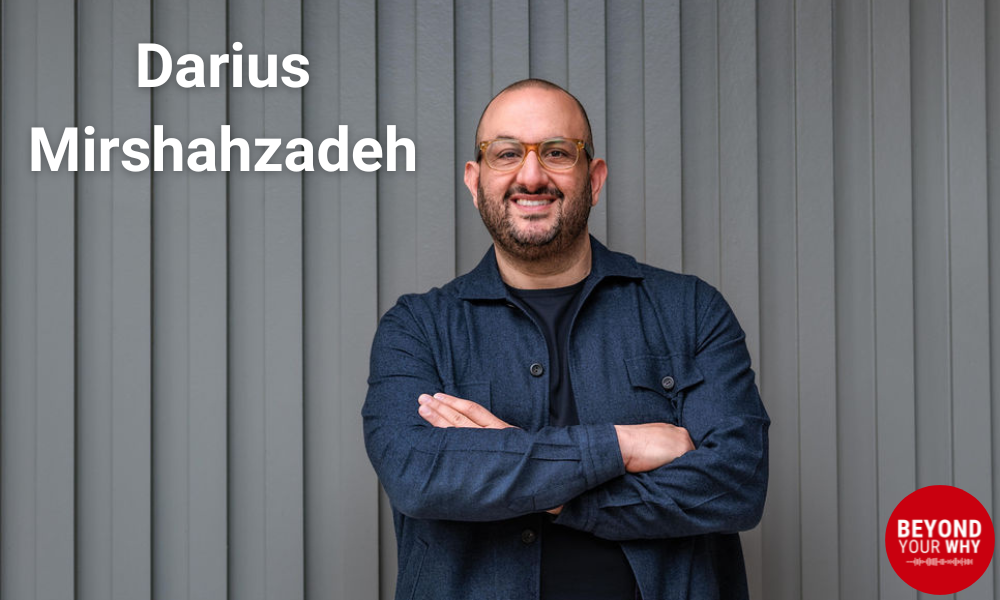
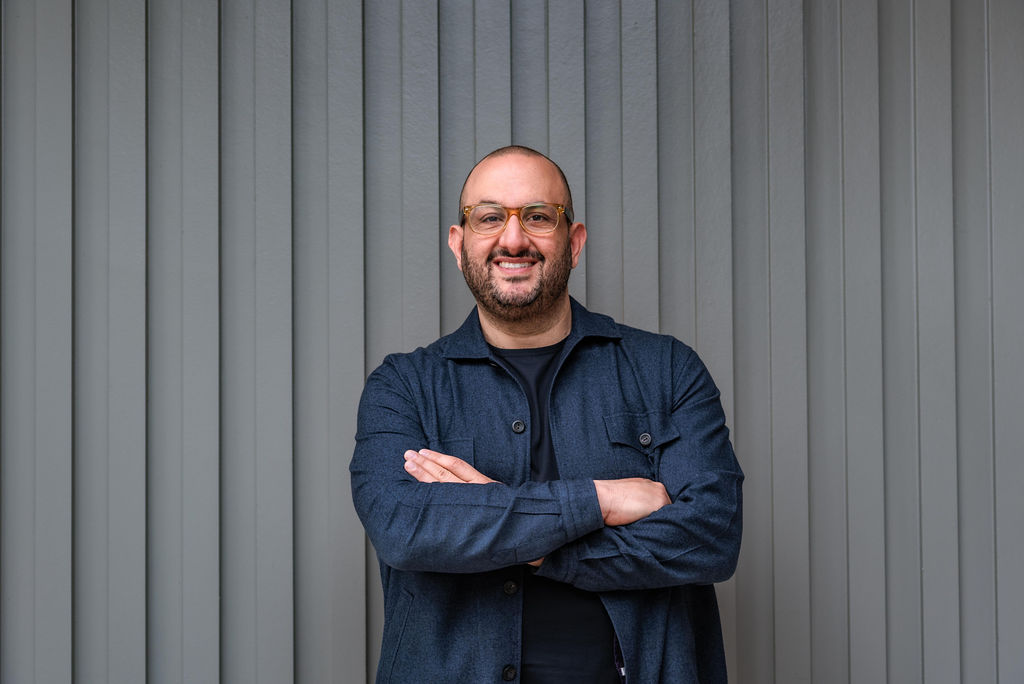

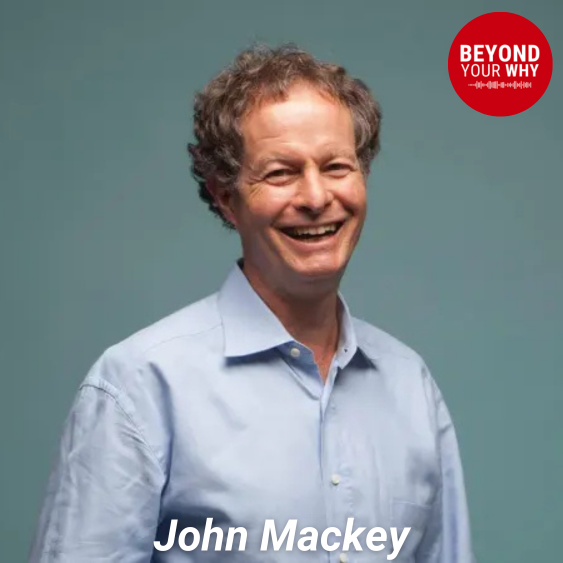





 Brandon James Mergard is an internationally acclaimed business executive and leadership coach. Currently serving as the CEO to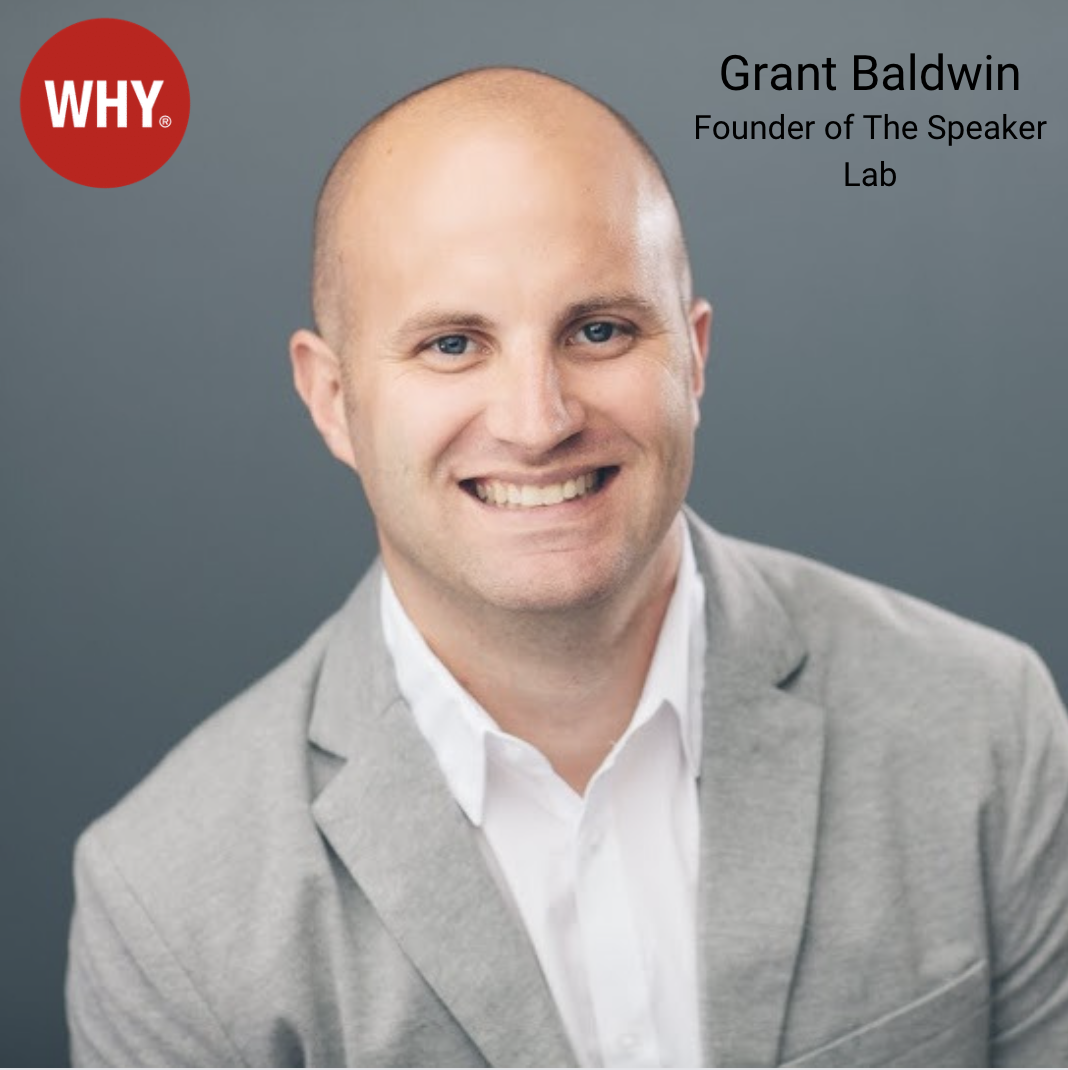




 As founder and CEO of The Speaker Lab, Grant Baldwin has helped thousands of people build successful and sustainable speaking businesses. Over the last 15 years Grant has become a sought after speaker, podcaster, author, and accomplished entrepreneur.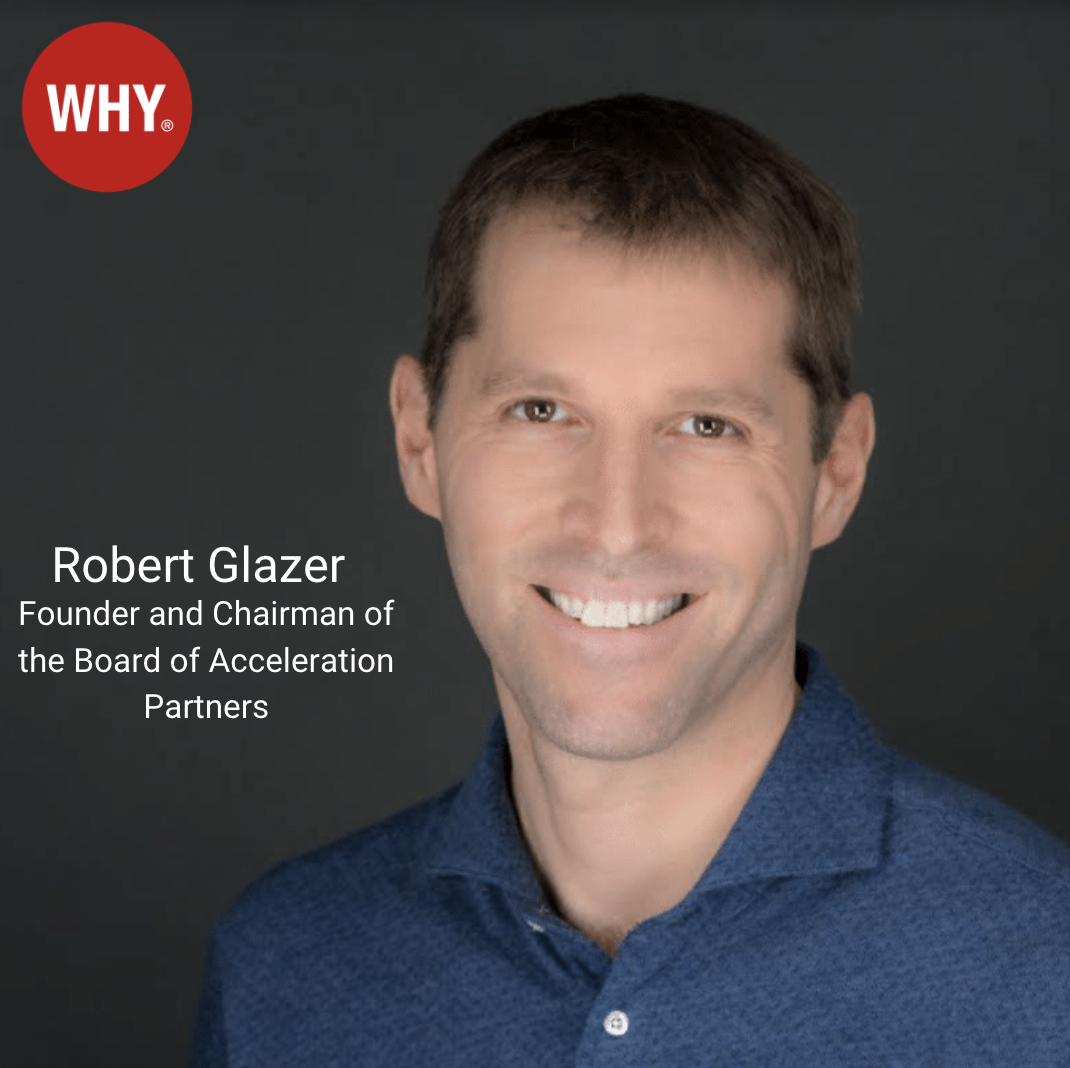







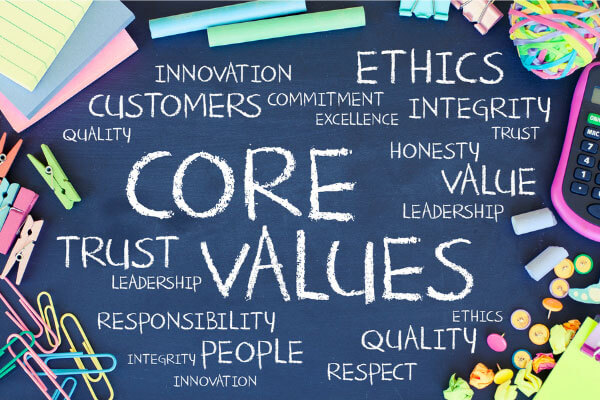

 Paul Epstein became the go-to fixer for NBA teams, NFL franchises, and league executive offices because he’s mastered the come-from-behind win. He recognizes that victory comes from the inside, and requires an All-In culture empowered by a growth mindset and a belief that we all have unlimited potential – when we double down on our strengths, gifts, talents, and passions.