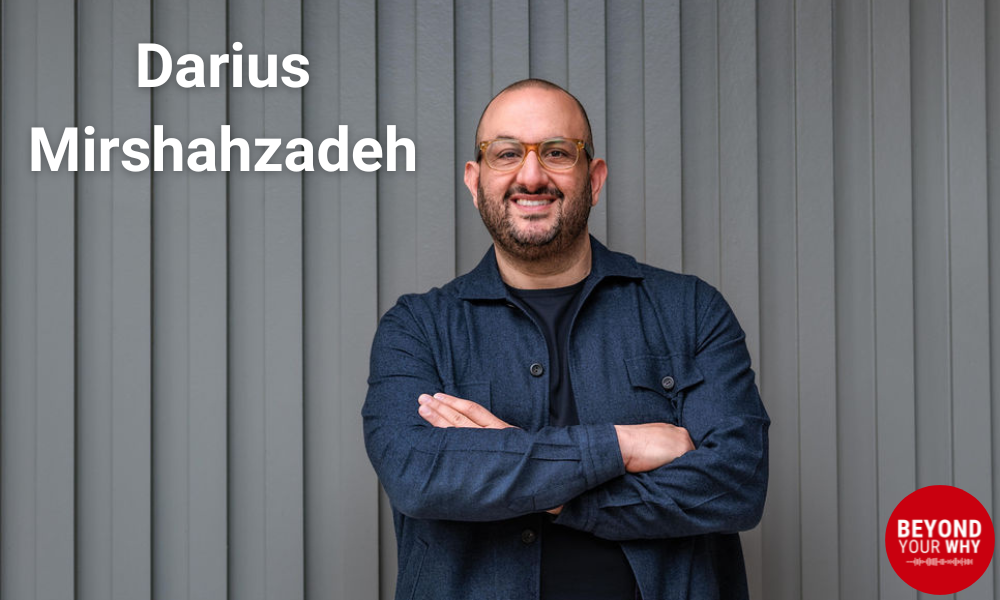
Guest: Darius Mirshahzadeh
WHY.os: Better Way – Simplify – Trust
Darius Mirshahzadeh has spent his career building companies, leading teams, and helping entrepreneurs scale with purpose. As a serial entrepreneur, bestselling author, investor, and Executive Managing Partner at MOTHER, he has led organizations worth hundreds of millions of dollars. But despite his success, he eventually discovered that achievement alone was not enough. This conversation reveals what happened when the life he built no longer matched who he wanted to become.
This episode matters because Darius lives the WHY of Better Way. People with this WHY naturally question existing systems and look for more useful solutions. Through his HOW of Simplify, Darius removes unnecessary complexity so people can move forward. Through his WHAT of Trust, he creates relationships where people feel supported, valued, and confident enough to build something meaningful together.
You’ll learn:
- Why simplifying complex problems can lead to major breakthroughs in business and life.
- How Darius rebuilt his life after realizing success was not creating fulfillment.
- How the Better Way WHY appears through constant improvement, simple systems, and trustworthy leadership.
If you have ever wondered whether there is a better way to build a business, lead people, or create a meaningful life, this episode is filled with honest lessons you can use. Listen to hear how Darius discovered that success without alignment is not really success.
Get in touch with Darius:
- LinkedIn: linkedin.com/in/dariusmirshahzadeh
- Instagram: instagram.com/imthedarius
- Website: therealdarius.com
Watch the Full Episode Here!
{YOUTUBE_LINK}
Timestamp Chapters
00:58 – Understanding the WHY of Better Way
03:58 – Darius Learns His WHY.os
06:35 – Growing Up as a Leader and Competitor
12:13 – College, Wrestling, and Seeing the World
15:30 – How Darius Landed a White House Internship
20:56 – Learning to Succeed by Refusing to Quit
30:02 – Building a Company With 1,000 Employees
35:11 – The Moment Darius Knew He Had to Leave
39:17 – The Game of Success Versus Real Life
46:58 – Rebuilding His Life From the Inside
57:37 – Moving From Advising Into Private Equity
01:02:16 – The Best Advice Darius Has Received
Listen to the Episode Here!
{EPISODE_LINK}
How Finding a Better Way Changed Darius Mirshahzadeh’s Life and Leadership
Success can look perfect from the outside while feeling completely different on the inside. Darius Mirshahzadeh knows that better than most. After building and leading one of the fastest-growing mortgage companies in America, earning national recognition as one of Glassdoor’s top CEOs, and creating significant financial success, he reached a point where something no longer felt right.
On this episode of Beyond Your WHY, Dr. Gary Sanchez discusses Darius’ WHY.os: Better Way – Simplify – Trust. A person’s WHY is the deeper motivation behind how they naturally think and act. Their WHY.os adds HOW they bring that motivation to life and WHAT others can consistently count on them to deliver. Throughout Darius’ story, these three patterns appear again and again.
Building Better, Not Just Bigger
Long before leading large organizations, Darius was already looking for ways to improve everything around him. Whether he was wrestling, serving as class president, or starting businesses while still in college, he naturally searched for smarter systems instead of simply accepting what already existed.
That mindset followed him into entrepreneurship. Rather than becoming passionate about mortgages themselves, Darius became interested in building organizations. His real focus was creating stronger cultures, developing leaders, and helping companies perform better.
“I didn’t care about mortgages. That was the widget. I wanted to build leaders.”
That statement reflects his Better Way WHY. The business was the vehicle, but improving people, leadership, and company culture became the work that gave him energy.
Why Simplicity Creates Scale
One of the strongest themes in the conversation is Darius’ belief that complexity can stop growth. He shares how Apple’s design philosophy changed the way he thought about innovation. The company took incredibly complex technology and made it simple enough for almost anyone to use.
This is where his HOW of Simplify becomes clear. Darius naturally looks for ways to remove steps, reduce confusion, and make an outcome easier to understand. He applies this thinking to products, leadership, company culture, investing, and personal growth.
“People buy simplicity. People buy outcomes that they understand.”
For Darius, simple does not mean basic or shallow. It means taking something complex and making it useful. When people understand a process, they are more likely to trust it, use it, and move forward with it.
When Success Stops Feeling Like Success
Darius eventually helped build a company with around 1,000 employees. He was highly rated as a CEO and had achieved the kind of business success many entrepreneurs chase for decades. But the mortgage industry was cyclical, and its repeated highs and lows came with a heavy personal cost.
When interest rates changed, Darius sometimes had to reduce the team. He went through several rounds of layoffs and watched people he cared about lose their jobs. His company said that people mattered, but the business model repeatedly forced him into decisions that felt out of alignment with that belief.
After another difficult round of layoffs, Darius sat alone in his car. Without planning to say it, the words came out: “I’m quitting.” He gave himself one year to decide whether leaving was truly the right move. Eleven months later, he stepped down.
For someone with a Better Way WHY and a WHAT of Trust, the decision makes sense. Darius could no longer ignore the gap between the values he wanted to live and the outcomes the business required. He needed a better way to build, lead, and serve.
The Game Versus Real Life
One of the strongest moments in the episode comes when Darius explains the difference between “the game” and real life. The game includes titles, recognition, money, awards, status, and public success. Those things can be enjoyable, but they are not what matters most to him now.
“The game is title and business and ego and accolades. Real life is relationships.”
Real life, in his view, is built through family, close friendships, love, trust, and the people who know him beyond his public accomplishments. When his identity was tied to the game, he constantly compared himself to other entrepreneurs and punished himself for every decision that did not appear perfect.
His WHAT of Trust appears strongly in this part of the story. Trust is not only something Darius wants to create with others. It is something he has had to rebuild within himself. That required learning to value his relationships and character more than his title.
Rebuilding From the Inside
Leaving the company did not immediately solve everything. From the outside, Darius still appeared successful. Internally, he struggled with anxiety, comparison, regret, and harsh self-talk.
A major shift began after he listened to The Power of One More by Ed Mylett. One idea forced him to consider which emotions he was allowing to control his life. He realized fear, anger, envy, and pressure occupied far more space than joy, love, and connection.
He decided to try living differently for one day. He focused on giving one more hug, expressing one more kind thought, and being more present with his family. That day went so well that he tried it again the next day. Then he repeated it.
“I’ve white-knuckled the hell out of this thing called life.”
Darius began questioning whether force, pressure, and constant achievement were truly the best ways to live. His Better Way WHY turned inward. Instead of only improving companies and systems, he began looking for a better way to relate to himself.
Through meditation, awareness, and intentional changes in his thinking, his anxiety dropped significantly. He did not stop working hard or pursuing meaningful goals. He stopped believing that he had to punish himself to achieve them.
Learning the System Before Improving It
Darius does not believe Better Way thinking means changing everything simply to be different. When entering a new field, he first looks for the proven system. He talks with people who have already succeeded, studies the existing path, and learns how the pieces work together.
Only after he understands the system does he decide what should be improved. This approach has shaped his work in mortgage lending, consulting, private equity, and investing.
“If I don’t know the system, I have to learn the system. Until I learn the system, I can’t have an opinion on how to do it.”
This is an important distinction. Better Way is not random change. It is improvement with a purpose. Darius uses his HOW of Simplify to understand what matters, remove unnecessary steps, and create a path that people can follow and trust.
Building With Trust
Darius says trust has always been central to how he builds teams. He knows that one person cannot scale a company alone. Real growth requires people who trust one another enough to take ownership, share responsibility, and act without being controlled at every step.
His WHAT of Trust is what others can count on him to bring. He wants to be the person who keeps his word, stands beside entrepreneurs, and creates partnerships that are not based on short-term extraction.
That belief now shapes his work with MOTHER. His focus is on entrepreneurs backing entrepreneurs and building companies with patience, care, and long-term thinking. It is another expression of his Better Way WHY: finding a more human approach to capital, leadership, and growth.
Advice for Building a Better Life
Darius closes the conversation by sharing three pieces of advice that have guided different stages of his life. First, be careful about accepting advice from people who have not accomplished what you are trying to do. Their fear or limited experience may shape what they tell you.
Second, he points to Winston Churchill’s reminder that success is going from failure to failure without losing enthusiasm. Darius has lived that lesson. Whether he was wrestling, selling mortgages, building companies, or starting again, he expected difficulty and continued learning.
Finally, he shares a lesson from Carl Jung: until people make the unconscious conscious, it can control their lives while they call it fate. That idea now shapes how Darius thinks about personal awareness and living in alignment with his natural gifts.
Darius’ story shows what the WHY of Better Way can look like in real life. He improves systems, simplifies complexity, and builds relationships rooted in trust. More importantly, he has learned that the search for a better way sometimes requires changing the way a person defines success.
Listen to the full episode of Beyond Your WHY with Dr. Gary Sanchez to hear Darius Mirshahzadeh’s complete story and learn how his WHY.os has shaped his leadership, decisions, and life.
Meet the Guest
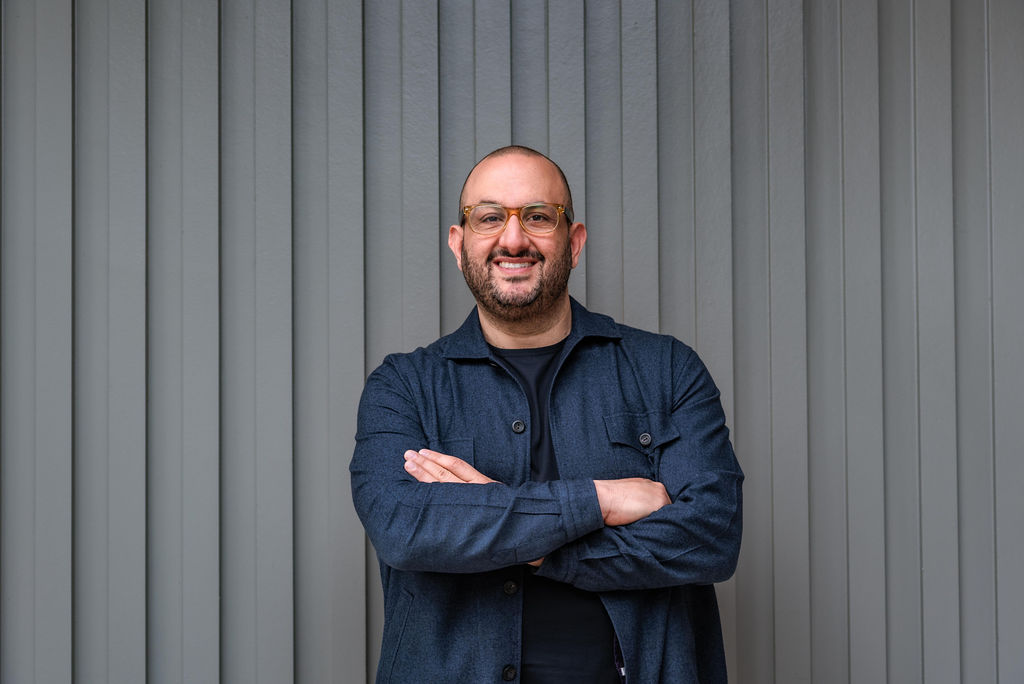
Darius Mirshahzadeh did not build his career in a boardroom. He built it in the trenches as a serial entrepreneur, operator, and leader who has lived every chapter of the entrepreneurial experience and gained the wisdom to know what actually matters.
As Executive Managing Partner of MOTHER, Darius brings the kind of credibility that cannot be faked. He was ranked #9 on Glassdoor’s Top CEOs in America and led TMS to become an Inc. 5000 company, ranking #40 in the country. He has raised $250 million to invest in and scale high-growth companies.
Darius is a graduate of the Stagen Integral Leadership Program and a Birthing of Giants alumnus at MIT. He is also the bestselling author of The Core Value Equation, a guide for building culture-centered organizations that scale with integrity.
He hosts The Greatness Machine, a top 100 podcast where he interviews accomplished people who are living their purpose. He also served as a TEDx curator at the De Young Museum in San Francisco.
At MOTHER, Darius represents the firm’s belief that entrepreneurs backing entrepreneurs changes everything. He believes patient capital with a genuine heart can outperform extraction and that strong businesses are built by people who care about their teams, partners, and legacy.