Categories
Uncategorized

What 5,247 Hiring Managers Said About Why People Get Hired

Updated May 2026.

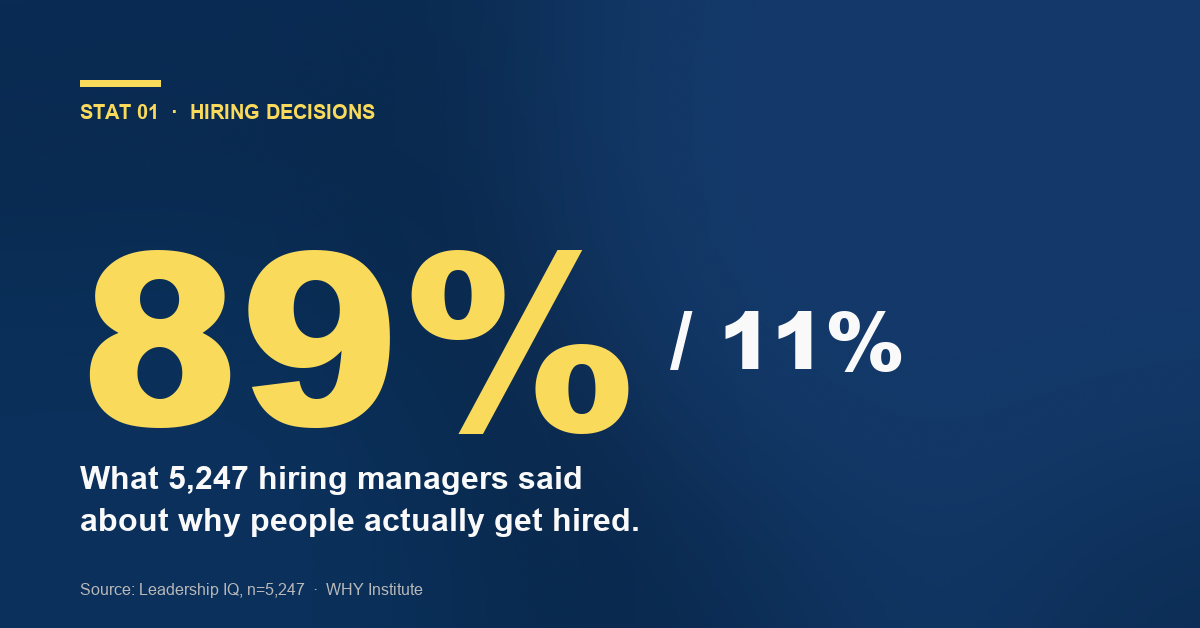
The short version: Leadership IQ surveyed 5,247 hiring managers. 89% of new-hire failures came down to attitude — motivation, coachability, self-awareness, fit. Only 11% came down to skill. If you’re being told “no” after final rounds, you’re losing on the 89% nobody writes on the job posting. This article shows what the 89% actually is, why most candidates miss it, and the one thing to do this week to fix it.

The CEO of Greenhouse — the company whose software runs the recruiter inbox at most of the Fortune 500 — said something out loud last year that the hiring industry had been quietly thinking. He said there are over 400 applications sitting in the average recruiter’s inbox at any given time, and that those recruiters “can’t really tell which ones we should pay attention to.”

If you’ve been applying and hearing nothing back, that quote will land like a kick to the gut. But the kick lands differently once you see the next number — because what hiring managers do pay attention to, when they finally pay attention, is not the thing you’ve been told to optimize for.

The Number Most Career Advice Avoids

Leadership IQ — a research firm that studies workplace performance — ran a study on why new hires fail. They surveyed 5,247 hiring managers across 312 organizations. They asked one direct question: when a new hire doesn’t work out, what was the reason?

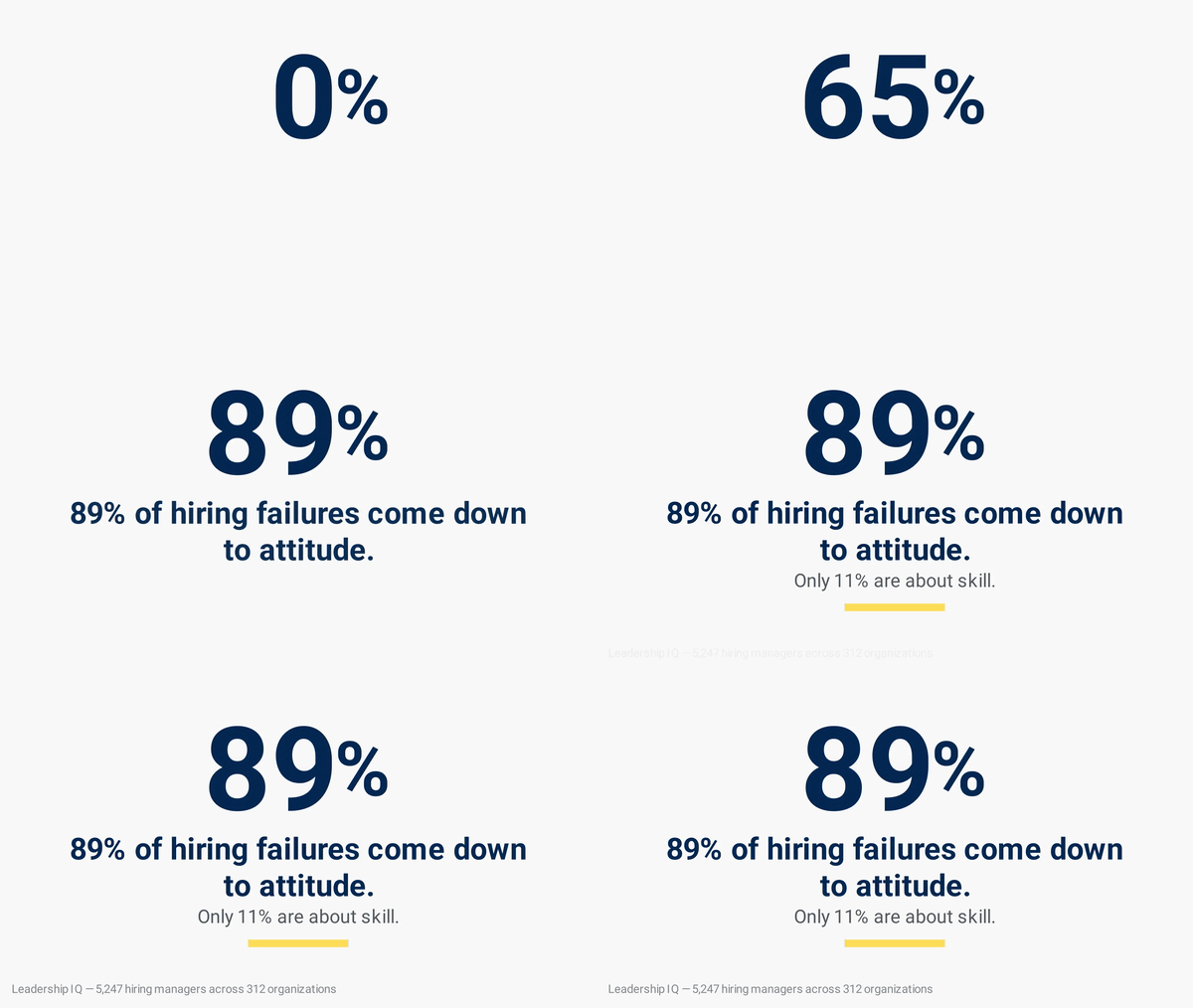
Animated stat: 89% of hiring failures come down to attitude — only 11% are about skill (Leadership IQ).

Here’s the breakdown they reported:

  • 89% of new-hire failures came down to attitude. Motivation. Fit. Self-awareness. Coachability. The way the person showed up.
  • 11% came down to a lack of technical skill.

The thing companies say they hire for is not the thing they actually hire for. They say “five years’ experience.” They mean “do I want to sit next to this person at 11pm during a launch.”

Sit with that ratio for a second. Because every job posting you have ever read leads with skill. Five years of this. Certified in that. Proficient in the other thing. That language describes 11% of the hiring decision. The other 89% — the part that actually decides who gets the offer — is almost never named on the page.

So when you see “qualified candidates only” and you check every box and you still don’t get the call, you’re not going crazy. You’re answering the question on the posting. They’re scoring the question they didn’t write down.

What “Attitude” Actually Means

“Attitude” is a soft word for what’s actually a hard, specific thing. When Leadership IQ unpacked the 89%, four things kept showing up in the data: motivation (does this person want this work for the right reasons), coachability (can they take feedback without breaking), emotional intelligence (do they read the room), and temperament (do they fit the actual day-to-day).

All four trace back to one underlying capacity: self-knowledge.

And here’s where the data gets sharper. Tasha Eurich, the organizational psychologist, ran a separate research project for Harvard Business Review with more than 5,000 participants. She found that 95% of professionals believe they’re self-aware. Only 10–15% actually meet the criteria.

So you have an 89% hiring decision built on a trait that 85–90% of the workforce thinks they have and doesn’t. The candidate who walks in with real, articulated self-knowledge is not just a slightly better candidate. They are statistically rare. They are the 10–15% in a stack of pattern-matched lookalikes — and the hiring manager feels it the moment they sit down.

This is what hiring managers mean when they say things like “we just clicked” or “she was the one.” It isn’t chemistry. It’s signal. They are picking up on a candidate who knows exactly who they are and what they’re doing in the room — and they are picking that candidate over candidates who, on paper, look the same.

A Real Final-Round Pattern: The Two Maria Problem

Here’s a composite from the kind of final-round we hear about constantly. Two candidates make it to the last round for a senior product manager role. Call them Maria A and Maria B. On paper they are identical: same MBA, same six years of experience, same shipped products on their resume.

Maria A is technically the stronger candidate. Her case study deliverable is tighter. Her metrics are sharper. The hiring panel agrees she is the more “qualified” of the two on every measurable axis. The 11%.

Maria B is asked, in the final round, why this role and why now. She answers in one breath. She says, in plain language, that she is hardwired to figure things out — to take an ambiguous brief and turn it into a clear plan — and that this role, which is rebuilding a broken roadmap, is exactly that work. She names how she operates with teammates. She names what she contributes that nobody asks her to. She does not hedge. She does not list adjectives.

Maria A answers the same question with a polished narrative about her career path and what she has learned from each role. It is well-rehearsed. It is also indistinguishable from the answer the panel heard from the previous three finalists.

Maria B gets the offer. The hiring manager later told her recruiter: “She just sounded like she knew exactly who she was.” That is the 89%. Maria A had the skill. Maria B had the signal.

How This Shows Up in the Final Round

If the 89% is the rule, the final round is where the rule breaks the tie.

By the time two candidates are sitting in a final interview, they’re both qualified. They both have the experience. The decision is no longer about credentials — it can’t be, because both finalists have them. The decision is about which candidate makes the hiring manager feel certain.

And the question that decision turns on is almost always the same one: Why this role, and why now?

Eight in ten hiring managers say candidates with genuine drive outperform candidates who are slightly more qualified but less clear about their motivation. Read that sentence carefully. Slightly more qualified. Less clear. The slightly-more-qualified candidate loses. The clearer candidate wins.

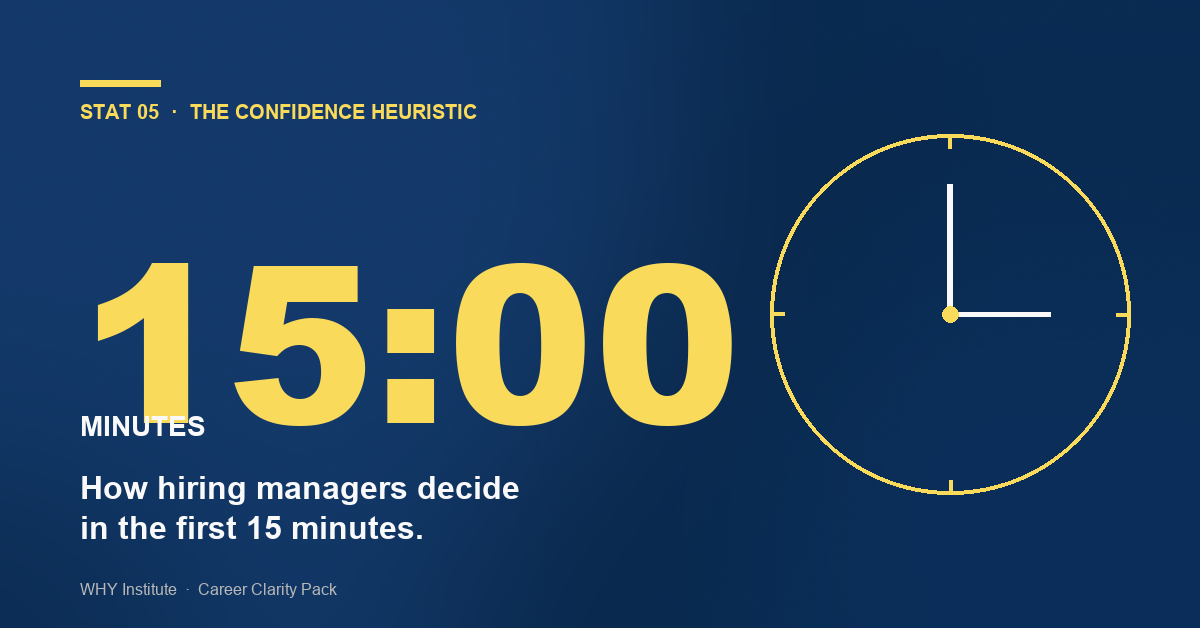
If you’ve ever been in a final round and walked out with a strong feeling and no offer, this is almost always what happened. You answered the qualification questions. You didn’t answer the 89% question. (We broke down the final-round dynamic in more detail in The Confidence Heuristic: How Hiring Managers Decide in 15 Minutes.)

What to Do This Week

Most career advice in 2026 is still advice for the 11%. Polish your resume. Add the right keywords. Practice your STAR stories. All of that is fine — and none of it touches the 89% that’s actually deciding the outcome.

The 89% requires something different. It requires you to be able to articulate, in plain language, what drives you, how you operate, and what you contribute — with enough certainty that a hiring manager hears you and stops looking at the rest of the stack.

That isn’t a confidence trick. You can’t fake your way to it, and rehearsing buzzwords makes it worse. It’s the byproduct of self-knowledge — the kind that 10–15% of professionals actually have. The good news: it isn’t a personality trait you were either born with or not. It’s the result of a specific framework, applied to yourself, in writing, until it’s clear enough to say in one breath.

Here is a five-step exercise you can run this week, before your next final round:

  1. Write your WHY in one sentence. Not your job. Not your title. The thing you are hardwired to do — the contribution that shows up across every role you’ve ever held. Most people need three drafts before this lands honestly.
  2. Write your HOW in one sentence. The way you operate when you’re at your best. Not adjectives — verbs. “I find the simplest version of the problem and put words on it” is a HOW. “I’m a hard worker” is not.
  3. Write your WHAT in one sentence. The specific contribution other people count on you for. The thing colleagues come to your desk for that nobody asked you to be the person for.
  4. Read all three out loud. If any of them sound like a LinkedIn headline, rewrite. Hiring managers can hear rehearsed language. They cannot hear self-knowledge in language that was built to be impressive.
  5. Practice the answer to “Why this role and why now” using only those three sentences. No biographical narrative. No career-path summary. Just: this is what I’m hardwired to do, this is how I do it, this is what people count on me for, and this role is exactly that work.

If you can do that exercise honestly in a notebook, you will walk into your next final round answering the 89% question — the one nobody else in the stack is answering — in a way that is impossible to fake and impossible to forget.

That is what the Career Clarity Pack does, in a structured framework, in one sitting. It walks you through the WHY.os — your hardwired driver, the way you operate, and what people count on you for — and gives you the language for the 89% the same way a good resume gives you the language for the 11%. One framework. One sitting. One clear answer to the question every hiring manager is silently asking and rarely writes down.

If you’ve been studying the 11% and losing on the 89%, the fix is not more polish. It’s clarity.

Get the $47 Career Clarity Pack →

Frequently Asked Questions

What did the Leadership IQ study actually find?

Leadership IQ surveyed 5,247 hiring managers across 312 organizations and tracked over 20,000 new hires. They found that 46% of new hires fail within 18 months — and when they do, 89% of those failures trace back to attitude (motivation, coachability, emotional intelligence, temperament), not technical skill. Skill accounts for only 11%.

Why does attitude matter more than skill in hiring?

Skill is easy to verify on a resume — and easy to train once a person is hired. Attitude is hard to assess in 30 minutes and almost impossible to train later. So hiring managers, often without saying it out loud, weight the harder-to-fix variable. The candidate with clear self-knowledge becomes the safer bet, even when their resume is slightly less polished.

How do hiring managers test for coachability?

They watch how you respond to pushback in the room. When an interviewer challenges your answer or surfaces a weak spot, do you defend, deflect, or absorb the feedback and respond clearly? Candidates who can name what they don’t know — without losing certainty about who they are — signal coachability without having to claim it.

What is the WHY.os and how does it relate to hiring?

The WHY.os is your operating system: your WHY (what drives you), your HOW (how you operate at your best), and your WHAT (what you contribute that people count on you for). All three are drawn from the 9 WHYs framework. Together they give you the precise, plain-language answer to the question every hiring manager is silently asking — and almost no candidate answers clearly.

How do I find my WHY?

The fastest evidence-based path is the WHY.os Discovery inside the Career Clarity Pack — a structured framework that surfaces your hardwired driver, your operating style, and your contribution in one sitting. It is research-backed and used by over 250,000 people. You can also start with the five-step exercise above as a free first pass.

Categories
Uncategorized

The Confidence Heuristic: How Interviewers Decide in 15 Min

Updated May 2026 with peer-reviewed sources linked inline.

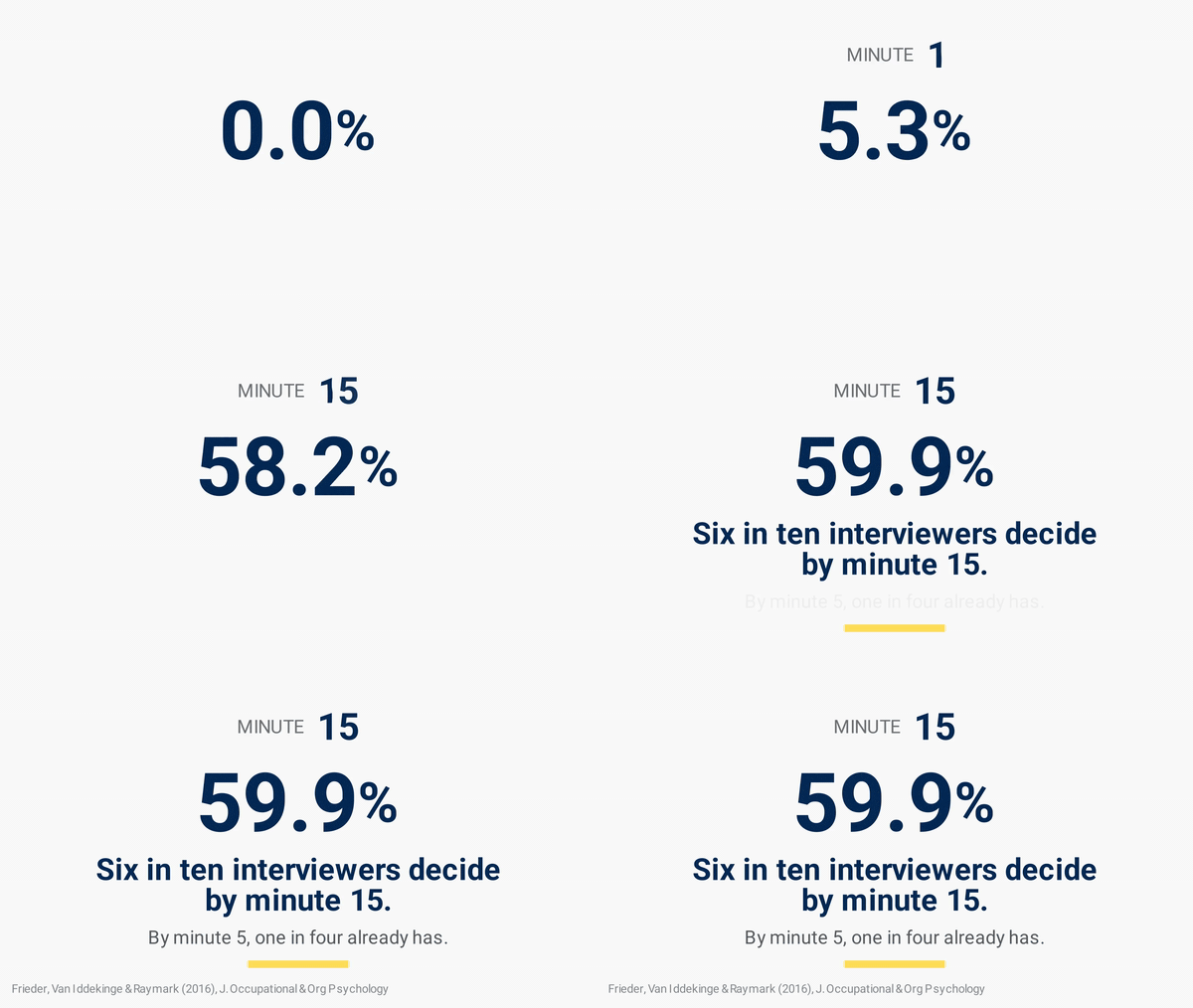
Six in ten interviewers have already decided about you before the halfway mark of your interview. Not minute thirty. Not the technical round. Minute fifteen.

That number comes from a peer-reviewed study by Frieder, Van Iddekinge, and Raymark (2016) — 166 interviewers evaluating 691 real candidates, published in the Journal of Occupational and Organizational Psychology. The breakdown is sharper than the headline:

  • 4.9% of interviewers reach a decision within the first minute.
  • 25.5% have decided within the first five minutes.
  • 59.9% — six in ten — have decided by minute fifteen.
Animated stat: 4.9% at minute 1, 25.5% at minute 5, 59.9% at minute 15 of interviews — six in ten decide by 15.

Most of the candidates in that study were still answering their second or third question when the person across the desk had already made up their mind. Whatever you say about who you are inside those fifteen minutes is what gets graded. The rest of the interview is the hiring manager looking for evidence to confirm what they already think.

The Stat Career Coaches Get Wrong

You have probably heard a different version of this number. The “seven-second first impression.” The “ninety-second decision.” Those numbers get repeated in every LinkedIn post, every interview-prep article, every TikTok career coach reel.

The seven-second number does not trace to a peer-reviewed interview study. It traces to social-perception research from the 1990s — Ambady and Rosenthal’s “thin slice” work — that was about classroom evaluations of teachers, not interview decisions for jobs. Over twenty years it got generalized, then over-generalized, then converted into clickbait. The ninety-second number has a similar problem. Neither one survives a citation check.

The Frieder, Van Iddekinge, and Raymark data does. It is the cleanest peer-reviewed measurement we have of when actual hiring interviewers reach a decision in actual interviews. And the answer it gives is not seven seconds. It is fifteen minutes.

That distinction matters because it changes what you can do about it. Seven seconds is a verdict. Fifteen minutes is a conversation. Fifteen minutes is enough time to say something true about who you are. Most candidates do not. (Related reading: what 5,247 hiring managers said they actually screen for.)

What Actually Decides It in Minute 15

If the decision is made before the technical round, before the deep-dive questions, before the case study — then it isn’t being made on competence. It is being made on something else. Researchers have a name for it.

It is called the confidence heuristic. In a series of three experiments published in the Journal of Experimental Psychology: General in 2018, Pulford and colleagues showed that when two people communicate, the one who sounds more certain wins — and that listeners use certainty as a shortcut for accuracy. The effect held in face-to-face conversations and in computer-mediated ones, which means it isn’t body language doing the work. It is the verbal expression of certainty itself. The candidate who sounds sure of who they are is read as the candidate who knows more.

The Pulford finding is not just an interview phenomenon. Stanford Graduate School of Business research has examined the same pattern from a different angle: how brittle first impressions are once formed, and how confidence — not competence — drives whether the impression sticks. Jerker Denrell’s work at Stanford GSB shows that once a hiring manager has read a candidate as uncertain, that read is unusually hard to reverse — there is rarely a second chance to clarify it inside the same interview.

The interview is not a competence test. It is a confidence test — and most of what’s being graded happens before the competence questions even start.

That is the brutal version of the answer. The interview is not measuring who can do the job. It is measuring who can talk about doing the job without flinching. And by minute fifteen, the hiring manager has already decided whether you can.

The Difference Between Confidence and Certainty

This is where most career advice gets dangerous. The advice industry hears “candidates with confidence win” and converts it into performance — power poses, eye contact drills, vocal warm-ups, the firm handshake. All of that lives on the surface. None of it survives fifteen minutes of an interviewer paying close attention.

Performed confidence and grounded certainty are not the same thing. They sound different on contact. Performed confidence is loud and slightly forced — the candidate is auditioning. Grounded certainty is quieter — the candidate is already at home in who they are. The interviewer cannot always tell you which one is which, but they can feel it. Selection-interview research published in the Journal of Business and Psychology consistently shows the same pattern: candidates who register as authentic — not rehearsed — are rated higher in the interview and perform better on the job afterward. Authenticity tracks reality. Performance does not.

The reason is mechanical, not mystical. Certainty is hardwired. It comes from knowing the thing about yourself that has been true since you were a kid — the way you process the world, the reason you do the work the way you do it, the signal that runs underneath every choice you’ve ever made. You don’t manufacture that in a coaching session. You uncover it. And once it’s named, it’s stable. It doesn’t shake under pressure. That is what an interviewer is reading in the first fifteen minutes — whether the person across from them is operating from something solid, or assembling an answer in real time.

This is the lane the WHY framework lives in. A WHY is not a polished story. It is the underlying driver — one of nine — that has been running you the whole time. Once you know which one it is and how it expresses itself, the certainty isn’t performance. It’s recognition.

How to Sound Certain Without Sounding Rehearsed

Practical things you can do, knowing what the research actually says — but only after the underneath part is in place. None of these tactics work unless you have the self-knowledge to anchor them.

  • Lead with why, not where. When the interviewer asks “tell me about yourself,” most candidates start chronologically — school, first job, second job, here. That is the language of credentials. Replace the chronology with a one-sentence statement of why you do the work the way you do it, then let the chronology serve the why. The hiring manager is grading whether you have a center. Show them the center first.
  • Cut the qualifiers. “I think I’m pretty good at…” “I sort of see myself as…” “I feel like maybe I…” Hedging language is the verbal opposite of certainty. The Pulford research is specifically about verbal expressions of confidence. Every “I think” you remove makes the room read you as more sure.
  • Answer “why this role” the way the recruiter is actually asking it. The question is not “do you like the job description.” It is “do you know why this work, specifically, sits inside who you are.” Most candidates answer the first question. The candidate who answers the second one is the one the room remembers in minute fifteen.
  • Stop sounding like a candidate. The candidate voice — modest, qualifying, eager to please — is the voice of a person hoping to be chosen. The voice that wins the room is the voice of a person who has already made the decision about who they are, and is now describing it. The shift is subtle. It is also the entire signal.

None of these tactics are about volume or polish. They are about source. You can rehearse a confident answer, and an experienced interviewer will hear the rehearsal. You cannot rehearse certainty about who you are. That has to actually be there.

The One Thing the First Fifteen Minutes Is Really Grading

Strip everything else away and the question the hiring manager is asking in those first fifteen minutes is one question: does this person know who they are?

Not what they did. Not where they went to school. Not how many years they have. Whether they know themselves clearly enough to describe themselves without flinching, in their own language, with conviction. That is the signal hiring managers are filtering on, even when they cannot tell you that is what they are doing. The peer-reviewed research is unambiguous about it. The candidates who walk in with that signal — grounded, articulate, certain — are the ones who walk out with offers.

The reason most candidates can’t do this isn’t talent or preparation. It is that nobody has ever taught them to articulate what is already true. Their resume is built. Their LinkedIn is optimized. Their interview answers are rehearsed. But the question underneath all of it — who am I, and why do I do the work the way I do it — has never been answered in language they can use in a room.

That is exactly the gap the WHY.os closes. It is not a personality test. It is a system that names the three layers of how you operate — your core driver, the way you bring it into the world, and the impact people feel from being around you. It produces the language a hiring manager hears in minute fifteen and remembers in minute fifteen-thousand. Not a story you wrote. A signal that was already there.

If you have ever walked out of a final round wondering what they saw — or didn’t see — in those first fifteen minutes, this is what was missing.

Frequently Asked Questions

How quickly do interviewers really decide?

Peer-reviewed research from Frieder, Van Iddekinge, and Raymark (2016) tracking 166 interviewers across 691 real candidates found 4.9% decide within minute one, 25.5% within five minutes, and 59.9% — nearly six in ten — by minute fifteen. The “seven-second” stat from viral career advice does not trace to interview research; it traces to 1990s thin-slice studies of classroom teachers.

What is the confidence heuristic?

The confidence heuristic is a documented pattern, tested in Journal of Experimental Psychology: General by Pulford et al. (2018), where listeners use a speaker’s certainty as a shortcut for accuracy. The person who sounds more sure gets read as the person who knows more — even when they don’t. In interviews, this means the candidate whose self-description carries certainty is graded as more competent, regardless of credentials.

How do I sound confident without being rehearsed?

Drop hedging language (“I think,” “I sort of,” “I feel like maybe”). Lead with why you do the work, not where you’ve worked. Answer “why this role” by naming the part of who you are that the work satisfies, not by describing the job. None of these tactics work without the self-knowledge underneath them — rehearsal is detectable inside fifteen minutes of an attentive interviewer.

What does authenticity look like in an interview?

Authenticity in an interview is the verbal version of self-knowledge. It sounds like a person describing something they already know, not a person reaching for an answer. Selection-interview research in the Journal of Business and Psychology consistently links authenticity ratings to higher interview scores AND higher post-hire job performance. It tracks reality; performed confidence does not.

How does the WHY.os help with interview confidence?

The WHY.os names the three hardwired layers of how you operate — your core driver, the way you bring it into the world, and the impact people feel from being around you. It gives you the language an interviewer hears as certainty in minute fifteen, because it isn’t a story you wrote — it’s a signal that was already there. The Career Clarity Pack ($47) is the fastest path to that language.

Get the Career Clarity Pack — $47

Categories
Podcast Uncategorized

When Everything Falls Apart: How to Make Sense of Your Life and Start Again

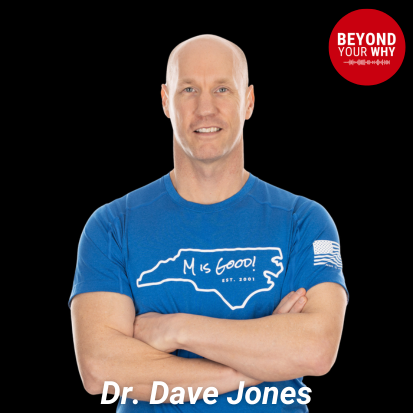
Guest: Dr. Dave Jones
WHY.os: Make Sense – Better Way – Mastery

Dr. Dave Jones didn’t follow a straight path to success. He went from chasing a professional hockey career overseas to standing in a locker room at 26, realizing it was over. No plan. No direction. No idea what came next.

That moment could have broken him. Instead, it forced him to do what he naturally does best: make sense of the chaos. His WHY is Make Sense, which means he’s driven to take complex, overwhelming situations and turn them into something clear and usable. This episode shows what happens when that ability is used on your own life.

You’ll learn:

  • How to move forward when your original plan falls apart
  • Why clarity, not motivation, is what actually gets you unstuck
  • How a WHY of Make Sense helps you turn confusion into direction

Want to learn your WHY? It is now 50% off for all Beyond Your WHY listeners! [Click here!]

Get in touch with Dave:

Watch the Full Episode Here!

00:00 – Introduction to WHY: Make Sense
03:50 – Growing up and chasing hockey
08:20 – Getting humbled in juniors
11:25 – The moment everything changed
13:30 – Feeling lost and starting over
15:20 – Building a business from nothing
17:10 – Why purpose isn’t handed to you
20:30 – Why most people feel stuck at work
23:00 – Looking forward vs looking back
31:30 – The R7 process explained

Listen to the Episode Here!

When Everything Falls Apart: How to Make Sense of Your Life and Start Again

Most people think success comes from having a plan. Dr. Dave Jones learned the opposite. His biggest turning point came when his plan completely fell apart.

In this episode of Beyond Your WHY, Dr. Dave shares what it feels like to lose direction and how he rebuilt from nothing. His story is a clear example of the WHY of Make Sense. That means he is driven to take complex situations and turn them into something clear and actionable. WHY.os adds another layer by showing how someone does that and what they naturally bring to others, making it practical in real life.

When the Plan Stops Working

Dave’s early life was focused on hockey. He built his identity around it and pushed everything else aside. School didn’t matter. The goal was simple: go pro.

But reality hit fast. After getting humbled in juniors and bouncing around teams, he realized something wasn’t adding up. By the time he was playing in Germany, the gap between where he was and where he thought he should be became impossible to ignore.

He described the moment clearly:
“I can see myself in the locker room… I had the epiphany. Like, what are you doing, dude? It’s time to move on.”

That moment forced a decision most people avoid. Let go of the identity you built.

The Space Between Who You Were and Who You’ll Become

What came next wasn’t clarity. It was confusion.

Dave found himself in a new country, without hockey, without direction, and without a strong sense of who he was. He didn’t just feel lost. He questioned whether he even liked himself.

“I had the view of the world that if I can put enough people down, I will get ahead… I didn’t like myself.”

This is where his WHY of Make Sense shows up in a different way. Instead of solving external problems, he had to solve himself.

People with this WHY often step into chaos and create clarity for others. But when life turns inward, they have to apply that same skill to their own identity.

Turning Chaos Into a Direction

Dave didn’t suddenly find a perfect answer. He started with a question.

“What do I do now?”

That question led him to start a marketing agency. Not because it was a perfect plan, but because it was the next step that made sense at the time.

The early years were rough. He expected quick success, but reality looked different.

“I think we invoiced that year $15,000… it was a rough year. It was bad.”

But this is where his WHY.os comes into play.

  • His WHY (Make Sense): turn confusion into clarity
  • His HOW (Better Way): look for improved approaches
  • His WHAT (Mastery): go deep and build expertise

That combination meant he didn’t quit. He kept refining, learning, and improving until things started working.

Why Most People Stay Stuck

One of the most honest parts of the episode is Dave’s perspective on work and fulfillment.

He shared a stat that hit hard:
“88% of the US economy is disengaged at work.”

His takeaway is simple. Most people build their life around skills instead of purpose.

“You have to be fulfilled to your passion and your purpose and your why.”

This ties directly back to the WHY of Make Sense. Without clarity, people default to what they’re told to do. With clarity, they can choose a direction that actually fits them.

Moving Forward Instead of Looking Back

Dave also challenges a common idea in personal growth. Yes, your past matters. But staying stuck in it doesn’t help.

“At some point… you have to look forward.”

That perspective reflects how someone with Make Sense operates. They don’t ignore problems. They solve them and move forward.

Clarity isn’t about understanding everything perfectly. It’s about understanding enough to take the next step.

Final Thoughts

Dr. Dave’s story isn’t about having everything figured out. It’s about learning how to think when nothing is clear.

He didn’t avoid confusion. He worked through it.

And that’s the real takeaway. You don’t need a perfect plan. You need the ability to make sense of what’s in front of you.

If you’re feeling stuck or unsure what’s next, this episode will give you a new way to look at it.

Listen to the full episode to hear how Dave turned confusion into clarity and built a life that actually fits him.

Meet the Guest

Dave Jones brings a rare combination of professional athlete experience, military service, and psychological expertise to his work as founder of one of the world’s largest Christian marketing agencies. After competing professionally in hockey across Europe, Dave founded M is Good in 2001, developing the innovative R7 process that helps leaders effectively communicate vision.

With a doctorate in Sport and Performance Psychology, he coaches elite athletes from the NHL, NFL, and other sports through his Mental Toughness Training system. As a four-year U.S. Air Force veteran, Dave now lives in Raleigh, NC with his family while running three successful companies that blend his Christian brand development expertise with performance coaching.

Categories
Podcast Uncategorized

From Training Tom Brady to Tackling Parkinson’s: Tom House’s New Mission

Tom House is a former Major League pitcher who turned his time in the bullpen into a sports-science lab. Today he’s known as the “throwing whisperer,” coaching icons like Nolan Ryan and Tom Brady while fighting Parkinson’s with the same data-driven grit. His mix of PhD research and locker-room wisdom makes him a rare voice who pairs hard facts with straight talk.

Tune in to learn:

  • How a “process over outcome” mindset put him under Hank Aaron’s record-breaking homer—and why it still matters for any goal.
  • The four pillars he uses to shape both Hall of Fame arms and everyday health: mechanics, strength, mindset, and recovery.
  • Simple daily moves that let him trade a wheelchair for surfboards while living with Parkinson’s.

Press play now and get the goods straight from Tom himself.

Get in touch with Tom!

NATIONALPARKINSONS.ORG
LinkedIn

Watch Full Episode Here!

00:10 – Intro & Tom’s “Make Sense” WHY
03:30 – Process-Focused Upbringing
08:07 – USC Years & Rod Dedeaux Lesson
12:40 – Catching Hank Aaron’s 715th HR
18:57 – Birth of 3D Pitching Analytics
23:13 – Coaching Legends from Ryan to Brady
31:51 – Parkinson’s Diagnosis Revealed
40:21 – Adaptive Training Lab for Patients
45:55 – “Don’t Do Nothing” Daily Routine
49:03 – Best Advice: Respect the Competition Like this comment

Listen to The Episode!

4 Pillars, 3-D Data, Everyday Wins: Tom House on the Beyond Your WHY Podcast

Tom House pitched in the majors, caught Hank Aaron’s 715th homer, then turned every bullpen into a research station. Today he carries the nickname “throwing whisperer” after coaching Nolan Ryan, Drew Brees, and Tom Brady—all while managing Parkinson’s with the same grit he asks of elite athletes. His chat with Dr. Gary Sanchez shows how clear systems, relentless testing, and small daily actions can lift results on the field, in business, and at home.

Listeners get more than sports trivia here; they see how precise data and old-school integrity fit together. Aidan, writing in her favorite coffee-chat style, spotlights the parts that make you pause, nod, and jot notes for Monday morning. From motion-capture breakthroughs to a morning rule that fights inertia, the talk balances science and plain speak. Keep reading for the highlights, then queue up the episode to catch every detail straight from Tom’s voice.

The Four Pillars That Hold Up Peak Performance

House boils success down to mechanics, functional strength, mental-emotional skills, and recovery. Each pillar stacks on the next, and none stands alone. “My job was simple: take the guesswork out of coaching,” he says, pointing to decades of testing that back his method. Athletes learn where power leaks and how to patch them fast; executives can copy the same checklist for mind-body stamina. The take-home: skip shortcuts, shore up the foundation, then watch output climb.

Data Before Opinions: How 3-D Cameras Changed the Game

In 1986 House started filming pitchers at 1,000 frames per second and logging every angle. High-speed video proved that eyes trick coaches, but numbers do not. The result? Mechanics once taught by feel became teachable with proof. Business leaders can steal the mindset—measure first, tinker second—to trim waste and sharpen strategy. “We didn’t get beat; we got out-milligrammed,” he jokes, reminding listeners that tiny adjustments decide winners.

Parkinson’s on the Clock: 4 Hours Hard for 4 Hours Clear

When doctors delivered the diagnosis, House built a new training block. Four hours of focused movement buy him roughly four hours of steady hands and clear speech. He mixes light weights, balance drills, and surf sessions—yes, surf sessions—to keep symptoms at bay. The rule of thumb he gives patients: “Don’t do nothing.” One small task—sit up, brush teeth—starts the momentum snowball. It’s the same mindset that put him in the right bullpen spot for Aaron’s record ball years earlier.

Tom House proves that process breeds luck, numbers beat hunches, and tiny wins stack fast. If you coach, lead a team, or face your own uphill climb, this episode slips practical tactics into a good story. Hit play on the Beyond Your WHY Podcast, hear Tom’s full playbook, and share the insights with a teammate who could use a fresh edge.

Learn More About Tom House!

If you’ve ever heard of a quarterback changing his throwing motion mid-season… or a pitcher turning to neuroscience for an edge… there’s a good chance Tom House was behind it.

Tom’s story starts in the bullpen—literally. A Major League Baseball pitcher for nearly a decade, he earned his stripes with the Atlanta Braves and Boston Red Sox. But his real calling was never just throwing a ball—it was understanding human potential.

After hanging up his glove, Tom became the “throwing whisperer” — coaching legends like Nolan Ryan, Drew Brees, and Tom Brady. But his genius wasn’t just in mechanics—it was in blending science, motion, and mindset to help elite athletes unlock what made them great.

Then, 15 years ago, life threw Tom a curveball: a diagnosis of Parkinson’s Disease.

For most, it would have been a reason to step back. But for Tom, it became the next chapter of his WHY.

Today, Tom channels everything he’s learned—decades of sports performance, biomechanics, coaching, and mindset mastery—into his work with the National Parkinson’s Association, building movement-based protocols that are changing the lives of those living with the disease. His journey isn’t just about sports anymore—it’s about legacy, resilience, and healing through motion.

In this conversation with Dr. Gary Sanchez, Tom unpacks the why behind his relentless curiosity, how Parkinson’s gave new purpose to his passion, and why he’s more fired up today—helping others thrive through movement—than he ever was on the mound.

Categories
Podcast Uncategorized

AI or Extinction? Chris Daigle’s Blueprint for Staying Ahead


Guest: Chris Diagle
WHY.os: Right Way – Simplify – Make Sense

Chris Daigle is a seasoned entrepreneur and the CEO of ChiefAIOfficer.com, where he teaches business leaders how to use AI in smart, simple ways. With decades of experience in fields like SaaS, real estate, and internet marketing, Chris has developed strategies for success that anyone can follow, especially in today’s fast-changing tech landscape. His insights on the power of AI for business are clear and actionable, making him a must-listen for professionals at any level. Tune in to learn:

  • How to make AI work for your business, even if you’re not a tech expert
  • Why knowing your purpose matters, and how to use it to keep going through challenges
  • The best ways to stay ahead in any industry by building relationships that last

Listen to the full episode for Chris’s top tips and real-life stories on succeeding with AI and business.

Connect with Chris!

LinkedIn
ChiefAIOfficer.com

Watch the episode here


  • 00:18 – The Importance of Knowing Your Why
  • 02:44 – Early Entrepreneurial Beginnings
  • 06:52 – Lessons from the Military
  • 11:48 – The Transition to Tech and Consulting
  • 17:53 – Entering the Real Estate Market
  • 25:18 – Shift into AI and Digital Marketing
  • 36:34 – The Role of Chief AI Officer
  • 42:30 – Understanding Generative AI
  • 46:24 – AI as a Business Advantage
  • 55:50 – Best Advice for Success


The Big “Why” in AI and Business Success: Insights from Chris Daigle on the Beyond Your WHY Podcast

In the latest episode of the Beyond Your WHY podcast, Dr. Gary Sanchez sits down with Chris Daigle, a veteran entrepreneur and AI expert, to dig deep into how today’s professionals can use AI not just to keep up, but to thrive. Chris, CEO of ChiefAIOfficer.com, has led a career through fields as varied as real estate, SaaS, and digital marketing, always guided by an instinct to find better ways of doing things. Today, he’s taking that same energy and applying it to the world of AI, where he believes the future belongs to those who know how to make this technology work for them.

If you’re wondering how AI can impact your work—or whether you’re prepared for the changes ahead—Chris’s insights might just answer those questions. With years of experience building strategies in fast-paced industries, he knows what it takes to stay relevant, especially in tech. In this post, we’ll break down the main takeaways from his conversation with Dr. Sanchez, so even if you don’t catch the full episode, you can take away valuable lessons on career growth, resilience, and what it really takes to succeed with AI.

From Selling Candy to Six Figures: The Entrepreneurial Spirit

Chris Daigle didn’t set out with a formal business plan; he started as a kid selling candy at a markup from his school locker. What he discovered, even back then, was that recognizing a need and finding a way to meet it could lead to real results. His journey from “arbitraging candy” to founding tech companies showed him that traditional paths aren’t the only ways to succeed—and that sometimes the boldest moves pay off the most.

His message? It doesn’t take a fancy setup to get started. In his words, “The best opportunities come when you identify a need and fill it with passion.” By the time he launched his first software company in 2002, he’d already mastered the art of finding his market. For Chris, the key to success isn’t a magic formula; it’s staying attuned to what people need and staying resilient enough to deliver it.

Why AI is Not Just for the Tech Gurus

While many people think of AI as an intimidating, highly technical tool, Chris breaks it down differently. AI isn’t about the complex coding for most of us; it’s about how it can be applied in practical ways. He explains that AI can make everyday tasks more efficient, which means more time for important work. “AI isn’t just a tool; it’s a thought partner that unlocks new ways to do business,” he says, emphasizing that AI can improve productivity, accuracy, and speed when used correctly.

The best part? Chris says you don’t need a technical background to benefit. In fact, he’s built a certification program to help non-technical professionals harness the power of AI without needing to learn code. For Chris, this kind of “thinking in AI” is the future, especially for people who want to be seen as indispensable in their fields. It’s about knowing how AI can support you in doing your job better, faster, and smarter.

Relationships First, Tools Second

In a world obsessed with efficiency and automation, Chris reminds us that relationships are still at the core of business success. He shares how his early relationships in internet marketing helped him gain access to valuable opportunities at companies like Agora. According to Chris, his network isn’t just a list of names; it’s a community of people he’s built trust with over decades, which has been instrumental in every major career move.

The takeaway? Don’t overlook the power of real connections. “Investing in relationships pays dividends years down the line,” Chris notes, pointing out that while AI and tools can help you work smarter, they can’t replace the loyalty and support built through genuine relationships. As technology advances, human connections will become even more valuable—and Chris’s success proves that blending AI with authentic networking is a recipe for lasting success.

Chris Daigle’s journey, from an enterprising kid to a leading AI strategist, shows that while technology is essential, it’s just one part of the puzzle. Success also depends on having a clear purpose, strong relationships, and the willingness to learn new skills—even ones that seem outside your comfort zone. In this episode, he breaks down what makes AI so powerful in business, why anyone can start using it today, and how the right connections can open doors no tool ever could.

About Chris Diagle

In 2024 and beyond, it’s AI enablement … or extinction. I make sure you end up on the winning side by helping your business gain the AI advantage. Our frameworks for teaching you how to start using AI at work make sure you create more time, create more revenue, and create more enjoyment from your business or role.


An early pioneer in SaaS, I launched my first software company in 2002 and since then have gone on to found several successful businesses where I was able to develop the entrepreneurial and leadership skills that have led us to where we are now, the cutting edge of AI empowerment for Mid-Market & SMBs, and from the C-suite to the solopreneur.


Categories
Podcast Uncategorized

Alcohol vs. Success: 5 Powerful Ways to Reclaim Your Life


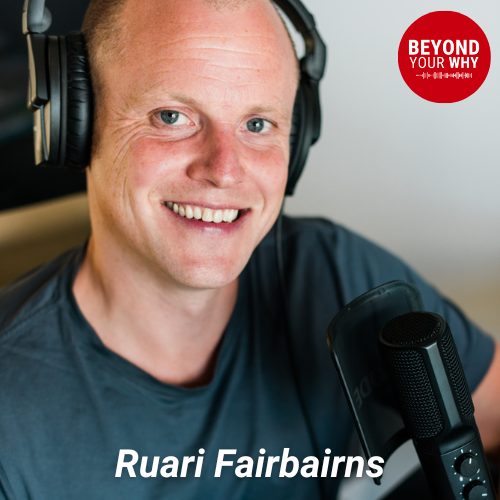
Guest: Ruari Fairbairns
WHY.os: Contribute – Simplify – Mastery

In this episode of Beyond Your WHY, Rory Fairbairns joins Dr. Gary Sanchez to talk about his personal and professional journey. Rory is the founder of One Year No Beer, an initiative that has helped thousands of people rethink their relationship with alcohol. His experience as a top oil broker in London and his own struggles with alcohol make him a powerful advocate for living a life free of unhealthy habits.

Here are three key takeaways from this episode:

  • How taking a break from alcohol can boost your energy, productivity, and happiness.
  • The surprising link between alcohol, stress, and success in high-pressure careers.
  • Why you don’t need to hit rock bottom to make positive changes in your life.

Listen now to discover how Rory made life-changing decisions that led to a healthier, happier future.

Connect with Ruari!

Instagram
LinkedIn
Facebook
oneyearnobeer.com

Watch the episode here


00:00 Introduction to the Why of Contribute
13:53 Taking a Break from Alcohol and its Impact
25:20 The Importance of Finding Meaning and Purpose
34:16 Understanding the Relationship with Alcohol
37:40 Addressing the Underlying Drivers of Compulsive Behavior
40:32 Alcohol’s Impact on Coping Mechanisms and Stress Tolerance
49:01 Shifting the Conversation: From Sobriety to Control and Reduction
52:11 The Potential to Profoundly Change Lives
56:21 Character Development and Personal Growth


Breaking Free from Alcohol: How Rory Fairbairns Found Success Without It

Rory Fairbairns didn’t just take a break from alcohol—he completely changed his life by doing it. In this episode of Beyond Your WHY with Dr. Gary Sanchez, Rory shares how ditching alcohol led to personal and professional breakthroughs he never expected. As the founder of One Year No Beer, Rory has helped thousands rethink their relationship with drinking, showing that it’s possible to succeed without a crutch like alcohol.

But here’s the kicker: Rory didn’t hit rock bottom. He didn’t lose his job, destroy relationships, or have a dramatic wake-up call. Instead, he made a conscious decision to improve his life, and it paid off in ways he couldn’t have imagined. From thriving in the competitive world of oil brokering to launching a successful global initiative, Rory’s story is a powerful reminder that you can change your life without waiting for a crisis.

The Alcohol Trap in High-Pressure Jobs

One of the standout moments in the episode is Rory’s raw honesty about how alcohol was woven into his daily routine as a top oil broker. He describes the culture of long lunches where wine flowed freely and how not drinking was almost seen as a career risk. “I believed my business would crumble if I stopped drinking,” Rory admits. But the opposite happened—his business grew by 50% after taking a break from alcohol.

This experience hits home for anyone who’s felt pressured to drink in social or work settings. Rory challenges the notion that alcohol is needed to fit in or build connections, especially in high-stress careers. Instead, he found that showing up clear-headed gave him an edge, especially when his colleagues were battling hangovers.

You Don’t Have to Hit Rock Bottom to Change

One of the most valuable lessons from Rory’s story is that you don’t need to wait for a catastrophic moment to make a change. Many people think they have to hit rock bottom before reassessing their drinking habits, but Rory is proof that’s not true. He wasn’t in a crisis when he decided to step away from alcohol; he simply wanted more out of life. “The truth is, if you’re regularly consuming alcohol, it’s already costing you,” Rory says in the episode.

This idea is crucial because it encourages people to evaluate their habits before they spiral out of control. Even a short break from alcohol can lead to massive improvements in health, relationships, and productivity. Rory emphasizes that this decision is within reach for anyone willing to get real with themselves about the role alcohol plays in their life.

Reconnecting with Purpose

Another key takeaway from the episode is how Rory’s decision to stop drinking helped him reconnect with his purpose. During the interview, Rory talks about the power of finding your “why” and how living with intention led to greater happiness and success. “I found that when I got back to my purpose, everything clicked. The noise in my head about alcohol started to fade,” he says.

For Rory, giving up alcohol wasn’t just about health—it was about aligning his life with his deeper goals. Whether you’re struggling with drinking or not, Rory’s advice on finding purpose applies to anyone looking for more meaning in their daily life. This is about more than quitting a bad habit; it’s about setting yourself up for long-term success by living in alignment with your values.

Ready to Make a Change?

Rory’s story is a reminder that we all have the power to make big changes before things fall apart. You don’t have to wait for rock bottom to step away from unhealthy habits, whether it’s drinking, stress, or anything else holding you back. The episode is packed with valuable lessons for anyone looking to improve their life, health, and relationships.

If you’re ready to explore how changing your relationship with alcohol (or any habit) can unlock new levels of success, listen to the full episode of Beyond Your WHY with Rory Fairbairns. Don’t wait for the crisis—take control now.

About Ruari Fairbairns

©SayanaCairo

OYNB is a company with a powerful mission to completely transform the relationship people have with alcohol. There’s no denying that alcohol abuse has profound negative impacts on society and the lives of individuals– it’s estimated that poor alcohol habits cost the UK economy $52 billion and the US economy $250 billion.

OYNB provides transformational programs where people can get awareness about their drinking habits, along with the support, education, and coaching they need to make a change. To date, **OYNB content has been seen by over a billion people globally** (including over a million podcast downloads), and they’ve **helped hundreds of thousands of people in 158 countries to reshape and rethink their relationship with alcohol**.

# About Ruari Fairbairns

**Ruari Fairbairns is the founder and CEO of OYNB**, a leading figure in the health and well-being space. He was awarded Great British Entrepreneur of the Year for Scotland and Northern Ireland 2020, with OYNB also being named *The Spectator’s* Economic Innovator of the Year in the UK. Known for his passionate advocacy for healthier living, Ruari has been instrumental in steering OYNB to the forefront of the alcohol-free movement, inspiring over 100,000 people worldwide to reassess their relationship with alcohol, and strive to become the best version of themselves.

Ruari’s story

Born on the Isle of Mull, Scotland, from an early age Ruari harboured a deep-seated determination to make an impactful mark on the world. He left school at 15 to start his first business, and eventually landed in London where he carved out a successful career as a senior oil broker. However, he quickly found himself immersed in a binge-drinking culture, leading him to the profound realization that alcohol was causing him more harm than good.

Taking a transformative break from alcohol, Ruari witnessed significant improvements across various aspects of his life: he became healthier, happier, more productive, and a better father and husband. Motivated by these personal improvements, he embarked on a mission to help others experience the same positive changes. In 2015, he launched One Year No Beer (OYNB), to help people reassess their relationship with alcohol. The initiative quickly went viral, attracting over 20,000 sign-ups in its inaugural year. And so OYNB was born, with its core values deeply rooted in the supportive online community established by its initial members.

Today, Ruari takes immense pride in the fact that OYNB is recognized as a leader in preventive behaviour change, with ambitious plans to diversify into numerous other behaviour-change models beyond alcohol. His previous experiences, particularly the harmful alcohol culture he encountered during his tenure in London, continually drive his work.


Anything else we should know?:

More about our main program, Complete Control:

The Complete Control program is an 8-week program designed to help high-achievers, business-owners, entrepreneurs, and top professionals change their relationship with alcohol to optimize their health, well-being, relationships, and business performance.

Categories
Podcast Uncategorized

The Power of Coaching: 7 Secrets to Creating Movement in Life and Business


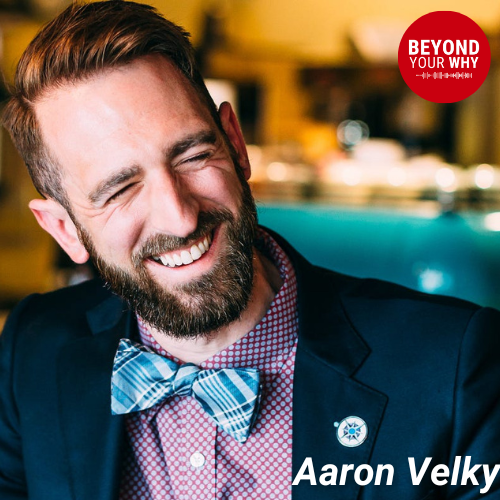
Guest: Aaron Velky
WHY.os: Better Way – Clarify – Contribute

Aaron Velky is a coach, entrepreneur, and speaker who’s all about helping people move forward. With years of experience leading both businesses and athletes, Aaron’s insights focus on creating action and overcoming fear. His unique approach to balancing life, business, and personal growth has made him a trusted voice for those looking to make real progress.

  • How to get clear on what you want by cutting out distractions
  • Why you should do things even when you’re afraid
  • The role of a coach in pushing you to grow, even when you resist

Tune in now to learn how Aaron’s practical advice can help you stop playing small and start making bold moves.

Connect with Aaron!

LinkedIn
Facebook
Instagram
getoutofyourownway.coach

Watch the episode here


00:00 Introduction to the Why of Better Way
02:08 Aaron’s Background and Early Life
05:49 Aaron’s Experience in College Soccer
09:31 Transitioning to a Dirty Job: Apartment Maintenance
12:34 Discovering a Passion for Coaching
16:53 The Importance of Perseverance and Hard Work
21:11 Taking the Next Steps: Coaching and Personal Development
24:34 Coaching and Building a Nonprofit
29:01 The Importance of Vision and Clarity
39:58 Expanding, Growing, and Shining


5 Bold Moves to Grow Faster: Lessons from Aaron Velky on the Beyond Your WHY Podcast

When it comes to business, coaching, and life in general, Aaron Velky knows what he’s talking about. As a successful entrepreneur and coach, Aaron has dedicated his career to helping others create movement—whether in sports, business, or personal growth. His approach is all about finding the right balance, overcoming fear, and refusing to play small. In this episode of the Beyond Your WHY podcast, hosted by Dr. Gary Sanchez, Aaron shares some key lessons on how to stop stalling and start making real progress.

If you’re someone who tends to hesitate or feels like you’re holding back, this episode is for you. Aaron doesn’t just talk about his wins—he dives deep into the importance of trying things, even when you’re unsure or afraid. As someone who’s built multiple businesses and coached countless individuals, he knows a thing or two about the challenges that come with growth. Let’s break down the major takeaways that can help you move forward, starting today.

Clarity Comes from Cutting Out the Noise

One of Aaron’s biggest points is that clarity isn’t about adding more ideas or options—it’s about removing the ones that aren’t aligned with your goals. We often get stuck because we feel like we’re drowning in possibilities, but according to Aaron, the real trick is knowing what not to do. “You get clear by cutting away the distractions,” Aaron says. He talks about how, in both business and life, the most successful people aren’t the ones who do it all—they’re the ones who focus on what really matters.

Take a look at your to-do list. Are there tasks on there that aren’t serving your bigger vision? If so, it’s time to cut them out and refocus. Aaron’s approach isn’t just about doing less—it’s about doing the right things, and that’s where the magic happens.

Do It Scared

Aaron shares a piece of advice that might make some of us uncomfortable, but it’s key: you’ve got to do it scared. Whether it’s taking a leap in your career, having a tough conversation, or starting a new venture, fear will always be part of the equation. But as Aaron explains, waiting until you’re fearless isn’t the answer. “If I’m scared, we do it scared. That has been my model for everything,” he says.

This mindset shift is huge for anyone who feels stuck or unsure. Instead of waiting for the perfect moment (spoiler: it doesn’t exist), Aaron encourages listeners to take action even when the fear is there. It’s in the doing that confidence builds, and before you know it, what once seemed terrifying will become just another step on your path.

Coaches Create Movement, Not Comfort

If there’s one thing Aaron is passionate about, it’s the role of a coach in helping people grow. But unlike what some may think, a coach isn’t there to make things easier—they’re there to push you. “A coach forces movement,” Aaron explains, “You can either run toward the vision, or I’ll set your chair on fire.” This quote sums up his no-nonsense approach to growth. Whether you’re working with a business coach, life coach, or fitness trainer, the goal is always movement, not comfort.

Aaron also touches on how everyone needs someone outside their inner circle who believes in them more than they believe in themselves. This outside perspective can help you see your potential and push past the limits you didn’t even realize you’d set. It’s not about feeling good all the time—it’s about making progress, even when it’s uncomfortable.

Stop Playing Small

A key theme throughout Aaron’s conversation with Gary is the importance of showing up fully in life. “Nobody benefits from you shrinking,” he says, quoting a mentor who changed his perspective on hiding his true potential. Whether you’re in a meeting, presenting to a client, or launching a business, Aaron believes that showing up confidently—without holding back—is essential.

Shrinking or playing small might feel safe, but it doesn’t help you grow. Aaron shares his own experiences of stepping into bigger roles and embracing opportunities, even when he didn’t feel ready. His advice? You’ll never feel completely ready, so stop waiting and start stepping into the bigger version of yourself today.

Action Leads to Impact—Don’t Wait for the “Right” Time

Another important takeaway from Aaron’s episode is the idea that making an impact doesn’t need to wait until you’ve “made it.” Many people hold off on pursuing bigger goals, like giving back or creating a legacy, because they think they need to hit a certain level of success first. But Aaron challenges this idea, saying, “Impact can’t wait.” He urges listeners to take action on their bigger goals now, even if it’s in small ways. The perfect time might never come, so don’t let waiting be an excuse for inaction.

Aaron Velky’s insights in this episode of Beyond Your WHY are both practical and inspiring. From pushing past fear to creating clarity by eliminating distractions, Aaron’s approach is all about action. If you’re feeling stuck, these lessons offer a straightforward way to get moving again.


About Aaron Velky

Aaron Velky is a transformational coach on a mission to help you reach the next level and create an incredible impact in the world by solving your biggest problem…

You.

He’s been through all the things that kept him from living the life he wanted: being his own worst enemy, believing his own excuses, and not having someone to hold him accountable to change.

Now, Aaron and the team at Get Out of Your Own Way coach successful entrepreneurs to a crystal-clear vision and push them to the next level of business, relationships, experiences, and health while elevating their ability to make an impact. Hang around Aaron for a while, and you’ll change from an immovable object to an unstoppable force.

His podcast was ranked in the top 2.5% of worldwide shows in the first 10 days of launch, and his retreats, coaching and company programs have helped hundreds grow beyond their wildest dreams.

Visit getoutofyourownway.coach for more info on retreats, coaching and company engagements.

Categories
Podcast Uncategorized

How to Make Sense of Networking: 7 Tips from a Pro


Guest: Mark J. Carter
WHY.os: Make Sense – Challenge – Clarify

Mark J. Carter is a networking expert, social media strategist, and podcast host who went from being an introverted high school student to a successful networker. Mark’s experiences in sales, public speaking, and coaching have shaped his approach to building meaningful relationships in business. His book, Idea Climbing, provides actionable advice on how to create and sustain a strong network.

  • Learn how to build strong relationships and get valuable referrals.
  • Discover the benefits of niche networking events over large, generic ones.
  • Find out how to use social media to grow your professional network effectively.

Listen to the episode now to hear Mark’s straightforward tips and stories that can help you connect with others and succeed in your career.

Connect with Mark!

LinkedIn
Facebook
markjcarter.com

Watch the episode here


00:00 The Power of Making Sense
03:03 From Introvert to Expert Networker
09:11 Navigating the Transition from Sales to Coaching
19:33 The Importance of Networking and Building Relationships
21:23 Harnessing the Power of Social Media for Networking
23:20 Building Relationships and Getting Referrals
27:06 Memorable Interviews and Unexpected Opportunities
29:08 Favorite Interviews and Lessons Learned


From Introvert to Networking Pro: How Mark J. Carter Turned Relationships into Success

In this episode of the Beyond Your WHY Podcast, Dr. Gary Sanchez chats with Mark J. Carter—a guy who’s cracked the code on networking, even though he started out as the shy kid in high school. Mark’s story is a relatable one, filled with twists and turns that led him from sales to coaching, and eventually to becoming a social media strategist and podcast host. But what makes Mark special isn’t just his resume—it’s how he turned building relationships into a powerful tool for success. Whether you’re a seasoned networker or someone who still breaks a sweat at the thought of small talk, Mark’s insights offer something for everyone.

Now, why should you care about what Mark has to say? For one, he’s not just another “networking guru” throwing around buzzwords. He’s a guy who’s been in the trenches, made his fair share of mistakes, and figured out what really works when it comes to connecting with people. Plus, he’s got this knack for making complex situations understandable—a skill that comes in handy whether you’re at a networking event or trying to make sense of a chaotic work project. So, grab your coffee (or whatever helps you focus), and let’s dive into the good stuff.

The Power of Making Sense

Mark’s journey has been all about making sense of the chaos around him. He’s got what Dr. Gary Sanchez calls the “Make Sense” WHY, which is all about solving problems and breaking down complex situations into something everyone can understand. This is a skill that served him well as he transitioned from sales to coaching. In Mark’s words, “You help people get unstuck and move forward by helping them solve their problems.” It’s not about being the loudest voice in the room; it’s about cutting through the noise and offering clarity. Whether you’re helping a client understand a product or trying to explain a new strategy to your team, this ability to make sense of things is a game-changer.

Building Relationships Like a Pro

Mark didn’t just wake up one day as a networking expert. It took years of trial and error, but he eventually figured out that the key to successful networking isn’t about how many business cards you can collect—it’s about building real, meaningful relationships. (https://statswork.com) He talks about how niche networking events can be more valuable than large, generic ones because they allow you to connect with people who share your interests and goals. “At the end of the day, it was all about building relationships, getting referrals, and then it eventually started to be, then it became getting into the events,” Mark says. It’s a reminder that the quality of your connections often matters more than the quantity.

Social Media: Your Networking Secret Weapon

In today’s world, if you’re not leveraging social media for networking, you’re missing out on a huge opportunity. Mark emphasizes how powerful these platforms can be for expanding your professional network. But it’s not just about blasting out posts and hoping for the best. Mark’s approach is more strategic—he’s all about using social media to build relationships and get referrals. He shares tips on how to engage with your audience in a way that’s authentic and valuable. “I got good at getting right to the point of, okay, I need one actionable idea from every interview I go into,” he explains. This focus on value-driven content is what sets successful networkers apart from those just going through the motions.

Mark J. Carter’s story is a testament to the power of making sense of things, building meaningful relationships, and using the tools at your disposal—like social media—to create success. His journey from introvert to networking pro is proof that you don’t have to be born with a “networking gene” to make it in this world. Instead, it’s about understanding your WHY, focusing on the relationships that matter, and continually learning from each experience.

So, if you’re looking to improve your networking skills or just want to hear some solid advice from someone who’s been there, done that, this episode is a must-listen. Head over to the podcast to catch the full conversation and start applying these insights to your own life. Your network—and your career—will thank you.

About Mark J. Carter

Mark has always been curious about how successful people got where they are in life. He has been interviewing successful people for 25 years, posting interviews online for 12 of those years. Each interview is a “how to” interview which means as a viewer/reader/listener you get actionable advice about how to grow personally and professionally.

Mark’s other projects include events and marketing initiatives. He has collaborated with TED’s founder Richard Saul Wurman to create a world-class conference and helped with branding for the world’s largest chapter of Meeting Professionals International (MPI). He has launched book tours and events for New York Times best-selling business authors, helping them share their big ideas with the world. Mark still enjoys interviewing people and posts many of the interviews on his YouTube station https://www.youtube.com/@markjcarter, his Idea Climbing podcast and Idea Climbing internet radio show.

Mark also serves as a podcast host for B2B organizations for entrepreneurs.

Mark’s interviews culminated in his recent book, “Idea Climbing: How to Create a Support System for Your Next Big Idea” www.IdeaClimbingBook.com

Categories
Podcast Uncategorized

10 Steps to Simplify Your Success: Insights from JM Ryerson


Guest: JM Ryerson
WHY.os: Simplify – Challenge – Trust

JM Ryerson is a business coach and author known for his focus on simplifying success. Growing up in Montana, he learned the power of keeping things straightforward. In this episode, he shares his insights on how simplicity can lead to greater success in both personal and professional life.

  • Learn why simplifying your approach can lead to big wins.
  • Discover the importance of being authentic and vulnerable.
  • Find out how daily acts of kindness can build strong relationships.

Listen to the episode now and start simplifying your path to success!

Connect with JM!

LinkedIn
Instagram
letsgowin.com

Watch the episode here


02:15 – Simplifying for Success
05:30 – Early Influences
08:45 – Embrace Vulnerability
12:20 – Daily Acts of Kindness
16:10 – Growth Mindset
20:25 – Small Business Focus
24:50 – Importance of Values Alignment
28:35 – Coaching Approach
33:00 – Overcoming Adversity
37:15 – Books and Resources


Simplify Your Success: Insights from JM Ryerson on the Beyond Your WHY Podcast

Ever feel like life’s way more complicated than it needs to be? Like you’re juggling too many balls and somehow, none of them are staying up? If so, you’re in for a treat. On the latest episode of the Beyond Your WHY Podcast, Dr. Gary Sanchez sits down with JM Ryerson, a business coach and author who’s all about cutting the fluff and keeping it simple.

JM Ryerson isn’t just another business coach; he’s a guy who believes that simplicity is the key to success. Growing up in Montana, he learned early on that keeping things straightforward can lead to big wins. Now, he’s sharing these insights with the world, helping people and businesses thrive by focusing on what truly matters.

What You’ll Learn from This Episode

  • Simplicity Leads to Success: JM Ryerson breaks down how simplifying your approach in life and business can lead to big results.
  • The Power of Vulnerability: Learn why being your true self can create stronger connections and better leadership.
  • Daily Acts of Kindness: Discover how small gestures of appreciation can build meaningful relationships.

Keeping It Simple for Big Wins

JM Ryerson’s main message is clear: simplicity is powerful. He believes that by breaking down complex tasks into manageable steps, you can achieve greater success without feeling overwhelmed. Whether it’s in your personal life or your business, keeping things simple helps you stay focused and effective.

Embracing Vulnerability

One of the standout moments in the episode is when JM Ryerson talks about the importance of vulnerability. He suggests that leaders who show their true selves, flaws and all, build stronger connections with their teams and clients. This authenticity isn’t just good for relationships; it’s good for business too.

The Magic of Daily Acts of Kindness

Ryerson shares a simple yet powerful practice: sending three messages of appreciation every day. These small acts of kindness, done without expecting anything in return, can have a huge impact on your relationships and overall well-being.

In our busy lives, we often forget the power of small gestures. By consistently showing appreciation, you can build a network of strong, supportive relationships.

JM Ryerson’s insights on simplicity, vulnerability, and kindness offer a refreshing perspective on success. Whether you’re a business owner, a leader, or someone just trying to make life a bit less hectic, this episode has something valuable for you.

Ready to simplify your path to success? Listen to the full episode of the Beyond Your WHY Podcast with Dr. Gary Sanchez and JM Ryerson now. You won’t want to miss these game-changing insights.

About JM Ryerson

JM Ryerson, a successful entrepreneur and leadership coach, has founded and sold three businesses. With over 20 years of experience in business and sales leadership, he now helps leaders and teams achieve peak performance through coaching, speaking, and writing. As CEO of Let’s Go Win, he’s dedicated to fostering leadership, enhancing culture, and inspiring personal growth.