Categories
Podcast

Finding A Better Way: Joe Maez Discusses Leadership, Mentoring And Mindset For Success

BYW S4 7 | Better Way

Finding a better way is what drives human success. To be able to find a better way, we need leadership, mentoring and the right mindset. In this episode, Dr. Gary Sanchez sits down for an insightful discussion with Joe Maez, real estate agent and founder of The Maez Group. Joe is an armed forces combat veteran who has leveraged the training, mindset and mentoring of many to get to where he is today, despite coming from a challenged community. Learn great insights from Joe and Dr. Sanchez by tuning in to this episode.

Watch the episode here:

Listen to the podcast here:

Finding A Better Way: Joe Maez Discusses Leadership, Mentoring And Mindset For Success

Welcome to the show, where we go beyond just talking about your why and actually helping you discover and live your why. If you’re a regular reader, you know that every week, we talk about one of the nine why’s and then bring on somebody with that why so you can see how their why has played out in their life. In this episode, we’re going to be talking about the why of a better way.

If this is your why, then you are the ultimate innovator. You are constantly seeking better ways to do everything. You find yourself wanting to improve virtually anything by finding a way to make it better. You also desire to share your improvement with the world. You constantly ask yourself questions like “What if we tried this differently? What if we did this another way? How can we make this better?”

You contribute to the world with better processes and systems while operating under the motto, “I’m often pleased but never satisfied.” You were excellent at associating, which means that you are adept at taking ideas or systems from one industry or discipline and applying them to another always with the ultimate goal of improving something.

I’ve got a great guest for you. His name is Joseph Maez. He was born and raised in Northern New Mexico. Joe is not afraid to go the extra mile. He’s a graduate of UNM Anderson School of Management, a US Army combat veteran and the first New Mexico broker on record to close over 100 million in residential real estate in a single year.

He’s recognized as being amongst the leading real estate professionals in the country selling thousands of homes in Albuquerque and Rio Rancho metro areas. Armed with a unique and extensive knowledge of local markets coupled with unparalleled marketing and negotiation skills and discipline, Joe brings a true passion to every real estate transaction. Joe is a sales coach and consultant to many public and private companies. Joe, welcome to the show.

[bctt tweet=”It’s not about what you say. It’s about what you do. People can say things, but it’s about what they do that is worth more.” username=”whyinstitute”]

Thanks for having me, Gary.

This is going to be fun. I’m looking forward to this. Tell everybody a little bit about your background. Take us back to where were you born? When you went to UNM, how did you get into the military and then how did you get into real estate? Let’s go down that path.

I was born in Española, New Mexico, a little Northern New Mexico town up in Rio Arriba County. I went to school in Cuba, New Mexico, until I was in third grade. At that point, my father got a job up in Chama, so he moved us up to Abiquiu. That’s pretty much where I grew up. My graduating class was eighteen people, Gary, in Coronado High School.

Most people reading this will not know what Española is like, what kind of reputation it has and what it is known for. Give people a sense of where that is and what that is like.

To me, it’s a beautiful place. It doesn’t have the best of reputations. It was known as being the low rider capital of the world and the heroin capital of the world which we’re trying to change. There’s a lot of amazing people that come out of the Española Valley area. It’s a beautiful country, too. For people that are reading that never experienced it, it’s a challenging location. It’s a challenging community. More specifically, where I graduated from was a place called Gallina, New Mexico, which is where the Coronado Leopards are. It was a consolidated school.

I rode the bus for 45 minutes in the morning to get to school. It was neat because I took my daughter on a little trip and I hadn’t been back to that school in twenty years. The campus gates happened to be open on a Sunday afternoon and I took my daughter through there. I said, “That’s where your daddy went to school.” She’s like, “No way.” My kids are going to some great schools. I want them to go to school where it’s cool to be smart because when I was growing up, it wasn’t cool to be smart. MPC had to do things a little bit differently. I graduated from that school.

I did the delayed entry program for the Army Reserves. Both my grandfathers are Vietnam veterans. I always wanted to be like those guys. Those are my gold standard. That’s what a man should be. Just studying what you’re studying and doing what you’re doing. A lot of things are learned. We want to be like the people before us. I have great mentors. I was the only person from my generation to go and join the military. As soon as I possibly could, I even told my recruiter, “I was laid down.” Normally people just hold out for a bonus or something like that, but I joined up right away.

BYW S4 7 | Better Way
Better Way: Going to war is super humbling because you never realize how good you have it until you don’t have it.


I was a combat engineer. The good thing that my parents did is they always programmed us. They said, “You’re going to college.” That was awesome. My first major was sports medicine because I was super into sports and always liked to run, lift weights and do all that stuff. We didn’t have enough kids for the football team at the school that I went to, so that was a bummer. If you’re going to play basketball, you have to run fast. You had to be faster than everybody else, which helps me out in my industry right now. You have to be faster than everybody else.

You got to be resourceful.

I joined the Reserves and then I got a business degree. When I was going to college, mom and dad said, “You got to go to college.” I was going to NMSU down at New Mexico State and then one day I woke up, I said, “What’s going on with you?” I used to sell my artwork in the old town. I did stuff for the Spanish market when I was growing up. My father-in-law taught me how to carve crosses in Spanish colonial furniture and things like that.

One day, I was like, “I’m not going to be in people’s feet for the rest of my life,” and then I said, “I’m going to business school.” I left NMSU and went back to Anderson because I have a strong business school and that was that. Halfway through my graduating semester, I was deployed to Iraq with the 101st Airborne Division. That was in 2003 when we invaded Iraq. That was an eye-opener.

Both my grandfathers were war vets. My dad’s a war vet. This was part of me going into that role. When you’re in your twenties, you don’t think that war is a bad thing. As sick as it sounds, you’re excited to go to war. When you get around that in my life, there’s not a lot of good that comes from war but I can tell you that great experience came to me from war.

Going to war is humbling because you never realize how good you have it until you don’t have it. That’s always been a saying. Sometimes people get tired and they don’t know what that means until they experience it. Even going to school, certain relationships that you’ve had, advice that your father or your mother and advice that mentors gave you, a lot of times, we take that for granted. Taking running water for granted and taking a shower in cold water or things like that. What was supposed to be a four-month deployment turned into thirteen months, so that changes your perspective on life.

What was that like?

Nobody ever likes to admit their shortcomings but I was the kid growing up that going to college was checking the box for me because if you didn’t go to college in our family, everybody gave you the guilt trip because all our fathers and mothers had done it. My grandmother was the first valedictorian in the family line, which was great to move the needle forward. I didn’t even buy books in college. I just went, listened, and passed every test with A’s, B’s, and the occasional C.

When I got back from Iraq, I got straight A’s because, unfortunately, Anderson didn’t give me any credit, not even a partial credit, but it was fine. I got down into it. I finished off when I graduated with straight As in my last semester, which never happened. I was in the books and I was reading, and I was like, “I’ll never take education for granted like that,” or opportunities for that matter. That was neat. I needed that.

[bctt tweet=”10% of what you’re going to learn is in the classroom. The other 10% is reading in a book, but 80% is actually rolling up your sleeves and doing it.” username=”whyinstitute”]

Going to war for me was an eye-opener. I was a hell of a soldier. When you’re in your twenties, that’s a great time to be a soldier when you don’t need to have any kids or worry back at home. In my 40s, I’d probably be a different soldier than when I was then because I was one of the youngest NCOs, which is a Non-Commissioned Officer. I got out as an E-6 after eight years of being in which I was always a fast tracker. I always max my PT test and all the educational stuff. I was good at it. I always excelled.

I had soldiers that reported to me that were twice my age which was another learning lesson because I didn’t have enough miles to empathize with them about what was going on back at home because it was hard for some of these guys to be far away from their families. I couldn’t empathize. It takes time to get that kind of experience.

Now, I’m a pretty decent communicator because people always say, “You’re only 40 years old,” and I’ll tell them, “I’m 40 years old, but I got a lot of miles on me.” Sometimes I feel like Forrest Gump because there are many things. Forty is young and I still had a lot of life experience. When I was coming back from Iraq, my wife started looking for homes for us because where I come from, everybody does.

That’s the way a lot of people think about things. They say, “This is the path of life that people need to take.” It’s like, “You go to school, then you go to college. After you go to college, you get a job. You worked that job for as long as it takes to retire. You contribute to whatever your retirement account it is. When you retire, you get a hobby.” The way that you throw and get married, have kids and buy a house. There are these paint-by-numbers things for your life and that’s all learned.

When I came back from Iraq, I told my wife, “I had some good money saved because number one, when I was there, there wasn’t anywhere to spend that money.” These poor guys come back in debt because they have access to the internet. I did not touch that money, so I had a pretty good amount of money saved when I came back. I said, “Time to check that box and buy a house.”

Rosie started looking around for a house and then when I finally was able to talk to her when I came back into town, she’s like, “You would be a good real estate agent.” I said, “What’s a real estate agent?” She’s like, “They help people find houses. They make a lot of money, too.” I was like, “I like money.” At that time, I was bartending at my family’s bar in college and I did pretty good bartending.

Bartending is listening to people and making sure their drinks are full. They’re not waiting on you for that matter. Being a good listening ear but also remembering them, knowing what they like when they show back up again. I was a great bartender. She said, “You love helping and listening to people.” I said, “Real estate. How’s that work?” She said, “It’s a 100% commission paid.” Where I come from, you get a paycheck on the 1st and the 15th. I said, “I will listen.”

I went to career night with her and I listened to the guys that were putting on the career night. They are super awesome guys. They totally put on a good show and sold me on it, but when they told me 100% commission paid, I still had those limiting beliefs in my mind about, “Could I do it?” We both agreed that we’re going to get our licenses. Rosie got her license and went with the brokerage here in town.

At that time, Pulte Homes was doing a lot of college recruiting. They’re on campus and it was in real estate. They advertise a $55,000 a year salary with benefits. I was like, “Great. There’s the security.” I went with it. I interviewed and I got the job. It was a fun process. There’s a lot of time we probably don’t have to talk about that but it was neat. My military service got me in the door there. I would have never gotten in the door if I didn’t have my degree because they’re only looking for college grads.

BYW S4 7 | Better Way
Better Way: When any company rolls out a CRM, they lose so many people because people just don’t like change.


Number two, it was when war veterans were coming back from Iraq. I was one of the first people to come back and that was exciting. They hired me pretty quickly, which was great. I started with this company and it was awesome. Their sales training program was phenomenal. I didn’t know that at the time but my mentor’s name is Brian Fink and he used to tell me, “If you want, I’ll give you extra training. Meet me in my office at 5:00 AM.” He offered that to the whole sales staff. I was one of the only ones that showed up and he took a major liking to me.

Before that, this is where I got recognized. The company had rolled out a CRM. It was a national initiative. Pulte is a Fortune 147 company. You know how that is, Gary. We’re both better way guys. Sometimes when any company rolls out a CRM, you lose so many people because people don’t like change. I’m like, “Give me change. I love change.” That’s what I realized about myself. I’m an intern at this time. I’m low on the totem pole, which is great. I’m learning.

All of a sudden, corporate flies into town. Nobody even knows who I am. They said, “We’re looking for a Joseph Maez.” That’s before I started going by Joe. I remember my VP’s assistant was like, “That’s our young guy. He’s working down in the South Valley.” My VP says, “If he did something wrong, we could assure you he’s new,” or whatever. They said, “No. He’s the number one user of SalesLogix in the country. We want to talk to him because we noticed the sales in his community have gone through the roof.”

This was a platform at that time in 2004, 2005. That was the first year I started to see mass emails and things like that were going out. I was using it because I had to network with the brokers in the community. The rest was history, Gary. I used that system and then they had me teach it. For seven years, I was with Pulte. In my last two years with that company, I was the number one salesperson in the entire nation, which was awesome. It all came with great training. Pulte had an amazing training program.

Ryan did a good job of investing in me and he’s an integral part and mentor. He was inspirational to me. I’ll go cool stuff development-wise, so I learned a lot about construction and finance. There’s so much that goes into it. It was like a Master’s degree in real estate. Towards the end, they started laying off people. Pulte changed in general because it was in the downturn. A lot of the people that I looked up to were getting cut and let go for the right reasons. The company could not sustain that type of overhead anymore.

To me, I’ve never seen anything like that so it was hard for me to take even though I was a great revenue generator. At that point, I was untouchable. You got a 25, 26-year-old guy making $500,000 a year. It was amazing. I was at the top of my game. My wife was on the resale side and I’m on the new construction side. We’re doing great.

My little boy was two at the time and Rosie was pregnant with our little girl and then this lady came into town. She was from Pulte corporate. After they started laying off the executives, they came to depend on me. I knew I wasn’t going to get touched because I was a revenue generator. The last person you’re going to touch is the revenue generator.

When she came to town, she’s like, “You’re Joe Maez?” I said, “Yes.” She’s like, “I hear you get whatever you want around here.” I was like, “Where’s this coming from?” She said, “Starting next year, we’re going to cut your commission. The reason we’re going to do that is because we know you’re used to making a certain amount of money and you’ll work harder to make that same amount of money.” I was like, “It’s the cold-blooded killer.”

[bctt tweet=”Nothing replaces experience. You have to have good quality experience. You have to get somebody to mentor you.” username=”whyinstitute”]

She was hired to do that. She’s honestly one of the best things that ever happened to me because I had been toying about going out on my own for a couple of years at that point but I didn’t do it. I have second-level limiting beliefs. I knew I could do it. A lot of agents and marquee brokers in town were like, “Joe, you got to make people just come to you.”

I didn’t have anything to do with the sale. I was an order taker. I’m listening to that and I’m like, “All this stuff is adding up,” but I knew I was an X-factor. I always make things happen. It’s funny when I was younger, I never thought algebra would come in handy. I solve for X every day. I’m always solving for X, whether it’s figuring out a problem or finding out a better way to do things.

At this point, I’m on the top of my career. One day, I was at a company picnic and our new division president was there. He and I got along well. Six months had passed since that lady had that conversation with me and I’m forever grateful for her. She said, “What’s going on, Joe?” I said, “I’ve never done this before. I’m going to give you guys my two weeks.” I don’t have anything lined up, Gary. He’s like, “What is it? Is it about that conversation you had with someone?” I said, “No, it’s not that.”

In fact, I’m glad that happened because this company is amazing. Up to this day, it is one of the best companies out there because they always stood behind its product. It didn’t matter how much it costs. They always warrantied stuff. It’s seriously a great place to learn. I got to prove to myself that I’m not what they say, that I’m not just an order taker out there. They’re like, “If you ever want to come back, the door’s always open.” I appreciate that but I told them that I wouldn’t be back.

In my first year, I went to the same brokerage that my wife was with because the owners and I are good friends. Out of 550 brokers, I’ve placed number four in my first year. That was awesome. I knew I always wanted to be number one. Meaning, top in units and volume. The only way I could do that was by having a team because I was doing it all by myself.

At this point, my wife was taking care of the kids and taking care of me full-time, which is a hard job and taking care of our household. I would not want that job. Supporting us is the hardest job in the Maez family. That was good that she got to stay at home and she got to do all that. Here, I hit the ground. At this point, I started shopping for companies that I could have a team. They had teams here in Albuquerque, but they weren’t a real team. I would kill myself from stress and exhaustion if I was going to work as hard as I was my first year in residential resale.

I looked at RE/MAX and Keller Williams. I went with Keller Williams because they have a great philosophy in how they approach doing business with people, win-win or no deal, which I love. It’s got to be a win-win. By the way, financially, it made a lot of sense from a team perspective. That way, my team members can make decent money as well because I can’t be making all the money. We did that and grew that company. Keller Williams blew up. That was when I broke the $100 million mark and took the number one spot in Albuquerque. It’s been a documented thing for years.

A few years ago, I left Keller Williams and said, “At this point, the buck stops with me.” I started The Maez Group. We closed $149 million in production for 425 units, which is my all-time best. It’s a small brokerage. We have about eight brokers here. Most of them are new, so I specialize in training newer agents. The only difference was when I was with Keller Williams, I would lose my experienced brokers to the company. You got to get it. People want to make more money. Who am I to tell a broker that’s been with me for a certain amount of time like, “I can’t give you a raise.”

BYW S4 7 | Better Way
Better Way: Never take education for granted, or opportunities for that matter.


The Maez Group is like the boot camp for newer brokers and if they want to stay long term, they can. The Maez Group is a training ground. It’s where you learn how the real world in real estate works. Everybody has all these cool classes but the real world is a real world. What I provide is real-world experience. There’s a separate brokerage that I own which is called AI, which stands for All In.

These are people that are all-in. They’re not doing this. They’re not doing that. They don’t have one foot over here. They don’t have one foot there. They’re all-in in real estate and they’ve been vetted by me. They’ve been trained by me. They have no criminal record. These are people that you can trust in your home with your family and stuff like that. That’s a new launch.

There’s OP which stands for On Purpose. OP is for people that went through The Maez Group and couldn’t do AI because it’s a lot of work. Now they realize that real estate isn’t as easy as everybody says it is. They worked hard for their license and they still have a lot of contacts. Through OP, they don’t have to be members of the board of realtors with all the fees, but they can refer people to The Maez Group and they can get paid a referral fee on that.

It’s like a triangle of companies. I own a title company as well called Signature Title and it’s been years since we’ve opened it. It’s super successful. It’s doing good business. It’s great. That’s where we’re at. I have an amazing staff. We discovered our why’s with you, but as a better way person, it’s nice to see that because The Maez Group does what it does because we did find a better way.

A little flashback that I had when Gary was when my mentor was around telling him, “We’d sell away more houses if we had somebody to do our paperwork. It seems like every time I’m writing up a contract in the sales office, somebody is coming in wanting to buy, but I’m face to face with somebody writing him up on a deal.” He’s like, “When you’re the boss one day, you could do things how you want to do.” I said, “Noted.”

Now, you do.

My salespeople do not write their own purchase agreements. We have an experienced contract writer that writes all of our contracts. My claim to fame is over 3,000 transactions, Gary, and I’ve never been in a courtroom. The money is great, but having a great reputation is even better. If an attorney would go and say, “You have a pattern of behavior,” the pattern of behavior would be a success and doing things right. Also, creating a business model that people know that when they’re doing business with us, it’s getting done right. We spend money on the processes to make sure that they don’t have to worry about. That’s why people hire brokers to give themselves some insulation from liability.

Question for you then, you said that you’re the guy that makes things happen, what do you attribute to your ability to make things happen?

A lot of that is a combination of a lot of things. Number one, my mom. I’d always say, “I can’t do that.” She would quickly say, “You can and you will.” That was instilled in us at such a young age. My parents were always the candid type of people. In the military, I remember it’s been ingrained in you over time. One of the things that I always would remember was no excuse. If a drill sergeant or a higher up came up to you and say, “What’s this all about?” I’d say, “No excuse and we’d fix it.” We never make excuses and we always would complete the mission. Thinking back, we never had a failed mission because we always never gave up. Looking at things differently, there’s a lot of tenacity that goes into it and the can and the mindset.

[bctt tweet=”Enjoy the process of learning and learn well, because if you skip a step, you might not be able to survive if something really serious.” username=”whyinstitute”]

One of my favorite sayings was by Henry Ford, “Whether you believe you can or you can’t, you’re right.” That is a huge mindset. There were things that we’ve done here that everybody said, “You can never do that,” but we did it. It’s a mindset that if we know that we can do things, we can get it done. That’s the answer to your question. It’s a mindset more than anything.

When you work with new brokers, what are some of the things that you work with them on so that they can get over these fears? There’s a lot of fear jumping into a commission-only kind of situation.

I learned from these guys, too. I’m a mentor and I’ve mentored some great people in fact, but they mentored me, too. They didn’t even know it but they’ve been helping me out as well. I’m putting myself in their shoes. One thing that I know that we do differently is a real-life experience. I’m an audiobook type of guy, so this show is great. I’ve listened to some of the podcasts and it’s great for a guy like me because I’m not a pick-up-a-book-and-read type of guy.

One of the things I listened to in a book was, “10% of what you’re going to learn is in the classroom. The other 10% is reading in a book, but the 80% is rolling up your sleeves and doing it.” That’s the approach that I love for the newer agents. For me, it’s maybe not the best analogy, but as a wolf would teach the pups how to hunt, that’s how I teach people how to do things. It’s roll with me. We do it, they do it, so do it. If you’re watching me do it, you’re going to be way more comfortable than if you read it in a book or some guy that was teaching in class that’s never even done it. He’s just qualified to do teach the class. This is a real-world experience.

When any of my brokers come out of my camp, if they give me two years, I would put them up against any seasoned broker out there, just from how to get things done. They’re hearing that a seller calls me upset about a low offer or me negotiating that. They hear firsthand the negotiations on offer and how you get the highest price for a seller. They hear firsthand deals are going to miss closing and both the buyer and seller have scheduled moving trucks and everybody’s up in arms about that.

That’s a real-life experience you will not learn in a book or any class by somebody that’s teaching a class that’s probably not even qualified to teach a class. This is real-world stuff, so they’re seeing it for real. You’d be surprised, Gary, some agents will never sell a house because they don’t know how to write the contract. They’ve never made a single contract but once they’ve made that first contract, it’s all good. Now, they did it.

It’s almost like rites of passage. It’s like, “I’ve done that. I’m not afraid of it anymore.” Like a lot of things in our life. The first time somebody skydives, they’re probably freaked out. The second time, probably not so much. If they come back, then they’re probably not afraid of it. It’s the same deal. What I do is get people past that threshold sooner.

I remember there was a broker that I used to see in the office all the time when I was back at Keller Williams. I always remember these stories. Keller Williams is one of the best training companies there is. They do a lot of classroom training. She was going to those classes. I have probably been there for about eight months. I saw her in the hallway and said, “You sold anything yet?” She says, “No, I haven’t sold anything yet.” I said, “I’m going on a listing appointment. Come with me.”

She jumped in the car with me and she watched me list the house. When I was driving back with her to the office, I got a call from one of my buyers. There was a house that we emailed them because we have automatic trips and they wanted to see it. I said, “I’ll have one of my brokers open the house for you.” I said, “You’re going to go open the house and after you go open the house, we’re going to write it up.” She said, “Really?” I said, “Yup.”

BYW S4 7 | Better Way
Better Way: If you think it’s expensive to hire a professional, try hiring an amateur.


That was her first transaction. I said, “Have the buyers call me from the house.” They called me from the house. I ran payments with them over the phone. I told them about how the process works. She’s listening and watching it. It’s probably something that she had been in those classes for sixteen months and never even experienced. I had her write up the deal for me. I showed her how to write up the deal. She’s not on my team, but she’s a producing broker out in society right now. I know that was the spark that lit the flame. That’s what I do.

The other thing about me is that I’m a man of abundance. I never think about, “That’s my competition,” because it’s not. There’s so much business, Gary. For me, I noticed that it changed her life. It changed my life, too because it reinforced my beliefs that I love helping people. As Rosie said years ago, “You’d be a good real estate agent. You like helping people.” Why would I be good at anything? Because I love helping people.

What was the spark that set you from the guy who didn’t know anything to off and running?

This is going to sound pretty weird, but I grew up doing hard labor and doing stuff where I was even thinking back about my military careers. I was an NCO, but I had all the credits to be an officer. I always did things the hard way. When I realized how much I could do and what a living I could make with using this, that’s where things took off. It was a dream come true. A lot of people will say, “Joe got lucky.” I got lucky to find my niche and my niche is I can take things that are in bad shape and I can make them shine.

One of the hardest things for me, Gary was when I reached what I felt was the pinnacle of my career. A lot of people will probably never reach that spot but I was fortunate to reach it. It’s a breaking point. I don’t know if you can identify with this. I’m pretty sure you can because you’re a winner. I reached a point where I’m like, “I’m the number one guy. I’m selling all this stuff. I’m selling all these houses,” and then you’re like, “I’ve climbed to the top of this mountain. Now what?”

It seemed like I’ve always been in the military, I climbed that mountain. I did that. I went to Pulte, I climbed that mountain. I was done there. It seems like a seven-year cycle. It’s eight years in the military and 7 or 8 years in new home sales. Now I’m at this 7 and 8-year mark in residential resale and I’m at the top of my game, and then you started thinking, “What now?” It’s like the Rocky series. He was like, “Now, what?”

I took a year off and I let the company do its own thing. It still did well, but I realized how much I missed the interaction of being with people. It’s crazy but saving people’s lives. When you sell sometimes, there are situations where you’re saving somebody’s life in this. I’m able to help people in situations where I know another broker might not be able to do it.

For instance, I got a deal that’s closing. We sold their house. Everybody sees my sales and they see this one that’s sold for $2.7 million. They see all these big deals that close, but we sell everything. This house that I am selling on the outskirts of Los Lunas is a $149,000 property. We get it under contract and the seller doesn’t have the money to make all the repairs that have come upon this house. They’re already under contract in another property, so they have to close.

[bctt tweet=”Sales is not a bad word. Sales is helping people. It’s getting people to decide on something that’s good for them.” username=”whyinstitute”]

There’s the foundation on this mobile home that needs repairs but they don’t have it. There’s the septic that failed on this house and needs to be replaced but they don’t have the money. The neighbor next door has been living in this house and four people are using this well. The neighbor refuses to sign a Shared Well Agreement, even though these people have been living there for eight years and they’ve been paying the electricity down as well. She won’t sign a Shared Well Agreement. The buyer’s lender will not sell that property unless there’s a Shared Well Agreement or they have their own well.

Guess who drilled the well? I drilled the well for $20,000. I replaced the septic for $55,000 and I did the foundation for probably about $1,500. I don’t have to tell you but the commissionable event in that was maybe $5,100, but I can’t. They have enough proceeds coming out of the sale to where they signed something saying they’ll pay me back at closing. I’m able to do that. I know I can get it done. It’s neat to be in a position like that where you can bridge the gap. There was like, “How did you sell 425 homes?” I found a way to get it done because I’ve been fortunate to be good at what I’m doing. I’m able to help way more people because I’m able to bridge the gap.

There’s a lot of great real estate agents out there and we both know a lot of them. What is it that makes you good? What is the mindset? What is that X factor? What is that thing that somebody who’s reading to this who are thinking, “I’m considering getting into real estate. I am in real estate and I’m trying to figure out how do I go from beginner to expert? How do I go from survival to abundance?” What is it?

The answer to that for me is nothing replaces experience. You have to have a good quality experience. You have to get a great mentor, somebody to mentor you. It’s crazy to see real estate agents coming out and they get into it because they say, “There’s this guy and he’s got this and he’s got that. He doesn’t even speak good English.” The truth is if I can do it, they can do it. What they’re missing is the years of failure that come in there and learning the hard way, too.

When I mentor people, my goal is to save them like my dad and my mom used to give me all this great advice that I never took. My goal is that I get them to take my advice and save them some steps that I had to take that they shouldn’t have to take. That’s where it’s at. It’s been mentored. There are many agents coming into any industry. I know that when you’re a dentist, you don’t just start working on people’s teeth. It took time. You had to watch somebody that had crazy experience perform things and that made you a better person.

There are people in this industry and I have my qualms with this industry because number one, they just let anybody get into it, which is sad. If you think it’s expensive to hire a professional, try hiring an amateur. A lot of people don’t realize that until they have to call me up. They’ve spent double or whatever.

Electricians have an apprentice and journeyman program. That’s what people need to do. They need not to cheat the system. I mentor young ones at a couple of colleges in the summer. They said, “What’s the biggest piece of advice you can give to somebody younger like me?” I said, “Enjoy the process of learning and learn well because if you skip a step, you might not be able to survive something serious.”

I deal with millions of dollars of production. What happens if you make a mistake? Are you able to make it right? If you’re a true professional, you have to be able to make it right. That’s why to work with a true professional costs money, but a true professional should pay for themselves. I always tell myself, “You want to get to the point where your experiences were so much that when people hire me, it’s almost like getting me for free because I pay for myself during the transaction.” From the advice that I’m able to give people. I always say it’s experience.

BYW S4 7 | Better Way
Better Way: It’s not just about the real estate process. It’s about knowing your product too.


I have an autographed picture here in my office of Nolan Ryan and Robin Ventura. Nolan Ryan has Robin Ventura in a headlock. I have a signed copy of that picture right here. I have it in my office for a reason and I named that picture, Experience, because Nolan Ryan was at the end of his career and probably one of the best pitchers of all time. He’s a Hall of Famer. There’s this young guy who steps up to the plate. Robin Ventura was a pretty big guy and a hotshot back then and Nolan beat him.

Nobody knew that Robin was going to charge. Robin acts like he’s taking the basics and watching them on YouTube and all that stuff, and then halfway, he decides he wants to charge Nolan. Everybody thinks, “Nolan wasn’t afraid.” “You’re talking about a veteran pitcher. Do you think he’s been charged before?” “Maybe once or twice.” He walked towards Robin Ventura and not one bit of fright, he went for it. What that all went down to me was an experience. The man had been in his fair share of scraps. He knew how it was going to turn out. He knew how to handle the situation. That’s what happened but he couldn’t have done that.

Having your mentor when you first started, how much of a benefit was that

It was a huge benefit. I didn’t know that at the time because I was young. You don’t have to be young. I’m talking about being young in the profession. When you’re learning a new trade, so to speak, you don’t know it at the time but you realize later down the road how valuable certain mentors were. My mentor, Brian, taught me the critical path of sales and we never skipped a step. I have my way of doing things right now but my way couldn’t have been my way without his way. Everything from how you greet somebody to how you get a commitment.

Sales is not a bad word. To me, sales are helping people. It’s getting people to decide on something good for them, not what’s good for me. I approached sales in a way that I’m helping somebody and I’m solving a problem. He went a lot deeper. A lot of real estate brokers help people find houses. He taught me how to know money well. Knowing the mortgage side, knowing the different programs and being knowledgeable about all the ways.

If somebody’s a doctor, a lot of people don’t know that there are zero-down programs for physicians with no mortgage insurance. They’ll say, “Call this lender and get back to me.” I’m like, “Nobody’s ever going to call that thing.” They’re almost afraid of going to a lender as much as they’re afraid of going to the dentist. That’s the reality. That’s human psychology and human nature. I always knew the money side. He taught me the value of learning the money side. It’s not just about the real estate process. It’s about knowing your product, too. That’s where the construction knowledge came into play. How does that work?

I remember one of the first things when I was selling houses in the southwest, a guy came in and he was on Sandi Pressley’s team. He was the buyer’s agent for Sandi Pressley, Arny Katz. He is one of the better buyer brokers out there and I’m brand new. I’m the new kid on the block. Arny wants to show his client a spec on a standing piece of inventory out there and the guy comes in and said, “What kind of roof is this?” This was years ago. I said, “I don’t know but I’ll get that answer for you.” He says, “What kind of windows are these?” “I don’t know but I’ll get that answer for you.” “What kind of air conditioning is this?” “I don’t know.” “What the hell do you know?” “I don’t know but I’ll get that answer for you.”

[bctt tweet=”The cheap way of doing things ends up costing you the most. You get what you pay for. Never go to the lowest bidder.” username=”whyinstitute”]

That was one of those defining moments in my life where I said, “I will never be in that position again.” I pulled Antonio, who was our project manager at the time out there. I said, “Antonio, I want to learn everything about construction, from permitting to the CO. Use me,” and they did. Antonio and his team taught me well about how the construction process works. When I show up to an appointment, I’m not just some other realtor.

I know about PSI in slabs. I know about the different types of slabs. I know about windows. I know more about somebody’s house than they know about their house when I show up and that’s great because I’m an expert. I’m not just anybody else. We are experts. On the money side, if I’m representing a buyer or seller, they can get their mortgage lender on the phone.

They call me the lender’s broker because I’m super low maintenance and by the time I give them somebody to talk to, they’re already qualified. I just need them to pull credit. I’ve already talked to the people about it. I already run numbers. I have already set expectations. It’s pretty easy for them. I know how to ask the questions. I know about the different programs and the reality of all that. That came with time and experience and being a student of the craft.

You said something important there that I wanted to touch on. You said you helped people make a decision. That seems like a big difference between helping them buy a house or helping them in the other areas. When I’m trying to buy something, that’s the hardest part. How do I make a decision? If you can help me do that, you’re my guy.

Here’s the thing about you, Gary, you do what you do, which is what you do and that’s great. You stay in your lane and that’s all fine and good. When you come into my domain and into my universe, that’s my universe, so my job is to be of value to you. You don’t know the market the way I do. Chances are, if you’d give me 5 to 10 minutes to talk with you and you casually tell me because I’m going to be asking you a lot of great open-ended questions to have you open up to me, I’m going to know where that property is. It might not even be on the market but I’m going to know where it’s at. I’m going to know that financially it meets your needs, it’s not going to put you in hardship and it’s going to meet a timeframe that’s comfortable for you.

By the way, unless you’re paying cash, I probably know about a program that you don’t know about that’s going to put a smile on your face. That’s what it is. I’ve seen people that have told me while we’re looking within the next twelve months to move, but after maybe a 30-minute conversation with me, they’re moving and it’s for the better. It’s not that I sold them something. I just showed them something that they didn’t know about.

I always tell my brokers, “Tell our clients something that they don’t already know.” There’s a reason why Zillow, Realtor.com and those types of platforms exist. They are a disruption. The disruption is the fact that people aren’t creating the value that they should. When Zillow is doing the job for you, if the buyer or the seller knows more than you do, then he fails. That’s the way I see it. Technology shouldn’t replace brokers like me because we’re valuable. Anybody else that I train, I want them to build in their value that they never have to be intimidated by some app that’s going to be created. People will always do business when they know there’s value.

BYW S4 7 | Better Way
Better Way: People will always do business when they know there’s value.


The last question and I know you’ve talked about a lot of great advice and given a lot of great advice. What would you say is the best piece of advice you’ve ever received or you’ve ever given?

I receive a lot of great advice. There was a Spanish saying, and it says, “Lo barato cuesta caro,” which means the cheap will end up cost. The cheap way of doing things ends up costing you the most. I’ve learned that you get what you pay for in most cases. Never go to the lowest bidder. That’s one of the better advice and that’s in everything, too.

It goes all the way around. If you’re going to go about something the easy way, it doesn’t have to be about money. It could be about taking the easy way out versus putting in the work. That saying can mean so much on many different levels. Don’t ever cheat yourself. You got to put in the work to get what you deserve if you want it.

As far as advice that I give, that’s a tough question, Gary. I give a lot of advice but the advice that I give is by my actions and watching what I do and that’s how I do things right. Having kids, I’ve learned that it’s not about what you say, it’s about what you do. People are watching you and they’re watching how you deliver. That’s the best example because a lot of people can say things but it’s about what they do that is worth more.

Joe, I appreciate you taking the time. I know you’re busy. Thank you for being here. I’m glad we got a chance to do this finally. I know we get to see each other from time to time, but we haven’t had a chance to sit down and learn about you. It’s fascinating how you’ve gone from where you came from to where you are now. There are a lot of great lessons there. Thank you so much for spending the time. If there are people that are reading that want to connect with you, want to learn more about you and maybe want to work with you in buying or selling a house or being mentored by you, how should they get ahold of you?

The best way to do it is to go to my website. It’s www.JoeMaez.com and they can inquire. They could fill in an inquiry and we’ll get with them.

Joe, Thanks again. I’ll see you on the golf course.

Thank you.

I want to wrap it up with our Guess Their Why. I want us to use somebody popular and that would be from the TV series, Ted Lasso. What do you think Roy Kent’s why is? If you watch Ted Lasso, you know exactly who Roy Kent is. He’s one of the favorite characters. He says whatever he wants to say whenever he wants to say it and the way he wants to say it. He’s serious, direct and to the point, no fluff, just right at it.

I’m going to guess that Roy Kent’s why is to simplify because he doesn’t mince words. He doesn’t worry if he hurt your feelings. He says it how it is. He’s nothing fancy. Just right to it. If you like that, you know what you’re getting. There is no extra fluff or candy that goes with it, then that is Roy Kent. What do you think Roy Kent’s why is?

I want to thank you for reading. If you have not yet discovered your why, you can do so at WhyInstitute.com. You can use the code PODCAST50 and get it for half price. If you love the show, please don’t forget to subscribe or leave us a review and a rating on whatever platform you’re using so that you can help us impact one billion people in the next few years by helping them discover their why, how and what. It’s what we call your Why.os. Thanks, everybody. I’ll see you next episode.

 

Important Links:

Categories
Podcast

How The Why Of Contribute Bleeds Through Leadership That Rocks With Jim Knight

BYW S4 6 | Leadership That Rocks


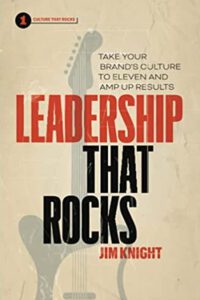
Jim Knight has upheld a passion for contributing in any way he can, anywhere he can. How does that bleed through and influence his work? Jim is a keynote speaker, coach, and author of Leadership That Rocks: Take Your Brand’s Culture to Eleven and Amp Up Results. He spearheaded Global Training for Hard Rock International for two decades and now teaches organizations how to attain their own rockstar status. In this episode, he joins Dr. Gary Sanchez to share how he’s morphed his passion for serving with his experience in HR. Jim talks about leadership and its relation to culture in his latest work. Tune in as he gives tidbits of insights from his book and more on creating a culture that attracts rockstars!

Watch the episode here:

Listen to the podcast here:

How The Why Of Contribute Bleeds Through Leadership That Rocks With Jim Knight

In this episode, we’re going to be talking about the why of contribute. If this is your why, then you want to be part of a greater cause, something that is bigger than yourself. You don’t necessarily want to be the face of the cause but you want to contribute to it in a meaningful way. You love to support others and relish the success that contributors make for the greater good of the team. You see group victories as personal victories. You are often found behind the scenes, looking for ways to make the world better. You make a reliable and committed teammate, and you often act as the glue that holds everyone else together. You use your time, money, energy, resources, and connections to add value to other people and organizations.

Now I’ve got a great guest for you. His name is Jim Knight. He teaches organizations of all sizes how to attain their own rockstar status. Although his illustrious career started at Gatorland Zoo in Florida and he has the scars to prove it, he cut his teeth in the hospitality training industry and eventually led Global Training for Hard Rock International for decades. His customized programs show how to amp up organizational culture, deliver world-class differentiated service and build rockstar teams and leaders.

BYW S4 6 | Leadership That Rocks
Leadership That Rocks: Take Your Brand’s Culture to Eleven and Amp Up Results

He’s known for signature spiky hair. He is the bestselling author of Culture That Rocks: How to Revolutionize Your Company’s Culture. It was featured in Entrepreneur Magazine as one of the five books that will help you transform how you do business. His new book Leadership That Rocks: Take Your Brand’s Culture to Eleven and Amp Up Results launched in May of 2021. A portion of his book sales, podcast revenue, speaking fees, and training programs proceeds go to No Kid Hungry and Cannonball Kids’ Cancer. Jim, welcome to the show.

Thank you so much, Gary. I appreciate it. I don’t know that I gave you the long bio. That was quite an introduction, but you touched on a couple of things that are probably going to fit into our conversation. First and foremost, I’m thrilled to be here. Thank you.

First of all, you can’t see Jim’s hair so I’m going to try to describe it. It looks to be about 5 to 6 inches tall, perfectly straight up, and multi-level, multi-colors. How the heck did that come about and how do you do it?

I probably have always been known for my hair and since I’ve been an adult. Once I started to work on my music degree and for 21 years, I was at Hard Rock International. We had a chance to look, be, say and do whatever. I worked with The Island of Misfit Toys. Believe me, this hairstyle is safe compared to a lot of my rock and roll friends with piercings, colored hair, bollocks and the whole thing. I used to have long hair. I had a mullet and I could sit on my hair about 2.5 feet at one point, then I decided several years ago to grow up a little bit and started speaking professionally. I went up so it’s got some spikes in there.

To answer the second half of your question, it is multilayered. I have somebody who does the hair once a month. She uses razors instead of scissors and that’s the first secret. The second is I use this product called Got2b Glued. I’m sure a lot of people in your audience probably have seen this before at CVS, Walgreens or Walmart. It’s in a yellow tube. It’s the same look, smell, feel, and consistency as Elmer’s Glue. I throw that stuff in there a little dollop and 30 seconds later, this is what you get. It’s like Sonic The Hedgehog all day long. This thing is hurricane-proof in Florida.

You go to bed looking like this. What do you look like in the morning?

It’s almost the same. I took a shower in the morning but if I go to sleep like this and I was laying on one side, it might get a little bit matted. You can throw some water in there and it reconstitutes the glue. If I wanted to, I could not wash my hair for 3 to 4 days and it would still be spiky like this. I’ve lived pretty well on Survivor for about 3 to 4 days. After that, it’s sad and it gets weak and flat. Water is my nemesis. If I jump on a pool, it’s game over.

Take us back to when you were a kid. Where did you grow up? How did you get into hospitality? Take us through the quick version of your life back when you were in high school.

[bctt tweet=”At the heart, culture is about people.” username=”whyinstitute”]

My quick version is I wanted to be a musician. When I was in middle school and high school, I started thinking about wanting to perform. I did a bunch of community theater. I did go to school and have my Music Degree in Associate of Arts, Music, and Education. My first job was at Gatorland Zoo. I live in Central Florida so I live in the land of theme parks, Disney, Universal Studios and SeaWorld. There are like 27 theme parks here in Gatorland. It’s one of the best-kept secrets. That was my first job. While I was doing that in the summertime, I started to go to college. While I was at university to make a living, I found out that being a musician, you had to be good, so I changed careers.

They say those that can’t do, teach. I became a middle school teacher and did that for six years. I’m a product of public education and I’m happy to have taught in that. Eventually, I needed to make some money in the summertime. As you can imagine, teachers don’t make any money in the summer. I take a little summer gig at Hard Rock International. The Hard Rock Cafe at that time was the new thing in Orlando. It’s the busiest restaurant in the world. I was a host deceiving people. I did that for a year. I became a trainer. They paid me to start traveling and opening up Hard Rocks around the world, Madrid, Mexico City and Paris. I got to hang out in London.

I traveled the world as a kid. A couple of years later, I became a manager and was running shifts for that building, which does anywhere between $42 million and $45 million a year, which is unheard of in hospitality. Your skills get sharp. Your head and ego get big. You’re hanging out listening to 90 decibels of Zeppelin and meeting rockstars left and right. It was a gas to do that. Within a year, I went over to the Corporate Sports Center and ran training and development for them. That’s the long answer. The short answer was several years ago. I decided I wanted to have a little bit of a louder voice and I wanted to contribute more to society.

I still pull the levers of music, education and hospitality. I put all of that together to make this edutainment in the programs, whether it’s something as a writer, eLearning and certainly as a keynote speaker. Several years ago, I left. Instead of being in hospitality, I wanted to go vertical. Now I speak in front of bankers, insurance agents, clowns, and funeral directors. If there’s an association and they’re looking for a speaker, I want to go out there and talk about culture, service, building teams, and those types of things. Leadership is hot and heavy right now.

What did you notice that Hard Rock did better, different and unique that allowed them to scale to $40 million to $50 million per restaurant?

I would say that’s probably three. You usually would take New York and Los Angeles. Las Vegas was probably one of those, as well as Orlando. Those four would do those types of numbers. Everybody else is between $7 million and $20 million, depending on the market. You had to be in a big A-location. That was what Hard Rock started with. They’re now in a lot of C markets. They’ve decided that there’s a lot of earth where they can plant their flag.

They’ll bring the Hard Rock brand to a country or a market because some people in these countries aren’t ever going to travel to Western Europe or the US, which is predominantly where the Hard Rock is. Their future is all franchise cafes. Although a lot of people still go, “Hasn’t that thing been around for 50 years?” They have and they’re still opening up properties, but the future for that brand is hotels and casinos for sure. That’s where all the money is.

Particularly, a casino will do what ten hotels do. That’ll do what twenty cafes will do. You’re limited on where you can do that in the world. To answer your question, Hard Rock is cool as I thought it was. To me, it’s still one of the awesome, great brands in the world. The product is fantastic. I love the environment, the music, the memorabilia, the retail, all of that stuff is cool. None of the buildings are the same. There’s no cookie-cutter. They build pyramids, inherit castles, and they put a bar on the side. It’s crazy. It’s always about the people.

BYW S4 6 | Leadership That Rocks
Leadership That Rocks: If you were to keep all of your awesome people, but change everything, logo, font, corporate sports center, tools, process, employee handbook, e-learning, whatever it is. If you change all of that, but keep the people, you wouldn’t make a huge dent in the culture.


The silver bullet for them is, I’m going to find the most unique people I can find because unique people bring some unique experiences to the party. They’re also going to make sure that these people have tremendous work ethic. It’s not just because they’re freaky people and they look different, which by the way, you see more companies starting to do that now. I’m thankful that I worked for a company for two decades that was doing that before it was popular, allowing tattoos to be seen, crazy colored hair, being on a first-name base with the boss, pushing back, challenging the status quo, and not having any fear of something happening to them. All of that stuff mattered. When you can do that, do you know what you get with the team members? They stick around and that’s loyalty.

Hanging out with that interesting collection of humans, and the value orientation that the company had were the two things that kept me going. I’d say it’s a tag team. It’s the unique people they went and found, but also the values like save the planet, take time to be kind, and all as one. These were emblazoned on the walls for no other reason but to keep us all honest. That allowed me to want to stick around a little bit longer and invite my buddies to come and work with me.

How did they go about finding all these unique people? What was their process or thinking behind that? Was this something that came about randomly? Was it a strategic thing that they thought or you thought about? At one point, you were running one of them. How did you do it?

I was running shifts in the mid-‘90s but I ran global training for the whole brand. I wasn’t running all of the individual properties. I came in in the early ‘90s. The thing started in 1971. There were two Americans that were hanging out in Great Britain and they had two issues. They couldn’t find a great burger. They wanted to make sure they had a little bit of some of that greasy Tennessee Truck Stop, Southern-style food that you couldn’t get in the UK at that time.

There was also not a big middle-class in the United Kingdom. You were either very rich or very poor. The fact that there were two lines for people, if you were rich, you stood in this line, if you didn’t have any money, you stood over here this line, they didn’t like that. That was red meat for some civil rights activists people that were coming out of the ‘60s. You know what was going on in our country. Those were the two reasons I did it.

To answer your question, it was extremely strategic. They will have the best food, shakes, environment, they’re going to put music in there, but their real goal was, “Let’s go find some people that were unique.” Ironically, they didn’t go youthful. Every single 1 of the 42 original servers had to be over 30 years old and they had to be women. A lot of them were redheads. It was funny to think you got this group of older redheaded women who are slinging food around and they’re going to push back a little bit.

It was a little irreverent and unpredictable but then even as time went on, their goal was, “Where can we go find some rockstars? Maybe it’s outside of the usual. Maybe it isn’t going to be another restaurant. Maybe I will go find somebody in tattoo parlors or concert halls. Could I go and find some in a retail location that had no food and beverage background at all.” They wanted people to have some experience but they certainly wanted to populate it with unique humans that had killer personalities. I almost think of the old TV show, Alice. If you think about that and you think of flow, some of your audience members may be old enough to remember. It was chewing gum and pushing back on everybody.

If you could find that person somewhere in your sphere when you went out to eat, drink, shop, stay, play or do whatever, coerce them, convince them, and pay them probably a little bit more to come work for you. All of a sudden, you’ve got a rockstar. You got a diamond in the rough who is probably going to create some unforgettable memories. That was their goal. It was completely strategic. I hope the brand is still doing that. I haven’t been there for years. That would be a miss if they stopped hiring some interesting humans.

[bctt tweet=”“You want to have a fantastic, awesome culture?” Number one, you got to go find some rock stars. That’s got to be your absolute focus more than anything.” username=”whyinstitute”]

It worked awfully well for them. You were there for two decades.

I started in April of 1991. I left in April of 2012.

What was it like for you to leave that comfort and start speaking? The middle school teacher gone culture, spiked-hair guy is now going to go speak to who?

I was crazy nervous. I had a little bit of some tricks up my sleeve. Part of it was the last several years before I left Hard Rock while I was the Senior Director for training and development, I had a great team of nine people. I started speaking on the side at that time. The very first one, like almost every speaker out there, we do it for free. Somebody asked me to come to do a little mini-orientation at Hard Rock. It had nothing to do with what I talk about now. No leadership, services or any of that stuff. They just wanted to have somebody do the Hard Rock story because they lived in a state in the US where there wasn’t property. I was like, “I’ll go do that. I’m not going to send my team.”

What happens is what happens with everybody. I went and spoke and somebody in the back of the room came up afterward and said, “That was awesome. Can you come to do it for my company? How much do you charge?” That’s when the light bulb went off. I started charging people, but here’s the cool part. I never took any money. I gave the brand. I gave Hard Rock all of the money because I wanted it to be above reproach. I never wanted my boss, the CEO or anybody to ever challenge me and say, “He’s having fun doing his side job than doing the regular day-to-day stuff.” It did allow me to feed the beast, get my sea legs, and get a lot better at platform speaking.

I was sharing stuff that I loved. I was impacting and influencing audiences to check out Hard Rock. Maybe they didn’t even know about the brand. Everybody wonders, don’t I actually get paid? I just put it into my budget. In training people, we spend money. To be a revenue-generating initiative was great. I never went over budget. My boss always loved it. What you probably would imagine did happen to me was I started loving that gig a lot more than the details of the day-to-day making the donuts.

I’ve decided to jump off since I was already doing it. I was doing about one a month. I had a couple that was ready to go when I jumped off. I was scared to death thinking, “I’ve got a cool job. I traveled the world. I’m getting paid well and looking at all the benefits. Am I going to leave all that because I think somebody will pay me maybe the same amount? I’d be happy if it would’ve been the same amount. Am I going to do that for a living?” It was crazy. I jumped off the deep end and I’ve never looked back. It’s been fantastic for me.

The platform that you started speaking on was culture.

It was the Hard Rock culture. If I got to be honest, I was pulling the lever of the brand. I tried to immerse people in the spirit of rock and roll. That’s where I probably got my focus more than anything else. It was on culture, which then led into some of those other things, service, leadership, building rockstar teams, that type of stuff. I’ll probably forever be known as the Culture Guy, and that’s cool.

What is it that makes a good culture and why is a good culture important?

We alluded to this already. If I was ever going to write or talk about it, I do define exactly what culture is right upfront. If you and I did a survey of your audience members or even if I asked you right now, “What do you think it is?” I will probably agree with you. I’m in the everything is culture camp. They can be all of the stuff that I mentioned before. At the heart, it is about the people.

Let’s say you’re a legacy brand. You’ve been around for 15, 20, 40 or 100 years. It doesn’t matter. If I were to have held on to the exact group of people that started the thing in the first place, you’re the founder, the president, the CEO, you’ve been doing it for 40 to 50 years, you could have held onto that group. You’d have the exact culture that you want. If you fast forward a couple of decades, it doesn’t work like that because people come and go.

BYW S4 6 | Leadership That Rocks
Leadership That Rocks: The more that you can be open-minded to change, and you can put more arrows in your quiver, you’re more likely to look somebody in the eye and go, “This is what it will take with this person right now to rock their face-off.”


I know that if I was to keep all of my awesome people but change everything like logo, font, corporate sports center, tools, process, employee handbook, eLearning or whatever it is, but I kept my people, I wouldn’t make a huge dent in the culture. I’d have exactly what I want. Let’s say that I love all of that infrastructure. I keep all of that stuff but I kick everybody out in the organization and replace them with a bunch of other people. I’ve completely revolutionized the culture

I will talk about a lot of nitty-gritty details but I can’t emphasize enough when I’m in front of an audience saying, “Do you want to have a fantastic, awesome culture? You got to go find some rockstars.” That’s got to be your absolute focus more than anything else because the rest of the stuff is you being a good manager but you’re not thinking like a business owner, entrepreneur, big brand. You’ve got to love on them. You’ve got to do everything in your power not to muscle the result and manage the threats, punishment and fear, which I still see out there in a couple of industries.

If you can throw your arm around people, teach them, and have a little bit of a heart-centered mindset, they stay with you longer. There’s a direct correlation between turnover and top-line sales. It’s not just in hospitality. I’m starting to see that in almost any industry. I know that’s a long answer but it’s always about the people. Do I want to focus on all the other stuff? Totally, but those are the little rocks. The big thing that makes a difference is I got to populate the thing with people who can slake it. They’re showing up going, “I’m in the memory-making business now.” They show up and do that every day, “I’m going to put Herculean results.”

When you’re leading the team and you’re trying to love on them, but you’re not getting the result you want. How do you handle that? I’m sure there are people reading that are dealing with this. Their key person isn’t quite doing it like they were, could or you wanted. How do you love on them yet get results?

First, I’d look in the mirror. Maybe the common denominator is the leader. Sometimes, I’ve got to change their tactics or they’ve been doing it the same way. They’re banging their head against the wall going, “How come they’re not responding to me?” This is why you go to conferences. You read books and listen to podcasts because the more that you can be open-minded to change and you can put more arrows in your quiver, you’re more likely to look somebody in the eye and go, “This is what it will take with this person right now that rock their face-off.” I would say that anyway from an end-user, a guest or a customer but we have to think the same way from an employee.

These associates and team members have different needs. For some of them, it might be a tiny little bit more money. Others need you to spend a little bit of time with them, look them in the eye, care about them, and ask them about their family and what did they do this weekend. Others want development. “Put me on a fast track. Give me a program so I can start hitting some things to ultimately become promotable.” It doesn’t guarantee me the job but it’s less likely that you’re going to go to the outside if I’ve been on the AAA Ball Club and I’m ready to be called up.

There are a variety of things. It could be surprising them with small little things, whether it’s buying sometimes a lot of tickets, stopping and getting an Icee or a Slurpee on the way. Sometimes it’s doing contests and having fun when you’re at work. Maybe it’s dressed down day. Maybe you’re allowed to have a company dog or you change the benefits in favor of them where it doesn’t cost you a lot of money. There are many things.

I have an entire chapter dedicated sometimes with all of these ideas bullet-pointed. I freely admit and go, “Please don’t do all of these. It’s ridiculous, but pick and choose the ones that would make sense from a tactical standpoint.” If leaders just sat back and thought, “I need to say thank you a little bit more. I need to tell people they rock. I need to care about them as a whole person and let them be seen.” Have discussions that if something is not working, don’t be freaked out about it. Come to me and let’s figure that stuff out.

[bctt tweet=”It isn’t about competence anymore. It’s not just about character. You need all three Cs: competence, character, and culture fit.” username=”whyinstitute”]

Sometimes it’s the easy and free things that would make a difference. This could be a whole episode discussion for me talking about how to keep employee engagement going and loving on people. When I say love on them, it isn’t just throwing your arms around them and going, “Come on, guy or girl.” It’s not about that. When people feel like this person does care about me, and there’s a relationship and trust factor, I’m willing to follow that leader off the edge of the cliff. When they do leave the company, I’m going with them.

What’s interesting is your perspective on this is right in line with the why of contribute. You look at it from the perspective of, how can I help you? How can I make your time here more fun, better and more productive? How can I be part of your success? Not every why sees it that way. It’s interesting to see leaders from how they think. It would make sense to somebody who’s why is contribute. Of course, I would do it that way but somebody else would look at it and say, “That seems like a lot of extra effort for trying to get them to do what I paid them to do.”

This is why your show is great because I love the idea that you take in these different tenets and you look at these and go, “Let’s dissect it. Let’s talk about each one.” If you take any of these personality assessments, DISC, Colors, Myers-Briggs, Franklin Covey, you name it. Everybody realizes there have to be different types of people on the team. If all of us were wise, there would be a lot of kumbaya and we’d be giving a lot, and nobody would get stuff done. I realized that but it’s been part of my DNA. I’ve always been like that because of my parents. Probably a little bit because of religion and going to church early on.

It’s certainly working for a brand that did not have a single marketing initiative that didn’t have some type of philanthropic charitable component. A lot of people don’t know that and they never wanted to scream from the top of their lungs but I knew. My Hard Rock buddies all knew and that’s part of the reason we stuck around. I love the idea of giving back if for no other reason but propping other people up because I know that it’s in my interest. Sometimes they’re not a part of my inner circle. It’s just I want people to succeed. By the way, I’m a consumer. I personally am an experiential starved consumer.

When I go out in shop land, I care about the store, the restaurant, the hotel or the place I’m going. It doesn’t matter. I want to be around awesome people. There are some small ways that I can give back, whether that’s a nugget of information, advice or some real mentorship. I’m all about that. Sometimes, it’s money too. I don’t mind helping people out. That’s how I’m wired and I get it. You’re right. There are going to be some that are like, “Not my bag. It’s not my gig.” That’s okay. I sign up for that. I’m the one who volunteered to say, “Put me in that role.”

It is what we were talking about the why of contribute. You use your time, your money, your energy, your connections to push other people forward. That’s the essence of how you view the world, which is awesome why for what you do. Let’s transition that a little bit into leadership. What is leadership from your perspective and what makes a great leader?

It’s probably like culture. These are both esoteric and nebulous words. Everybody’s got a different opinion about it. I’ve taken the slice of leadership from creating, maintaining or even completely changing and revolutionizing a culture. I had to start with that because that was a little bit of my background. I have been to many courses and I’ve seen many things. You talk about the difference between a manager and a leader. There are many important elements that come out of that.

Probably the number one characteristic that I see more than anything else is somebody who is trustworthy. If you trust that person, they’ve got a good shot of having some leadership. You’re trustworthy. Therefore, I trust you and all the other awesomeness in our relationships happens from there. The book that I wrote and the things I talk about are trying to dissect several of those. What does critical decision-making look like when you get to a point and you’ve got to make a decision?

BYW S4 6 | Leadership That Rocks
Leadership That Rocks: If you trust that person, they’ve got a good shot of having some leadership. You’re trustworthy. Therefore, I trust you. All the other awesomeness in our relationships happens from there.


Is it time for me to be quiet, subtle, cool and humble? Is it time for me to be loud, over the top, grandiose, and bring the thunder? It’s different for different moments. Can I be heart-centered? Can I still get things done? Could I still marshal the resources that I need but do it in a caring, loving and kind way where it’s the carrot versus the stick? I remember back in the ‘80s. You can push people uphill and you can muscle the result. Those days are long gone.

Gen Z or even if you still go back to the Millennials, they’ll laugh at you because a rockstar can always get another gig. As employers, we need them a whole lot more than they need us. Sometimes, the way that you treat people is the linchpin. They’ll go, “I’m out of here.” They’ll go right up the street and probably work for your competitor. I think about that from a leadership standpoint. I think about mentorship. I’ve gotten to the point that I almost dissect that into five different areas. You could be an internal, external, peer, public mentor. You could even be a reverse mentor. You can learn a lot from somebody that you’re mentoring. I have somebody who’s 25 years my younger and I learned from that person all the time.

Even having an unparalleled work ethic, which I know some people are going to throw certain generations under the bus. I don’t want to do that. I liked being extremely positive and also probably contribute to my contribute. I do think that there have been some things that have been lost. Sometimes, having a little bit of a pep in your step, a sense of urgency, attention to detail has been lost a little bit. I know it’s not always taught by parents. It isn’t being taught anymore in public education. If you’re not in charter, private school and in public school, I don’t know where you get that.

I used to think I was a good trainer. I cannot train people to have a personality and I can’t train you to smile. Either you have it or you don’t. If the juice isn’t running through your veins, you’re going to be impaired. You’re going to not be of use to me unless there’s a place for you in the back where no one will ever see you, which is highly unlikely. I need people to have a little bit of this work ethic mentality.

I have a good friend of mine who runs a frozen dessert concept in Chicago and it’s populated all with Gen Z employees. They’re young and they don’t have a lot of these skills. She has to make the decision to go, “There’s no way I’m going to hire you. I’ll move on to somebody else or I see something. I see the personality a little bit. They might be a diamond in the rough. Maybe I’m going to be their first and best job. Maybe they’re going to always think favorably. Maybe when they finish college, they want to come back to be a manager.” She’s made a cognizant decision from a work ethic standpoint. If they didn’t get to somewhere else, let me be that person. She almost probably has the same mentality. I bet her why might be contribute as well.

I think about those things, how can you be a catalyst for change? I talk a lot about change because times are changing. Changes are coming. You can either freak out about it. You can run away from it. You can lean into it. You can be a part of the change, or you can prepare the team for it. I spent a lot of time talking about that stuff. I don’t know if I rattled off 4, 5 or 6 things, but I try and chunk it down. If I’ve got time, an hour keynote, a three-hour workshop or somebody is flipping through the book, at the very least, they go, “I get it.” It’s in the sphere of culture but around work ethic, a heart-centered mindset, or critical decision-making. Could I be a catalyst for change? Can I enlist in some mentorship because maybe my company doesn’t have that? How can I go to the outside and make that happen? Can I think about everything that happens to me be a personal culture shift? Things are happening to me or things are happening for me.

You use the analogy of Shrek. Life is like an onion. There are layers in there and every time something happens to you, you can either be mad or you can be like, “This sucks but it’s okay. I’m going to use this to my advantage. How can I get better? How can I make sure I don’t make any more mistakes?” I ran off on a tangent there, but leadership is the number one characteristic. If I can trust you, then I’m willing to follow you. Now I’m more open-minded to doing the things you need that I might not have done on my own.

What part of being a great leader comes back to who you hire? Is it you can take anybody and lead well?

I’ve always been to the camp that there are three types of people. There are people who don’t know, can’t do, and don’t care. If it’s a don’t know, you can train about anybody. It’s a knowledge dump and there are many different ways to do that. Somebody might be visual versus auditory. Maybe they need a little bit more time, whatever it is. The don’t knows, I can deal with.

[bctt tweet=”All the best training in the world isn’t going to help a bad hire.” username=”whyinstitute”]

The can’t dos is where leaders tend to get a little bit frustrated because you try. Maybe you are somebody who gives somebody 2, 3 or 4 opportunities but they can’t do the gig. A lot of them are willing to cut ties and move on. I would see if there’s a place for them somewhere on the bus. Do they maybe have a skill? It’s the old Marcus Buckingham Gallup approach. Can I focus only on their strengths instead of pointing out their weaknesses because everybody’s got strengths? Do I need that on the team?

The can’t dos is tough. You might have to cut ties with them, but there’s also a whole bunch of don’t cares out there. I have no love for them. As a leader, if somebody were smart enough to think, “I’m going to focus on every area of the employee life cycle but at the very least, I’m going to focus on the front end. How I recruit, interview, what’s my stereotypical employee, how do I hire, and how do I train? Before I step back and go, “They’re an employee. I don’t have to watch them anymore.”

There’s a lot of things that go into place from recruiting collateral, non-negotiable interviewing standards. Do you know what you’re looking for? Because it isn’t about competence anymore. It’s not about character, although those two C’s I care about a lot. Now, I didn’t think about culture fit. You need all three, competence, character, and culture fit. If the leader is smart enough that they’ll go and find great people, then all the other stuff falls into place.

If you’re asking me, could I be a great leader and still do it through the product being first to the market, keeping everything clean? Is it just a physical building? How do I handle stuff when it’s online or on the phone? Regardless of what the product or the industry is, there are certainly a lot of things that I would do. I do care about the 997 things that somebody should be focusing on if they’re in a position of power. If I can’t get some end-user to think about the last three questions that always show up on a survey, “Are you coming back? Are you spending more money? Are you going to talk about me positively?” If I can’t get them to say yes to those three, I haven’t created a memory. I haven’t created some incentive for them to come back.

That’s another long answer. There’s a lot that somebody could do. I am now a firm believer, and I study and love many brands that I have huge crushes on. I have fallen madly in love with some great cultures out there who now swear that the only reason they are the way they are and their cultures is because of their people. You can steal all the rest of this stuff but if you can’t get my people, you’re never going to be able to replicate what we do.

Here’s a great example, Southwest Airlines. I cannot understand why every airline has not copied their onboarding and their departure processes. How they bring people on because they’re still number one in departures, landings and arrival. They’re still the most profitable airline out there. They have some fun when they’re doing safety announcements in their uniforms and all that stuff. Just the fact that they have no fees for baggage and they can onboard everybody quickly. Nobody else can figure that out. I go, “Why haven’t they done that?”

Let’s say they did do all that. They can do every one of those. If they can’t take the Southwest employees, all you’re doing is moving the deck chairs around on the Titanic. All you’re doing is changing and swapping systems. You’re not focusing on human behaviors, which are all learned human behavior. They’ve done a fantastic job getting the right people and that’s why I’m a fan of their still.

The next question I was going to ask you led right into that. Do people have it or don’t have it? Maybe you answered that with the three types of people but I’m wandering back to training. How much training do these organizations do? Let’s take Southwest Airlines. How much training do their team go through before they meet a customer? Is it a little or a lot? Do they hire somebody who already got those skills? How does that work?

BYW S4 6 | Leadership That Rocks
Leadership That Rocks: If the leader is smart enough that they’ll go and find great people, then all the other stuff falls into place.


They do a lot. When you’re looking at travel, you’re going to spend a lot more time because of the safety requirements that are in there. It’s probably even more than whatever the stuff is. My knowledge base is way more around retail, hospitality and theme parks. That’s what I learned and I sat on the certification governing board of the National Restaurant Association. I have to say the long way because if I just say NRA, they’re thinking of the other NRA. When I think about the work that organization does and I’ve seen about all of these statistics, the average restaurant day one orientation is around two hours. The good ones are around three hours.

At Hard Rock, because we had much more, food, beverage, retail, local marketing, group sales, dealing with celebrities, live music and all this other stuff, we spend an entire day. I thought that was short. I wish we had two days, but it’s one-day orientation and then you started training the next day. When I hear most restaurants are doing two hours, it blows my mind. When I think about a company like Chick-fil-A, this is a fast-food chicken place. They do no training until day three. It is two days of orientation. Their story, values, vision, mission, they dunk you in the culture. When you come up out of it on day three, you’re either all in or you’re not. It starts to prove that the awesome companies out there are spending a little bit more time.

The first part of your question was, “Do you just have it?” I’m a firm believer now that you don’t. You learn everything. You and I and your entire audience are not the way we are because we were born that way. It’s the difference between us and the rest of the animal kingdom. You learn everything. You learn it from your parents, school, friends, playground, religion, lack of religion. By the time you come to me as some 18, 19 to 20-year-old kid, you either got it or you don’t. You either have the smile. You’ve got the amp to want to be around people or you don’t.

People can fake it for a while and then you become unmasked. You fall back into your natural disposition. Training and leadership help. There are some things that I can do not to fake and coerce people into doing the things I want because as a leader, most companies aren’t going to have the boss micromanaging over their shoulder. At some point, you’ve got to step away and hope that they know what they’re doing, and they can represent the company, the brand very well. I do think you ought to do all these things, train, develop, communicate, reward, recognize, and all of that stuff.

On the front end, if you don’t have people who are coming to the party with some of that oomph as you said, it’s going to be a slog. You’re going to be pushing people uphill. I still think there are people that just because of their environment, they have the ability to wing it. They can shoot from the hip. They certainly like to gab. Even those things, you got that from somebody from somewhere.

I do believe and I’m such a huge fan that everything is learned human behavior. When I’m in front of an audience, I have to go, “You’re all recruiters now. You’ve got to put on your human resources hat.” If I was honest with myself and I had a time machine, instead of being a training and development guy because I had no say in how people came onboard or how they left, I can train the best that I can with what you give me but all the best training in the world isn’t going to help a bad hire. I would push people.

I would go back in time to be a recruiter because, at the very least, I felt like I got my finger on the pulse of what I needed. I will hand them off to the training guy or girl and they’ll be in a much better place. If they don’t have that DNA, it’s going to be tough. I don’t believe that you’re naturally born with it because I’m sure it’s controversial for some people too.

I’ve got a baseball team for you to follow. Follow the Washington State baseball team. The coach, Brian Green, had taken over the worst team in the NCAA, which was the New Mexico State Aggies. He turned it around to being five winning seasons in a row. Multiple players picked it to the Major League Baseball and then he got hired away to Washington State. I’m not sure if this is correct but I think his first twelve days of practice, they don’t touch a ball. It’s all culture. That’ll be a perfect example for you as well because it’s all about the culture. That’s what’s changed the game for many of them. He speaks on that now. I’d be curious to hear what are some other good companies that you’ve fallen in love with that have a great culture. I heard Chick-fil-A, Hard Rock, Southwest Airlines. What are some others that you like?

[bctt tweet=”A single person with a great idea can start a revolution.” username=”whyinstitute”]

This is where I’m always stretching to do more outside of hospitality because I could probably name a lot of those. Your readers will probably know Zappos. They are amazing to me. They only sell shoes and do it online. They don’t even sell their own shoes. They don’t even have their own branded shoes. They sell other people’s shoes. When I see brand health studies, they’re always in the top ten. It blows my mind that their founder, the late Tony Hsieh, decided they’re going to have the best culture and customer service regardless of what they do. They sell online shoes. They get propped up quite a bit.

There’s a computer server company called Rackspace. A lot of people will not know who that is. These are tech people and IT people. They set up infrastructure companies, but yet they internally have one of the greatest cultures to the extent that some of their employees get the Rackspace tattoo on their shoulders and on their calf muscles. That blows my mind. Harley Davidson still does a great job out there. Some of my music roots, Fender and Gibson have their own unique cultures.

There are a couple of places that I love that are restaurants here locally in Central Florida. Yellow Dog Eats is one of those. I talk about them quite a bit. It’s mostly because of the executive chef, the founder. He is one wild, interesting guy. The food is great and the atmosphere is fantastic but this guy has no filter. Every time he’s in the building, he creates memories. People have discovered him when they’re out and about.

Hotel-wise, I know people will talk about the Ritz-Carlton, but I’m a fan of Kimpton Hotels. From a culture standpoint, they’re fantastic. I got to still prop up Hard Rock. A lot of people don’t even know there are Hard Rock Hotels and there’s something like 30 of those on the planet now. It’s got some of these unique people you don’t normally see in the hotel space. Those are ones that I think of right out of the gate.

I spent a lot of time with the US Air Force now. I do some stuff up at Andrews Air Force Base up in DC which is where the presidential aircraft go off. I spend time with the Brigadier Generals, all the new ones that come on board. They have a fantastic culture. If you’re probably in any of the Armed Forces in the US, they will say that there’s a distinct, specific culture. I’ve met a Colonel at that time. She’s a Brigadier General now who works over at the Pentagon Space Force. She was at Andrews and on her own started to change what was going on at that airlift because it was not top-down like, “You will do it this way or else.” We probably think about the military. It was like, “Let me love on you. Be a little bit more kind. I want to hear feedback from you.” They are very open-minded and they cared about what happens to you and your families. Realizing you’re not just serving but the whole family is serving. I love that approach.

I almost hate using the words kinder and gentler armed services. To some degree in our country, at least, when you’ve got an all-volunteer military, you have to go there now for some of these young kids that are going in. You can’t go out there and be wrapping knuckles. That doesn’t work anymore. That’s 5 or 6. I’m trying to think outside of hospitality but my book will certainly list a whole bunch more, especially in this last one because I’ve talked about leadership. My next one is Service That Rocks. I want to want to highlight that. I wonder if I could get Brian Green in there from an employee standpoint for my 2023. It’ll be Engagement That Rocks and that’s all about some of the discussions that we had upfront. Let me check out Washington State. I think that’d be cool.

You’re going to love him. Last question for you. What’s the best piece of advice you’ve ever gotten or the best piece of advice you’ve ever given?

In my podcast, Thoughts That Rock, that’s the only question we ask on all of our people on there, what’s the best piece of advice you’ve ever been given? You turn the tables on us a couple of times. I like it. I’ll give you two. My father who was instrumental for me passed away of cancer. He always said, “You need to start small and crush those things.” What happens is when you get the win, somebody recognizes that. They invite you to the party and you get promoted. You take on more responsibility. I probably needed a little bit of a refresher. My first real corporate boss when I got over to Hard Rock said the same thing. Between my first real good Hard Rock boss and my dad was a real big step for me.

BYW S4 6 | Leadership That Rocks
Leadership That Rocks: You still can make a difference. At some point, when you put your ideas on the table and you get recognized for that, you’re going to get more responsibilities


I teach people now my mantra. My main piece of advice is and I still believe this. I think a single person with a great idea can start a revolution. That’s how dictator-led countries were overthrown. That’s how philanthropic movements are started. That’s how cultures get perpetuated for all times. Even if you’re a new up and coming, maybe a middle manager and you think, “I don’t have a lot of responsibilities. I barely have a staff. I got a small budget,” I don’t care if you’re making widgets. You still can make a difference.

At some point, when you put your ideas on the table and you get recognized for that, you’re going to get more responsibilities. The things that used to be in your circle of concern that you cared about, but you couldn’t do anything about, now they’re in your circle of influence. Now you have a bigger influence, which is what my driving force has been forever. I want to allow their voice, “How can I contribute to the world a little bit more in my own unique way?”

If there are people that are reading, and they want to connect with you, follow you, and get your book, where do they go? What’s the best way to connect with you?

The best place is my website. All roads lead to that. It’s my last name KnightSpeaker.com. You’ll see the podcast, my books, and the programs that I do. I’ve got a book marketing company and some fun little apps out there. We help people discover their next great read. There are a lot of things that I play in. I love the format of your show and I appreciate you having me on this. This meant a lot to me to be invited because I’ve seen some of the people that are on your show. It means a lot.

I am glad we got to talk and I’ve got three pages of notes here on what you talked about. Culture is something that I think about all the time. It’s something that we’re working on all the time and we’ll continue to work on it. That was helpful for me. I’m sure it was for the people that are reading. Thank you so much for being here. I look forward to staying in touch as we go on our journeys.

You got it. We’ll talk soon. Rock on.

Thanks.

It’s time for our new segment, Guess The Why. I want to do somebody that everybody knows, at least they think they do and that is Simon Cowell from American Idol. What do you think Simon’s why is? Let’s think about him for a minute. Every time you saw him on American Idol, what was he wearing? He was always wearing a white T-shirt and jeans and who knows, maybe tennis shoes. They weren’t perfectly starched, but he was always wearing a white T-shirt. I think at one point, he changed to a black T-shirt. Now everybody has a big to-do about he switched from a white T-shirt to a black T-shirt and what does it mean?

Every time he gives advice to people or has feedback, he is very direct to the point. Don’t give him the fluff, just tell him what it is. Based on that, I would say that Simon Cowell’s why is to simplify. To make things simple, direct to the point, and don’t give him the fluff. Tell it like it is and don’t beat around the bush. He simplifies things to the point where people can do them, use them, and be effective with them because it’s simple. I believe Simon Cowell’s why is to simplify.

What do you think? Let us know what you think. I want to thank you so much for reading. If you have not yet discovered your why, you can do so at WhyInstitute.com. Use the code Podcast50. You can get it at half price. All of our interviews will be much more valuable for you if you know your why. If you love the show, please don’t forget to subscribe and leave us a review and rating on whatever platform you’re using so that we can help spread the word. Thank you very much. I will see you next time.

Important Links:

About Jim Knight

Jim Knight teaches organizations of all sizes how to attain their own “rock star” status. Although his illustrious career started at Gatorland Zoo in Florida (he has scars to prove it), Jim cut his teeth in the hospitality training industry and eventually led Global Training for Hard Rock International for two decades. His customized programs show how to amp up organizational culture, deliver world-class differentiated service, and build rockstar teams and leaders.
Known for his signature spikey hair, Jim is the best-selling author of Culture ThatRocks: How to Revolutionize Your Company’s Culture was featured in EntrepreneurMagazine as one of the “5 Books That Will Help You Transform How You DoBusiness”.

His new book, Leadership That Rocks: Take Your Brand’s Culture to Eleven and Amp Up Results, launched in May 2021. A portion of Jim’s book sales, podcast revenue, speaking fees, and training program proceeds goes to No Kid Hungry and Cannonball Kids’ Cancer.

Categories
Podcast

What It Takes To Be A Good Coach: On Leadership And Culture With Jamy Bechler

BYW 34 | Good Coach


Jamy Bechler believes that it is a coach’s responsibility to help and inspire their people to be the best they can be. They can only do that when they learn how to step outside of themselves and see where others are coming from. This separates the good coach and leader from the rest. An author, motivational speaker, leadership consultant, and host of the popular “Success is a Choice” podcast, Jamy fulfills his why of “makes sense” by seeking to find better ways to solve problems and get something that makes sense and useful.

With a background as a championship athletic director, award-winning college basketball coach, and business consultant, he works with high-level sports teams and businesses helping them maximize results. In this episode, he joins Dr. Gary Sanchez to discuss what he sees are the differences between winning and losing programs. He shares his understanding of what a good coach and leader are, all the while highlighting the importance of leadership, culture, and teamwork.

If you’re looking to step up your game as a coach as well as uplift others and build that bond with them, then join in on this conversation and allow Jamy’s insights and process to guide you.

Watch the episode here:

Listen to the podcast here:

What It Takes To Be A Good Coach: On Leadership And Culture With Jamy Bechler

If you’re a regular reader, you know that we talk about 1 of the 9 why’s and then we bring on somebody with that why so we can see how their why has played out in their life. We are going to be talking about the why of makes sense. If this is your why, you are driven to solve problems and resolve challenging or complex situations, you have an uncanny ability to take in lots of data and information, observe situations and circumstances around you, and sort through them in order to create order. You consider factors, problems, concepts, and organize them into solutions that are sensible and easy to implement.

It is not even that you enjoy problem-solving necessarily. You simply can’t help yourself. It is the lens through which you view the world. Interestingly, it is not necessary for you to share your solutions on a continuous basis. It is sufficient that you yourself have solved the problem or resolve the complexity of the situation. Often you are viewed as an expert because of your unique ability to find solutions quickly. You also have a gift for articulating a solution and summarizing it clearly in understandable language for your benefit and the benefit of others. You believe that many people are stuck. If they could make sense out of their situation, they could find a simple solution and move forward. You help them understand and see their way through.

I’ve got a great guest for you. His name is Jamy Bechler. He is an author, motivational speaker, leadership consultant, and host of the popular Success is a Choice podcast. With a background as a championship athletic director, award-winning college basketball coach, and business consultant, he works with high-level sports teams and businesses helping them maximize results. He is recognized as an expert in leadership, culture, and teamwork.

Jamy, welcome to the show.

That was a mouthful. I appreciate the great introduction, Gary. Thanks for having me. I listened to that why and I’m like, “That’s a lot to live up to. Someone that’s solving stuff or make sense of the world that we live in sometimes.” As a motivational speaker, I’m not sure I motivate all the time. Saying a motivational speaker, that’s like someone introducing you as a comedian. “Say something funny, funny guy.”

Jamy, take us through your life. How did you get into coaching? Were you an athlete yourself? Did you play sports? Give us a little bit of a tour of your life.

I was a stereotypical kid athlete that played every sport. I went to camps. I did every sport possible because we didn’t have iPhones. We had a black and white TV until probably I was in high school, which is crazy with the three channels and then PBS. Younger people don’t even know what I’m talking about. We had to stay outside, so we played sports all the time.

[bctt tweet=”There’s always a baseline of competence in talent.” username=”whyinstitute”]

Where’d you grow up?

I grew up in Michigan. Even in the wintertime, we’re shoveling snow off the cement in front of our house to shoot hoops. Eventually, my dad built this pole barn and he put this basketball rim in there. It was a little bit shorter. It was only 9’6”. A lot of us were able to dunk on that. All winter long, we’d be inside with this little space heater but it was great. We’d shoot. You had to know the right angle to shoot the ball, so it didn’t get stuck in the rafters. It wasn’t a big enough barn where you could put a lot of arc on it. The point is, we were always playing sports. We were always doing something. I’ve read this book in seventh grade.

Before getting into high school, at seventh grade, I’m in English class and my dreaded English teacher, Mrs. Shannon, who I thought was the devil, did one good thing in my life. She had this library in the corner of her room and we could check out books. There was a John Wooden book, the great legendary basketball coach from UCLA. There was this book called They Call Me Coach. I read this book as a seventh-grader. I would love to say that I was this mature seventh-grader that said, “One day, I want to be a coach like John Wooden. I want to be the guy that helps people. It doesn’t matter if you’re a benchwarmer or you’re a star player. I’m going to be the coach that loves you.”

I wasn’t that mature but I read it. I was like, “I want to have a coach like that.” I recognize that there are good coaches and there are bad coaches. I want a coach like John Wooden that loves me, even if I make a turnover or a shot. That was the first time I thought that there was a difference between coaches that there was good coaches and bad coaches, good qualities and bad qualities. I got a little bit older. I realized I probably wasn’t going to go to the NBA. I started thinking more about coaching.

As I got into college, I went from being a star athlete in high school to my best friend who was the water cooler and the athletic trainer. I started to look at basketball a little bit differently. I started to look at the whole forest and not just my tree because I wasn’t playing very much. A lot of people will be bitter, be mad, or be a victim. I started looking at it from the perspective of, “I’m not playing much but I want to be a coach. I know my career is not to play, so I want to be a coach. I want to soak in as much of this as possible.” I was a good athlete and a bad athlete at times.

I became a coach for about twenty years. I was Coach of the Year. I was a good coach. I was also fired. I also had losing seasons. I also have some players that hate my guts. I also have players that we still keep in touch with. I had some ups and downs as a coach is. We’ll get into what I’m doing in a little bit. That’s helped me because I’ve traveled by plane. I’ve traveled first class. I’ve had programs with big budgets. I’ve coached at all different levels. I’ve also driven fifteen-passenger vans after losses where you eat sack lunches from the cafeteria. You put your own peanut butter and jelly on. You put your ham and mustard on.

I’ve seen all these different perspectives, which has helped me in my consulting with sports teams because I’ve been where they’ve been at, whether they’ve been successful or terrible. Knowing what it’s like to struggle through a season, whether it’s your fault or not, you’ve struggled through that season. I’ve lived it all and been an athletic director as well. For years, I’ve been on my own. I’ve been self-employed or unemployed depending on the day as an entrepreneur.

[bctt tweet=”We don’t step out of ourselves sometimes and see from other people’s perspectives and where they are coming from.” username=”whyinstitute”]

Where did you play basketball? Where did you coach basketball?

I played basketball in college at a place called Hiram College in Ohio. I was the epitome of mediocrity. Not only did I play basketball, I went to play basketball there but I also played some football and ran track. There are only two types of people that play multiple sports in college. One is the absolute maniac people that are amazing, the Bo Jacksons, the Deion Sanders. The other is the people that aren’t any good at any of the sports. The coaches are okay with sharing you because you don’t help them out anyways. I was fell in that category where the coaches didn’t care about me as much.

Where did you coach?

I coached a lot of schools, mainly in the South but I did start off at Kent State University in Ohio as a graduate assistant. I went to Anderson University in Indiana, LeTourneau University in Texas, Newberry College in South Carolina, Tennessee Temple in Chattanooga, Bryan College in Tennessee, and then Martin Methodist College in Tennessee was my last coaching stop. I was an Athletic Director at Marion High School in Indiana. The fifth largest gym in the world for high school. Nobody’s won more boys basketball state titles than that school had. That was a fun place to go to be an Athletic Director since I was a basketball guy.

That is a lot of interesting experience that you had. You didn’t just stay at one system and saw one thing. You got to see a whole lot of different organizations and leadership styles. What did you see was the difference between the winning programs and the losing programs?

Certainly, there’s always a baseline talent. No matter what we’re talking about, there’s always a baseline of competence in talent. Putting that to the side, the number one thing was the buy-in, the ownership of the players, and the coaches for a common goal. Are we bought-in to what we’re trying to accomplish? We can call this culture. Culture is a buzzword. Culture is something I talk about all the time. Ultimately, that culture is a buy-in tour. We’re all going to try to get to the same place together and in the same way. Sometimes we want to get to the same place but we don’t all want to go the same way or the same route. It’s having buy-in from, if not everybody, most of the people. That’s coaches and players.

Sometimes, the players and the coaches are on different pages. They’re not even in the same book. They have completely different agendas and selfish motives. You see this in businesses too, a lot. When I’ve consulted with a lot of businesses and I’m sure you’ve seen this as well, it’s the upper management, CEO level, or supervisory level. They’ll be like, “Come in and fix these.” We’re all part of the problem and the solution at the same time. It’s not us versus them.

I get that a lot with coaching. Coaches think, “It’s not my fault. Jamy is doing this, Jamy missed that shot, or Jamie didn’t know what he was doing.” It might not be your fault but it’s 100% your responsibility to help Jamy to know what he’s supposed to do, to help make Jamy the best he possibly can be, or to help have Jamy be inspired. That’s a big thing. We see this all the time with coaches. “These players are this. These players are that. They’re bored in practice or they don’t pay attention.” You don’t give them a reason because you don’t engage with them. You don’t inspire them.

It’s the same with businesses. “Our employees don’t want to be here.” It’s because you don’t make it fun. “I pay them a lot.” That doesn’t matter. How much you pay them doesn’t matter when they’re in that job doing it. That only matters on Saturday and Sunday, the days off, or on their vacation. Otherwise, it doesn’t matter how much you’re paying them. You have to inspire them in other ways if you want more out of them. Everybody being on the same page going together, it’s our team. It’s our goals. It’s not, “Gary is the boss, so it’s Gary’s team. It’s Gary’s goals. We’re trying to accomplish what Gary wants.” It’s not that. It’s, “We’re all going together. We’re all going to celebrate success together. We’re all going to overcome challenges together. We’re going to win and lose together.”

How do you teach somebody to get buy-in?

BYW 34 | Good Coach
They Call Me Coach

It’s a two-prong approach. In my case, I work primarily with sports teams. I certainly work with businesses but sport is my bread and butter. That’s my lane for the most part. You’re working with students but you’re also working with the coaches at the same time. With the students, you’re trying to find out what makes them tick. You’re trying to find out what their hopes and dreams are, what some of their challenges are, and understanding them. Also, trying to get them to understand the coaches, what the coaches are going through, and what the coaches are trying to get at. All of this comes back to trying to get everybody to see the whole forest and not just see their own tree. We’re trying to get them to understand as much as possible not to be understood.

A Stephen Covey’s great book, The 7 Habits of Highly Effective People, one of those habits is seek first to understand then to be understood. A lot of us don’t ever do that. We want to be understood. “You’re not seeing where I’m coming from.” That might be true but you haven’t even seen where I’m coming from. It’s one of these things. As coaches, we don’t understand what a sixteen-year-old is going through or what a sophomore in college is going through. We can’t understand that as a 40-year-old, as a 50-year-old, we don’t understand them and they certainly don’t understand us. The thing is our sixteen-year-old self probably wouldn’t understand the sixteen-year-olds now in a lot of ways.

We don’t step out of ourselves sometimes, see where other people are coming from and see their perspectives. That’s one of the very first things we will do when we work with any team. It’s gotten them to see other perspectives. We have a lot of little activities we’ll do that are fun that blows people’s minds and different things like that of understanding in perspective. We talk a lot about seeing things from a different viewpoint, from a different lens because you’re never going to get common ground. It can’t be, “Gary disagrees with me on this. Gary has this opinion. I have my opinion and so we’re done.” You got to work with each other. We’ve got to figure out a way to how can, “I can do what Gary can’t do. Gary can do what I can’t do.” Together we’re going to fill in gaps. Together we’re going to complement one another. We’re going to play our roles to the best of our ability.

One of the things I talk about a lot is cars. I don’t know much about cars but with teamwork, with filling gaps and stuff, we’ll talk to kids, “What’s your favorite kind of car?” They’ll give this expensive $100,000 car. I’ll show them this little $5 spark plug. First of all, most kids don’t even know what this is but I’ll show them this spark plug. I’ll be like, “This $5, $10 spark plug can keep your $100,000 car from driving. It can sideline your car. This $5 spark plug can also make your car be $100,000, be cool, and work effectively.” Roles are important. Every role and person has value. We need to see the value and see what other people can bring to the table, whatever that is. Understanding in perspective is one of the very first things needed in order for everybody to come together.

What popped into my mind when you were saying that is tell us how you felt about that kind of a conversation when you were sitting on the bench as the player in college wanting to be the star but finding yourself next to the water cooler.

[bctt tweet=”The problem is not the problem. The problem is your attitude toward the problem.” username=”whyinstitute”]

Most players that are in my situation would have hated it. I hated it because you’re embarrassed. As a college athlete, maybe you spent 18, 19 years of your life, depending on what the sport is preparing to be a college athlete and then you’re a failure. Your whole life, you’ve been successful. Your whole life, you’ve got up at 4:00 in the morning. You’ve grinded, rise, and grind type of stuff. You sacrifice. How many tens of thousands of dollars have you paid out or your parents have paid out to go to travel ball? You don’t expect to sit. It’s embarrassing, especially in a team sport.

Team sport is a little bit different than individual. In team sport, there’s a difference of opinion. There’s interpretation. It’s not just that, “I’m better than Gary.” We can’t prove that. Maybe I’m better than Gary at one-on-one or a better shooter but the team needs what Gary can offer more. In track, if I’m not on that four-person relay, it’s because I’m slower than those other four people. There’s some objective. Not that makes it easier but it’s less blame. There are more things that I can do personally to make myself better or to change the situation. In a team sport, most people sitting at the end of the bench are most people that don’t have a role that they don’t like. They’re not going to act the right way about that. They’re sometimes going to make the problem worse.

I love a quote from one of the greatest literary scholars of all time, Captain Jack Sparrow from Pirates of the Caribbean. He talks about the problems not the problem. The problem is your attitude toward the problem. The problem is not that I’m sitting on the bench. The problem is my attitude towards sitting on the bench. Coming back around to answering your question specifically, what you have to do with a young person or with anyone, an employee. You have to connect with them and you have to develop a strong connection, a strong bond that you can have some difficult conversations with them.

We try to have tough love. “I’m keeping it real with you, Jamy. I’m telling you what you need to improve on.” We have these tough conversations but we don’t have a strong bond. “I don’t trust that person. I don’t trust Coach Sanchez when he’s trying to tell me something because we haven’t developed this bond. I don’t trust him that he has my best interest. I don’t care if he has the other people’s best interests. I want him to have my best interest. If he’s looking at me as a commodity or this is a transactional relationship, I’m not going to believe in what he’s saying.” As managers, as leaders, or anyone in a position of leadership, we do that all the time.

We try to have a conversation with someone without having a bond or any kind of connection. You have to have that so you can figure out what makes me as the athlete tick, what’s important to me. You also have to ask a lot of questions. Ask me questions. Find out where I’m at. Find out what’s important to me. Find out as much as you can about me as the person so that you know what buttons to push as well. There’s also one major thing that leaders don’t do very well is they don’t find a way to utilize me as an employee, to utilize my strengths, to add value to me, or to catch me being good. However, that is, they don’t utilize me. Going back to the basketball analogy, how many times is there a blowout in a game? “Maybe you leave the starters in an extra five minutes longer than maybe you should have. You could have utilized me in that game a little bit more. Maybe I’m a great shooter and the team was playing a zone. You could have used me to shoot the ball a little bit more.”

Have you always been a good problem solver?

BYW 34 | Good Coach
Good Coach: It doesn’t matter how much you’re paying your employees. You have to inspire them in other ways if you want more out of them.


I don’t know. I understand that why and I understand I do like making things better. Saying I’m a good problem solver, I don’t know that. My wife might say I’m not a very good problem solver sometimes. I like making things better, whatever that is. I will go into a fast-food restaurant. I can’t help it. I will see ways that they could be better at things, especially if I’ve gone into a Chick-fil-A and then I go somewhere. I’m like, “Why can’t everybody copy the way Chick-fil-A does their drive-through?” I’ll fly a different airline in Southwest. I tend to be a Southwest snob. I’ll fly Southwest Airlines all the time.

It’s only a problem when there’s a problem. If there’s a problem with your airline or with your flight, Southwest will try to work with you a lot more than another airline will. When you have a customer support issue or customer service, you see the culture of an organization. I do see things like that. How can we make things better? You always want to be improving. Probably the answer would be yes. I’ve always tried to make things better. I’ve always tried to make myself better in whatever way I can. You call it problem-solving. That’s great.

My wife, that’s one of her strengths. When she’s interviewed for jobs and stuff, she says, “I love to solve problems.” She comes at it from more of a puzzle standpoint. She’s also a person on our Kindle or on our tablet who’ll do puzzles. She loves to solve those kinds of problems. I never do any of those things. Life has enough issues and problems to solve. She likes it from almost a game standpoint. I see it as how we can always get better.

You’re the head coach. You’ve got a lot of pieces moving. You’ve got a lot of challenges that you’re looking at. Are you somebody that enjoys having a lot of things coming at you at once and trying to figure out what to do?

I wouldn’t say I enjoy it but it doesn’t intimidate me. It’s not something that I get stressed about it. I understand I’m juggling a lot of balls. If something’s going to mess up and I’m going to lose those 3, 4, or 5 balls, I’m going to make sure I catch 1 or 2 of those balls. 1 or 2 of those is more important than the others. You’re always going to focus a little bit more on a couple of things. I wouldn’t say I enjoy it but I certainly don’t have a problem with it. It’s something that I can take in multiple information. Let’s see a lot of different perspectives. One of the problems with that is sometimes I would be a little slower with making a decision. I have an athletic director who is one of the best athletic directors I’ve ever worked for. He would be somebody that says, “We may not make the best decision but we’re going to make a quick, good decision.” I’m not saying that was good or bad but it worked for him. I thought he was a great athletic director.

[bctt tweet=”Take care of people the way they want to be taken care of.” username=”whyinstitute”]

I tend not necessarily to be paralyzed, paralysis by analysis but I do tend to, “Can we find a better solution? We come up with this one but can we come up with a little bit better?” It’s one of those tinkering type of things where I tinker a little bit too much sometimes. Not necessarily drag my feet or that could be looked at. I’m not a procrastinator but sometimes I will wait a little bit longer to make a decision because I want to get a little bit, “Can we see this perspective a little bit differently? How can we look at this problem a little bit more so that we’re making the right decision as opposed to a good decision?”

When you walk into a sandwich shop that you’ve never been before and there are 30 choices of sandwiches on the menu, is it easy for you to figure out which one you want to order or does it take you a while to make a decision? If it does, how do you then make a decision?

Did my wife tell you to ask me that? I tend to go last, all under the disguise of, “I’ve got to pay for it,” so I’ll go last. Everyone can go before me. If I go into a new sandwich shop, it would be because I’ve heard that they make this good sandwich or they have this reputation for something. If it’s one of those, Gary that you’re like, “Let’s go to this shop,” I’m going to ask you, first of all, what are they known for? I’m probably going to look for do they have that little icon or little logo next to one of their sandwiches that’s the chef’s special or this thing that they’re known for? I know I’m going too deep into the details.

A hole in a wall sandwich shop, they’re known for something. That grandpa started that shop many years ago because he made one sandwich good for the family and then it became something else. I want to do what they’re known for. I want to experience that. If that’s not the issue, then I’m going to go with it. “I love Reuben’s. Do they have a Reuben something like that?” I’m going to try to find what do they have and then compare it to other sandwiches that I’ve had in the past. If none of that works, I’m going with, “I’ll take the club. Do you have a club?”

Here’s a question I have for you. Do you feel more successful when you’re able to make things understandable or when you’re able to find a better way?

I love the process part of it. I love working through the process. That’s not 100% answering your question. I would rather be having a good process and the result wasn’t quite what we wanted. The result will be there but the process wasn’t good. It’s not repeatable. It’s not something that we can rely on. I love process type of stuff. I love knowing that what we did was probably the right thing. I don’t know if that answers your question.

Here’s why I’m asking you this. I’m sure the readers that read a lot will know. As you’re answering questions, it sounds like your why might be to find a better way versus to make sense of the complex and challenging. However, what I’m thinking is your why is to make sense of the complex and challenging. How you do that is by looking for better ways. Your process is about finding better ways but your ultimate result is to get something that makes sense, useful, usable, and we can do something with it.

I want actionable. I want things, “How is this practical? What can we do with this information?” I wouldn’t call myself the best student ever. I was a good student but not a great student. I don’t want just academic stuff or theory. What can we do with the practicalness of it? What you say makes sense. Isn’t that the why part of what makes sense? We’re back to that.

That’s what I think your why is make sense but your how is a better way. How you do it as you’re in search of a better way? Ultimately, what you bring is something we can still explore so that we know, “What is that thing that Jamy brings?” Every time he speaks, coaches, and interacts with people, there’s something that you bring that you deliver. We can continue to work on that. While we’re thinking about that, Jamy, what is culture? How do you define culture?

Culture is the identity that your group takes on, to put it in the simplest way. I also think that identity is intentional. A lot of people will argue with that, they’ll debate that, or they’ll disagree with that saying, “The culture that we have isn’t what I wanted.” That might be true but you were very intentional about allowing your culture to be what it is. “I didn’t want it to be like this.” We make choices every day and you make choices, maybe as a leader. Your group made choices along the way to choose to do or to prioritize something over here, as opposed to something here. This got you to where you are. We’re always intentional about, “I’m choosing something over something else.”

BYW 34 | Good Coach
Good Coach: Culture is the identity that your group takes on.


Those choices don’t happen accidentally. What happens is the result ends up being something that we didn’t want sometimes. The culture is the identity of your group. I do believe it’s intentional because the choices we make every day lead into that. Our actions, our behaviors, and our thoughts that become actions, the standards, and the things that we allow or emphasized will end up being our culture. Sometimes as leaders, we don’t like that. We’ll say, “We don’t have a culture.” It’s like, “You do have a culture. You just might not like it.” If you don’t know what your culture is, then it’s probably not a healthy, strong culture.

Everything that you do should be geared toward where you do want to end up. Almost reverse engineer it backwards. How are we going to get there? What are the day-to-day things that we can do to help in that culture? When I was an Athletic Director, I was tasked with changing the culture. If I had $1 for every time somebody said change the culture, we’d be rich. Everybody talks about changing the culture and they don’t even know what they’re talking about half the time. I was tasked with changing the culture.

One of the first things I did is not necessarily to change the culture but we redid our whole athletic department offices. We put on fresh new paint, put new posters up, and did all this stuff. We also changed stationary, all this trivial skin deep type of stuff. None of that came close to mattering as much as how I treated my secretary. I could put out the best emails, put up the best posters on the wall, and have the best staff meetings but if I treated my secretary poorly and our interactions that caused her to maybe not be happy or inspired, she’s going to interact with hundreds of people that one day, either on the phone or the people that come into the office. She’s going to be the first face that they see.

I can do more for our culture, good or bad, based on one interaction with my secretary each morning. With your salesmen, with your HR people, or your billing people, you can do more for your culture than any memo you’re going to send out. Your culture isn’t your posters on the wall, your fancy slogans, your billboards, or your website. Your culture is what’s going on around the water cooler. When Gary and Jamy are talking at the water cooler or in the break room at 9:15 break in the morning, that’s your culture. If you want to know what your culture is, it’s what those employees or your team members are doing when you’re not around. That’s your true culture. That’s either by what you emphasize, what you reinforce, or what you allow.

Businesses are so different. For example, our company got team members in Austin, Denver, New York, India, and all over the place. How do you build a culture with more of the virtual type of companies?

It’s even more intentional at that point. COVID has introduced us to Zoom. It introduced us to a virtual type of stuff. Not working at the office, not having touchpoints, and not being in-person. That means that you have to be even more intentional about, “How I’m going to reinforce and emphasize the certain culture that we want. I don’t see Gary every day. We can’t high-five each other. We can’t hang out and watch the game together as easily. We can’t have casual Fridays.” Every Friday could be casual because we’re at home. We have to be more intentional about it. Some businesses have fallen way behind in their culture because they haven’t been intentional and proactive. They’ve been reactive.

[bctt tweet=”No matter what business we’re in, we’re in the people business, ultimately.” username=”whyinstitute”]

They’ve been reacting to everything that happens. They’ve almost been shaking their head saying, “We can’t do this.” Instead of saying, “What can we do?” Don’t let what you can’t do interfere with what you can do like some of the best companies, best teams, even. I work with sports teams a lot. I’ve had a lot of sports teams that I’ve been consulting with that have been in quarantine. I’ll give you one example. There are countless of these that I’ve dealt with. You’re in quarantine, whatever that reason is. One of your kids tested positive or you played a team that tested positive. You’re in fourteen-day quarantine.

You’re in a basketball team and the coach says, “What do I do? I don’t know what to do.” I’m like, “Have you had Zoom meetings?” “They’re all zoomed out.” I’m like, “What would you be doing every day with practice? What we’d have in practice? What time would you be having practice?” “3:00.” “You don’t think they’re all practiced out. You don’t think they hate to practice. They don’t like practice. You still do it, though. You need to do Zoom meetings.” “I know but they’re so boring. What do we do?” I say, “You don’t have to do it for your two hours but every day at 3:00, you need to touch base with them on Zoom or whatever platform you use. Don’t call it a Zoom meeting.”

Put lipstick on a pig. Call it something different like motivational Monday. “We’re going to have Monday Motivation at 3:00. We’re going to have a guest speaker. We’re going to talk about something inspirational. On Wednesday, we’re going to have Wacky Wednesday and we’re going to have fun. We’re going to have Tuesday Chalk Talk.” I know that’s not alliteration. It’s going to be X’s and O’s. Every single day of your fourteen weeks, you’re still going to have practice. You’re going to have it for 30 minutes at the normal time so you can touch base with them but you’re going to do something different every single day. You’re getting on Zoom but you’re never going to call it a Zoom meeting. You’re going to call it something different.

You’ve got three assistant coaches. They can come up with stuff and idea but you’re going to do something every day and you’re going to touch base with some of your athletes and some of your team members. You’re going to have them come up with some ideas as well. It’s not going to be all Jamy Bechler because Jamy Bechler is not smart enough. It’s not going to be all Gary Sanchez. Even though we’re smart as coaches, we’re not smart enough to come up with something creative every day for 16-year-olds or 21-year-olds.

We’re going to talk to some of our key leaders. Get them to come up with some ideas and have them have ownership in what we’re going to do. That’s one specific example. We walked through a lot of ways that they could execute that effectively. Essentially, what it’s doing is not looking at what you can’t do but what we can do. You can have Wacky Wednesday, karaoke night. They’re all there. They’re all singing the same song on Zoom being stupid. They can all have their phones go on and making social media of that. We’re all seeing the screen. We’re all having fun. You can watch a movie together. There are so many things that you can do.

The internet is full of Google, what you can do during COVID on Zoom calls. As a coach or as an employer, you’re not going to do quite that much as an employer but you’re going to figure out, “What can we do to make it a little bit more creative?” Gary, you as the leader, “What can I do to bring Jamy into this where Jamy’s all the way across the country? We can connect on Zoom but how can I make him want to be more engaged and want to make sure that he’s not checking his phone so often or not disengaged from this Zoom call?” It’s no different than when we have in-person meetings. If you have a boring in-person meeting, then your people are going to be disengaged. You’re not going to inspire them. You’re not going to have the culture that you want, ultimately. It’s finding solutions. How can you put lipstick on a pig?

Last question I got for you, Jamy. What is the best piece of advice you’ve ever received or the best piece of advice you’ve ever given?

The best piece of advice I’ve ever received I wished that I had always lived up to is, take care of people the way they want to be taken care of. We can get into nuances about different things but we talk sometimes about, treat people the way you want to be treated. Sometimes we project. I don’t like birthdays at all. I’m not a birthday guy or whatsoever. If nobody wished me a happy birthday ever, I would be fine with that. I project that onto others. I forget people’s birthdays or I don’t make it a big deal but it might be a huge deal to you, Gary.

Saying take care of people the way you want to be taken care of or treat people the way you want to be treated sometimes doesn’t go far enough. I 100% get the sentiment. It’s better than treating people terribly. Ultimately, you want to treat people the way they want to be treated. You want to find a way to inspire them. It’s about them. You need to understand them. No matter what business we’re in, we’re in the people business, ultimately. We need to treat people the way that they want to be treated whenever possible. There are some nuances to that and there are some dynamics. You can’t 100% do that in every situation but if you follow that road, it’s going to get you to a good place eventually.

Jamy, thank you so much for taking time out to be here. I appreciate it. If people are reading and they say, “I would love to have Jamy come talk to our group. I’d love to meet with him,” how can people get ahold of you?

The best way is if they’re on Twitter, they can follow me. My direct messages are open. That’s, @CoachBechler. In my website, they can get ahold of me, see my books, the podcast, and all the free stuff that we have. That’s at, CoachBechler.com. Those are the two best places. I’m on the other social media platforms as well but Twitter is the best place to get me if you’re on social media.

Thank you so much for being here. I appreciate it.

I appreciate the work you’re doing as well. This is a great show. Keep it up. Thanks for having me.

It’s time again for our new segment, which is Guess the Why. We’re going to look at the why of Kanye West. If you had to take a stab at it knowing the nine whys, what do you think Kanye why is? I think his why is to challenge the status quo and think differently, think outside the box, do things differently, not follow a traditional path, and do it his own way. He’s done that in the way he does his music. He’s done that in the way that he’s changed the direction of his life. He’s still married. I don’t know if that’s going to be the same thing when this show comes out.

I would guess that his why is to challenge the status quo. What do you think it is? Put it in wherever on your social media. Thank you so much for reading. If you have not yet discovered your why, you can do so at WhyInstitute.com. You can use the code Podcast50 and you’ll get it at half price. If you love the Beyond Your Why show, please don’t forget to subscribe and rate us. It helps us gain more readers so that we can bring the why to the world and reach our goal of helping one billion people discover, make choices, and live based on their why. Have a great week. We’ll talk to you next time.

Important Links:

About Jamy Bechler

BYW 34 | Good CoachJamy Bechler is an author, motivational speaker, leadership consultant, and host of the popular “Success is a Choice” podcast. With a background as a championship athletic director, award-winning college basketball coach, and business consultant, he works with high-level sports teams and businesses helping them maximize results. He is recognized as an expert in leadership, culture, and teamwork.