
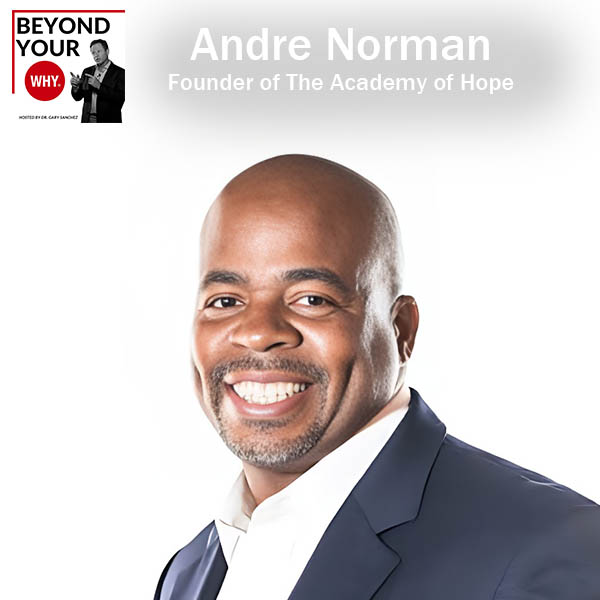
The main objective of the prison system is to rehabilitate criminals and integrate them into society. But seeing its current state, mired in cruelty and violence, it may not be serving its purpose well. In this episode, Dr. Gary Sanchez sits down with motivational speaker Andre Norman who shares his inspiring journey from incarceration, getting into Harvard, and working with top leaders at the White House. He talks about seeking better ways to run the US prison system, where he spent years fighting in gang wars and living in a constant threat of violence. Andre opens up about his two years in solitary confinement, detailing how this horrible experience opened his eyes to the contribution he can make in transforming the very system he went through.
—
Watch the episode here
Listen to the podcast here
Rehabilitating The Prison System With Andre Norman
In this episode, you’re going to meet Andre Norman. He went from gang member to leader of the gangs in the prison systems to going to two years of solitary confinement where he found himself, his formula, and his plan. He ended up getting out, going to Harvard, and working with leaders at The White House and many other organizations. You’re going to find this episode fascinating. I can’t wait to share it with you.
—
We’re going to be talking about the WHY of Better Way, to find a better way and share it. If this is your why, then you are the ultimate innovator and you are constantly seeking better ways to do everything. You find yourself wanting to improve virtually anything by finding a way to make it better. You also desire to share your improvements with the world. You constantly ask yourself questions like, “What if we tried this differently? What if we did this another way? How can we make this better?”
You contribute to the world with better processes and systems while operating under the motto, “I’m often pleased, but never satisfied.” You are excellent at associating, which means that you are adept at taking ideas or systems from one industry or discipline and applying them to another always with the ultimate goal of improving something.
In this episode, I have a fascinating guest for you. His name is Andre Norman. He is the number one prison success story in the world. Growing up in Boston, Andre struggled with poverty and illiteracy. After quitting on his dream of being a trumpet player, he turned to the streets eventually finding himself before a judge where he was sentenced to over 100 years in prison. In the first six years, he immersed himself in prison culture, gaining status and recognition within the system. This led to him being placed in solitary confinement for two years.
While in solitary confinement, Andre had an epiphany and realized he had become the king of nowhere. After assessing his current life and the life he wanted to create, with a 1% chance of succeeding, he formulated a plan to go to Harvard and become successful. Over the next eight years, Andre would work twenty hours a day. He taught himself to read. He taught himself the law. He went to anger management and personal development groups.
He was awarded parole and released having served fourteen years. Ninety minutes after obtaining his freedom, Andre made his first speech to a room of young Black men who were in juvenile detention, which is where he once sat. He taught them the three basic principles. The importance of accepting accountability and embracing mentorship, how to create a plan and live with integrity, and how to become a leader and never quit.
For many years, he’s been teaching these principles around the world. Having made stops in over 30 countries and worked with top agencies such as YPO, EO, Genius Network, The White House, Ferguson, Harvard, and London Business School all the while still working on his passion for helping people turn their lives around. He runs the Academy of Hope, a violence reduction prison-based program. Having gone from being hopeless in prison to now running prisons is why Andre Norman is the number one prison success story in the world.
—
Andre, welcome to the show.
You’ve got to send me that intro. I need a copy of that.
I had a different intro for you, and I decided not to use it because I think this tells a better story. The one I had didn’t go into where you came from. It’s just what you’re doing now, which I didn’t think did you justice.
I appreciate you. Email me a copy. I liked it.
Andre, were you born in Boston?
I grew up in Boston, Massachusetts at Boston City Hospital.
Tell us a little bit about your childhood. What was that like for you? What were you like in high school? Give us a little background on you.
I was born in Boston in 1967. It was a different time and era. All the people weren’t getting along as they do or are supposed to nowadays. It was like segregated communities in the sense of the White folks lived over there, the Black folks lived over there, and the Spanish people lived down there. We never saw the Asian folks. They were only downtown or someplace. You stayed in your bubble. Everybody had a bubble and you lived in it. When you came out of your bubble, people would tell you to get back into your bubble.
Going to school, you think everything is normal. You’re a kid. You don’t know the larger world is going through stuff. I didn’t understand the Vietnam War was going on while I was 2 years old or 3 years old. I didn’t understand a lot of things was going on. Watergate, I knew nothing about it. I never heard about it until I was an adult. The world is moving and I’m just a little kid. My parents and my oldest siblings are growing up understanding what’s going on. I have no clue.
I finally get to sixth grade. I have a little bit more ability. I can move around now. It was like, “Okay, cool.” That’s when I started realizing that I was living in a bubble and that my bubble consisted of the people who lived next door to me or down the street from me. I wasn’t allowed or expected to go beyond my bubble. I started traveling. I love traveling. As a kid in the fifth grade, I hated being boxed into the hood as we call it. I’d go down to the bottom of the hill and get on the bus, and I’d ride the bus from end to end.
After I rode the bus to every stop, there was a trolley. I started riding the trolley end to end at every stop. After I rode the trolley, I jumped on the train. I started riding the train to every stop on the first line. There are four train lines in Boston. I rode them all. I’ve been to every stop on every train line in the City of Boston that it has.
I started looking at the commuter rails and the buses that go to the suburbs. I jump on buses and I go to different communities. I jump off and go explore. People thought I was weird. This was way before GPS. That’s what you did. That was my escape from the city. I’d get on a bus and go somewhere. I get on the train or the trolley and go somewhere. I love this seeing stuff.
When I get to high school, it’s not going well. I’m not athletic or academic. I’m not super cool. I’m in where I’m in and then I fall off. As you see, my trumpet is on the wall behind me. Some friends of mine talked me out of playing the trumpet. They said it’s not cool and you can’t not have friends, so I gave up my trumpet. When I gave up my trumpet, I fell in with all the rest of the people.
The people who are going away that I didn’t want to go, but I ended up going in the street. If you’re not in school, you’re not doing anything productive, you’re going to be in the street. There’s not a lot to that. My street term didn’t last long. As everybody else, you make your little run and you get a car or whatever you get and then you end up in jail.
[bctt tweet=”If you are not doing anything productive, you will end up in the streets.” username=”whyinstitute”]
As a teenager, the one glamour thing that come up in my youth was in eleventh grade. I had failed 9th grade, 10th grade, and 11th grade in almost every class. I went to class late one day, my teacher wouldn’t let me in. I ended up in the auditorium sitting in the back of a presentation around exchange students. I’m sitting in the back. I’m jaded by this point in my life. I’m like, “Why are you talking about kids going to foreign countries? We can’t go anyplace. We’re stuck right here.” I had forgotten that I love to travel. Instead of saying, “This is for me, I just downed it because I was a hater at that time.” The guy called me to the front. He gave me the forms. He said, “Don’t say no to them. Fill out the forms. Make them say no, then you have an argument.”
Long story short, I filled out the forms. I applied and I got the first scholarship of all the kids in the Boston Public Schools because President Reagan wanted Black kids to go on his trips so he eliminated grades. You could not look at grades. You only had to talk to the person in front of you based on potential. In 1984, it was deemed I had the most potential of any kid in the Boston Public Schools system.
I win this scholarship and then my principal finds out. He calls me and the counselor to the office. He’s cussing us both out. Never could I represent their school. I was the worst kid they’d ever seen. He was going on and on. Long story short, when he was done, the man raised his hand. He said, “Three things. One, Andre is going on this trip. Two, it’s not your money, and three, it’s not your decision. Thank you for your time,” and we walked out. When we got in the hallway, he gave me that look like, “I told you. Don’t ever say no to them.”
In the summer of 1984, I went to London, Paris, Belgium, and Amsterdam on an exchange student scholarship. It was my thing. I’m traveling. I’m like, “I’m there,” and it was phenomenal. If I’d pick a moment, the seed that was planted that changed my life was I’m in a local pub. I’m seventeen. I used to play video games and you used to put your name up on the high score so I put Dre. When you go on it, it’s all Dre. I’m a video game kid.
In ‘84, the Olympics is going on in LA. Everybody in London, Paris, Belgium, and Amsterdam all called me the American. Nobody called me the Black kid, “He’s an American.” I had never in my life been called an American or put into the category of American. It was always like, “The Black kids and them or the White kids.”
What happened is after hearing it so much and I guess at the same time, the Olympics are going on so everybody’s up in arms about their country, I went to the pub and I switched everything from Dre to USA. I started putting the USA up there. I never saw myself as anything but the Black kid from the hood but all those people inundated me with being an American and I embraced it. Years later, that trip that summer helps me see and navigate my life now.
Listening to that, it doesn’t sound like you were a bad kid.
I was an extremely bad kid.
It doesn’t sound like it. From what I’m hearing, it doesn’t sound like you were a troublemaker. It sounds like you were a kid trying to find his way and got an opportunity. What did your friends think at that moment about you getting awarded this scholarship to go overseas?
By the time I got that scholarship, it was the end of my junior year going to my senior year. Half of my friends are already in juvie waiting for me to show up. When I say not a bad kid, not a good kid, there’s no bad or good. It’s who you are around. If you show me the atmosphere that somebody grows up in, I’ll show you what you’re going to get out of that. I’ve seen George W. Bush was president. Do you know what made him be president or prompted him? George Herbert Bush prompted him to be president. We can go back to him saying John Quincy Adams and his son.
You become, to a certain extent, not a guarantee of what’s around you, but George Herbert Bush has one son who was a governor and became president. If your father is a politician, you become a politician. All the Kennedy boys became politicians. You follow in the footsteps. Unless you’re an athlete, you can’t pass that on.
What were your parents like then?
My mom and dad separated when I was in the first grade. I was on my own when it comes to “your dad’s” part. My mom had six kids and is a single mom. She’s trying to raise six of us, feed us, and clothe us. She wouldn’t go on welfare so she’s working on too many jobs account. She was trying to make it work. She was overwhelmed with six kids and refused to sit at home and collect a check every two weeks. My mom went to work every day.
The backend of that is the kids are home by themselves. Since I and my brother were the little ones or the younger two, we needed guidance the most when it wasn’t there. My oldest siblings were on with their lives, whatever degree that looked like. I call it neglect but not willful neglect. It was the byproduct of how we were living. She couldn’t be at work for ten hours and be at home for ten hours. Something had to give.
What was the turning point that got you going in the wrong direction?
The turning point that got me going in the wrong direction was in the sixth grade when the kids told me I was poor. They made fun of me for being a free lunch kid and wearing dirty clothes. I didn’t have anybody to go to. At that moment, my friend came to me and said, “Dre, we can go sell weed in the park after school and make money. We can buy the stuff that we don’t have.”
Had I had a dad in my life, a mentor, or a coach who would have said, “No, Dre, you’re not doing that.” I had no one to turn to and say, “This is my option. Do you have a better option?” My sixth-grade friend who’s as strung out and pained as I am in trying to find a way, his advice seemed like great advice to me. Again, I didn’t have a brother 4 or 5 years older. My older brother was one year older than me. There’s no one I can go to and say, “What do you think about this?”
I went with my logic as an eleven-year-old. At eleven-year-old, if I can make these people stop yelling at me, it sounds like a good thing. I went with it. That was the turning point where someone would’ve said, “Dre, come on. You’re not going to go do this.” I would have not done it but there was nobody there to tell me no. If you’re running through life with no one there to tell you no, that’s a problem because you’re an accident waiting to happen.
[bctt tweet=”If you are running through life with no one to tell you no, you are just waiting for an accident to happen.” username=”whyinstitute”]
There is poverty, rich, wealthy, CEO, or the mayor’s clerk. If you’re governing your life right now and there’s nobody in your life that can tell you no when a bad decision or a bad move comes up or is inappropriate, you don’t have anyone to self-check you, you’re just waiting for the next bad decision to come.
You in sixth grade started selling weed. What happened on that path? Did you get into the juvie system finally?
In sixth grade, I started selling weed. What we’re used to doing to be clear was the older kids would sell weed. My job was to run back and forth to the stash house and bring it to them. I got $30 to $35 a day, which doesn’t sound like a lot of money, except if you’re this dirt-poor with nothing. If you’re a free lunch kid, $35 a day is a lot of money. Back then, a pair of sneakers cost $20, not $200. I got a saying. If you get on the wrong street and walk, at some point, you’re going to hit the end. I got on the street. I enter the street as a drug dealer. I then went to a gun carrier and I went to somebody in fights. It just progressed all the way up.
What was it that finally got you in front of the judge?
What finally got me in front of the judge was a bunch of arm robberies. I used to sell drugs and then I started robbing people who sold drugs because it was so much easy and they had so much money. I went to prison for robbing drug dealers.
They had the cash and you took it. How old were you then?
I was eighteen.
You got sentenced to 100 years in prison.
7 to 10 years, 9 to 10, 9 to 10, 10, 10, 15 to 20, 15 to 20, 3 to 5, 3 to 5, and 5. It’s 105 years. It’s what they gave. I had it 95, and I picked up 2 attempted murder charges inside and got 10 more, which pushed it to 105.
What was it like hearing that when you got sentenced to that amount of time in prison?
By then, you’re in a rhythm. It’s what’s expected. If you’re an honor roll student and in the second semester, they tell you you’ve got an A, you’re like, “Okay, cool.” If you’re flunking out and they tell you you’ve got an F, “Okay, cool.” This is where your path is going so anything that happens on that path isn’t spectacular. Some things are expected from you depending on what you’re doing.
Based on how I was living, nobody was shocked. They said, “Dre is in court again. Dre is going to prison.” “We knew that.” When I got to the prison, all my friends said, “What took you so long? We’ve been waiting for you. We knew you were coming.” It’s like when you get someplace and you’re like, “This would be perfect for Johnny. Where’s he at?” and then Johnny shows up how. We knew he was going to come, “This is your thing.”
My lifestyle was so clear that you knew where I was going to end up. If I didn’t go to prison, it would have been amazing. Also, it was amazing that I went. If LeBron James didn’t become the all-time greatest NBA player next to Michael Jordan, they’d be like, “What happened? He had everything going for him. It was all lined up. He was expected to be there.” I had everything lined up for me to go to prison so I went.
Take us through what it’s like walking from outside of prison into prison.
It was scary. If I had to pick one word, going to State or Federal prison is scary. The first day I went to the county jail, I was scared to death. I fight. I’m tough, but this is a place I don’t know. These are people I don’t know, so I’m scared. You fight through your fears and you win some false hope and you stop being scared, which was the worst thing that happened to me. I won my first fight in the county jail. I’d have been much better off if I’d lost my first fight.
I beat the guy up and people are celebrating me. “I’m good here. They are celebrating me. Let me do that again. I beat up somebody else. They celebrated with me some more. I’m cool now.” I’m getting the affirmation that I can do this versus had I gone in and a guy punched me on my face and knocked the tooth out, I have been like, “I am not going back there no more.” The worst thing that happened to me is I won my first two fights.
I told myself, “I can do this.” When I was scared, that was the greatest time to get me. I saw they had the TV show Scared Straight. It’s not you yelling at me so when I’m in that holding cell, I’m scared to death. My fears are on flame and then I found out, “There is nothing to be scared about it. I can do this.” That was the worst thing that ever happened to me when I realized I had the capacity of doing time in prison. The fear went away and arrogance took over.
Did you go to Federal prison?
I went to the State prison first for ten months. I was so violent and incorrigible that the State prison called the Federal prison and they traded me. They did a prisoner exchange. They said, “We can’t keep him here. He’s too violent.” They were a prisoner exchange and they sent me to the Federal government as a transfer. I was in the Federal government for two and a half years, and I was so out of control there. They called the State back and said, “Give us our people back. You’re getting him back,” and they kicked me out. They sent me back to Massachusetts. That’s when I picked up the two attempted murder charges. They put me back in solitary. I’m thinking I’m winning. You could not tell me I was not winning.
What was going through your mind when you were this super violent guy? Sitting here talking to you right now and hearing your story about going to Paris and all over Europe, I don’t see that in you at all.
You don’t owe me any cigarettes. Owe me a couple of packs of cigarettes and pay late. Seriously, when you get into a system and you morph into what’s in there. You become what’s around you. People say money gives you the chance to be a better or bigger version of yourself, the prison gives you a chance to be another version of yourself. I went in. I was like, “I’ve got to survive. I’ve got to make it. I’ve got to be accepted. I’m going to copy what I see other people are doing.”
The most violent guy has the most control. I’m a control freak so I’m going to do it the way that the most violent guy wins. He’s in charge. I’ll be the most violent guy. It was a rationalization versus anything else. I realized that if I hurt people in prison, then people will respect me. I get the status. I justified it by saying that they’re criminals. I’m not beating up little old ladies at the bus stop. I’m beating up gang members, murderers, rapists, and stickup kids. I’m not out there terrorizing people. Everybody here is a criminal. You all signed up for this. That’s how it goes.

Isn’t there always the next toughest guy coming along? Is there somebody always wanting to challenge you?
One hundred percent. I realized early on this is the better way. People aren’t scared to fight. How many people got in the ring with Mike Tyson knowing they were going to lose? They still got in the ring because they’re not scared of fighting. If Mike Tyson had a knife, how many people would get in the ring with him?
No one.
I’d put down the gloves and pick up a knife. I know how to position myself with a no-lose clause. My thing was I’m going to be the most extreme. I’m not going to beat you up. That’s Mike Tyson and you’ll fight him because too many people have fought him. People fought Mike Tyson, Muhammad Ali, and George Foreman. Nobody’s ever not climbed in a ring even though they won’t get knocked out or not. For me, I realized that even Mike Tyson, Muhammad Ali, and George Foreman got beaten. They all got beaten.
I’m like, “Let me up the price to fight Andre. There’s a different price. Are you willing to give your life to do combat with me? This isn’t a knockout. Either I die or you die. Those are the stakes.” Very few people, for the most part, nobody wanted to put those stakes on the table. “You fight me, I might knock you out. You get a black eye or a busted lip.” “I’ll go for that.” If you come at me, one of us is dying. If it’s you or if it’s me, one of us got to die. If you won’t do that, keep it moving because I’m not rolling around on the floor with you. I upped it and when I went to that status, nobody wanted to deal with me. They’re like, “He’s playing a whole other game.”
I think I remember you telling a story about when you walk into prison, you’re given a manual of how you’re supposed to act in the prison but then when you walk in with the inmates, you were given a different set of rules.
During my first couple of days at the prison, I went down to the caseworker’s office, and she told me I can get a Forklift degree. I can get my GED. I can get a college degree and all this stuff that I could do while I was in prison. I was like, “I didn’t know this about prison.” “Did you know you can get a GED or a Forklift degree, a college degree, or high school?” I’m like, “This is great.” I went back and I called my mom. I’m like, “Mom, it’s not that bad here. I can get all these degrees and make my life better. When I come home, I’ll be able to do something.” She says, “Great, son.” The next morning, I’m at the gate waiting to go to the school building, and then the homies rolled up on me and said, “Dre, where are you going?” I say, “I’m going to school. I’m about to better my life.”
They’re like, “He got the caseworker’s speech.” I said, “What do you mean?” They said, “Do you see those guys over there? That’s the White guys. When they find out that you’re on your own, they’re going to beat you up and take your stuff and that caseworker is not going to help you. You see those guys over there? That’s a Latino gang. When the White guys are finished, they’re going to run in and beat you up because you’re by yourself and the caseworker’s not going to come help you.”
“Do you see those guys over there? That’s the Black guys from the other side of town. When the White guys and the Spanish guys finished, they can go in and beat you up. When they find out you have nothing, they are going to beat you again for not having nothing, and the caseworker is not going to help you. If you hang out with us, we’ll make sure nobody does anything to you. Nothing will ever happen to you unless it happens to all of us. It’s all of us or you can go by yourself.”
I looked at the White guys, the Spanish guys, the Black guys, and the guys in front of me. I took that little folder they gave me and threw that s*** in the trash. He handed me a knife and I’m on deck. That was my first, “This is how life in prison goes. It’s not how you want it to go.” Your life is in the hands of other criminals. The people who’ve made awful choices throughout their entire lives are now governing your life which is what made me say, “I don’t want these people governing my life. I want to be in charge.”
[bctt tweet=”In prison, your life is in the hands of criminals. You are governed by people who have awful choices in their entire lives.” username=”whyinstitute”]
The only way to be in charge is to raise up to number one, and the only way to raise up to number one is to go down this path of hurting people. It’s because if you don’t get to be number one, then other people will decide your life for you, and I didn’t want that. I can’t wake up every day, “Are they going to rape me now? Are they going to take my TV? Are they going to take my Snickers and my candy bars? What are they going to do to me now?” I can’t wake up every day in fear of something happening to me so I said, “I’m going to take control of the fear. I’d rather be the bully than the bullied in prison.”
You’re the number one guy in prison. You’re the guy. Take us through a day in the life of the number one guy in prison.
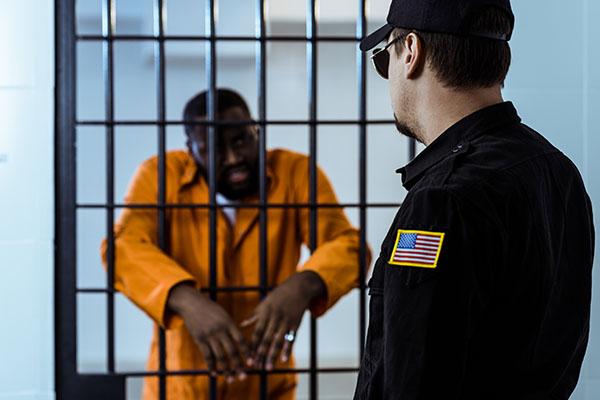
My day starts at about 4:35 when I wake up in a single cell, and I sit at the end of my bed. I said, “I control contraband. I control drugs. I control money and commerce.” I wake up every morning. I sit on my bed and I said, “Not who wants to kill me now,” because everybody in the prison technically wants to kill me because they want my job. Who doesn’t want to be Bill Gates? Who doesn’t want Bill Gates checked? Imagine if you can be Bill Gates just by stabbing him.
If that was the case, Bill’s like, “You don’t have to be smarter than me. You don’t have to open up another company that I can buy out. You only have to get close enough to stab me, then you can have my position.” Bill Gates would’ve been out of here a long time ago. It’s the same thing with every other CEO. If all you had to do was get Jeff Bezos and beat him down, then you can get to own Amazon. He wouldn’t be owning Amazon for too much longer.
In prison, if you can beat me down or kill me, you get my position. Every morning at 4:00, I wake up and I say, “Not who wants to but who’s going to try.” I would go through my database of all the variables and things that happened the day before. Everything moves. I’d be like, “It’s going to be Steven.” I’d deduce why Steven, why Johnny, or why Rakeen. I figured it out because if you don’t figure out someone wants to kill you before they do, then you’re dead.
If I figure it out when you get to my cell door that it was you, I’m dead. I am forced to figure it out in advance. I have to look at who came in and what gang are they a part of. Who left? What gang are they a part of? Who’s in solitary? What cell is working? What shift is it? Whose birthday is it? Whose mother died this day? I got to think of every single variable that’s happening in this jail that’s going to impact my life because when I get it wrong, I die.
It’s get-it-right-or-die. There’s no in-between. I wake up every morning at the end of my bed and I come up with, “Who’s it going to be now?” I would go see them first and confront them like, “I think you got a plan to kill me later on this day.” They are like, “What are you talking about?” It’s because I have to figure it out before you figure it out. The funny part is you haven’t figured it out yet because once you figure it out, I lose.
I’ve got to get to you before you figure it out, which was always crazy. I would come to you and give you the rationalization for why he was going to try to kill me. He is like, “That makes a lot of sense, Andre, but I would bring 2 or 3 guys with me who will be ready to murder you. I hate to have to murder you, but it’s you or me.” I would explain to you the scenario that you’re going to be faced with that’s going to bring you to the conclusion of killing me.
I would say to you, “How do you think I should handle this? Should I wait until 12:00 and you roll on me or should I get you ahead at 9:00?” They are like, “Come on, Dre. It’s not like that. I didn’t have that thought yet. You can’t hold me now.” I’m like, “Yes, I can.” I would look at you and make a decision. Do you pose a threat to me? You are standing down now and I believe in it.
In prison, you go by your word. What you say is authentic and real. If you say, “I’m standing down, I’m not going with that plan,” and you double back, it’s not a respectable move. It’s like a cheap shot. If I can get you to stand down and I can believe that you’re going to stand down, I keep moving. If I didn’t, they’ll take you out on a stretcher.
You have to do that every day.
Every morning at 4:00 or 4:30, I’m like, “What happened yesterday? Who came in? Who left? Who got mad? Who teamed up?” You’re a White guy. You’re from whatever part of town and there’s 30 of you. Your cousin just came to the prison and he’s in the other White gang, and it’s 30 of them. Your cousin being a member of the other gang means your two gangs are now going to merge because you have a lynch. You have that hinge to bring you both together. I’m not dealing with 30. I’m dealing with 60 now.
I’m dealing with 60 people because you’ve got that lynchpin. Yesterday, it was just two separate gangs, but because your cousin is a top member of that gang and he just came back, now you two are going to unite. Now I got 60 people I’m dealing with versus 30. Somebody is going to have the bright idea that you should get a larger percentage of what’s going on in the prison because you’re 60, not 30. 30 and 30 get what it gets, but 60 gets more than that. What’s standing in the way of you getting a bigger percentage? Andre. You have your lynch man.
You’re going to have a meeting together at 60. We’ve got way more soldiers. We can make more power moves. We’ve got more for a power move because we have a united front of 60 people. I’ve got to come see you at 9:00 in the morning and be like, “I know your cousin just came. He’s still in new man. He hasn’t got out of new man yet, but when he gets out, he’s going to come to you with this great idea of your two gangs uniting and that you all should get more lion’s share or profit share what’s going on and Andre is the way. It’s two days away but I’m here in advance because I know your cousin and I know you. It is only a matter of time before you all get together.” They are like, “Yeah, it makes sense.” It would make sense to me. “I’m here to have a conversation. How are we going to do this?”
You’ve got to be not only tough. You’ve got to be smart.
Tough only lasts about a week. Tough will get you through the first week because if all you are is tough, they can get you out of the way. You’re going to respond to the first slight or the first thing. You’re going to crash out. We call them crash dummies. Something is going to happen that’s going to make you crash out and then you are no longer a threat. If I want to get rid of you, I’ll send some dude over there to call out your name. You going to beat them up. They’re going to take you off the camp. You’re out here. It’s really easy to get rid of crash dummies. You can’t be tough enough. Tough doesn’t get it. You have to outthink 2,000 people every day.
[bctt tweet=”Being tough won’t help you survive in prison. You have to outthink thousands of people every day.” username=”whyinstitute”]
How did you end up going from the leader of the gang in prison to solitary confinement?
I tried to kill a couple of people. In prison, the status is violence. That’s communication. That’s the currency. Your name is how tough you are and how violent you are. I was trying to be the ultimate guy in prison. Somebody who murdered somebody in prison. It doesn’t matter what you do on the street or how much money you made. It’s what have you done back here.
When you were a kid, what did you do in college? What are you doing out here in the entrepreneurship world? When you are a kid, what did you have in your startup? What are you doing in the entrepreneurship world? That’s how you judge people. When you see NBA players, they say, “How many rings have you got?” They stay clown at Charles Barkley because he doesn’t have rings. That’s always the first joke. “You don’t have any rings, Charles.” He was a great player and an all-time great but he doesn’t have a ring. I always go down to him, Karl Malone, Patrick Ewing, and John Stockton. You get a list of them. Dominique Wilkins doesn’t have rings and it takes them out of the greatest of all times discussion.
You were going to be the best.
I’m going for the top.
I think you said you were good at stabbing but not very good at killing or something like that.
I’m so happy that nobody physically died. If there are skills you’d want to be bad at, killing people should be one of them. I had the heart, the courage, the fortitude, and the will. I had to be on top. It wasn’t for lack of trying. I just was not good at killing people. Lo and behold, my job now is saving people. I’m great at saving people with depression and suicide. If you have Imposter syndrome, I’ll pull you back, but I am really bad. It wasn’t in me. God was like, “That’s not your calling.” Some people will never be super wealthy or whatever because it’s just not for them.
What was it like to go into solitary confinement?
Solitary confinement is the ultimate challenge because you’re in there with yourself. The world is full of distractions. I got an iPhone, a computer, a car outside, books in front of me, books behind me, a trumpet, stuff to do, people to talk to, stores I can go to, and restaurants. You never have to confront yourself.
When was the last time you sat down for an hour in a room with nothing and focused on yourself? “Who am I? Why am I here? Where’s my life at? Am I happy with my life? What are the decisions I made?” I sat there in a cell 24 hours a day, 7 days a week, and I had to confront myself, which is something I had never done before because, in population, you are always going to be distracted by gang fights, some hustling, or some basketball. You can be distracted. There are no distractions in solitary.
For 24 hours, you will face yourself. I’ve watched a lot of people go crazy, crack up, commit suicide, set themselves on fire, or cut up because the reality of who they are was too much to bear. Are you ready to deal with who you are? Do you want to meet who you are? I had somebody say the worst that could happen is at death, you meet the person that you should’ve been. Who are you now and why are you here? When was the last time you asked yourself, “Why are you alive?”
I watched people every day. They go day to day. They find stuff to do. I’m building this house. I’m building this business. There is stuff to do but when was the last time you asked yourself, “Why am I here?” Cut everything else out of the way. I watch people confuse business with purpose, charity with purpose, raising a family with purpose, and all this other stuff like reading books with purpose. What is your purpose?
I sat in a cell and I had to ask myself, “What is my purpose?” I’m in a 10×8 and I’m running like crazy for myself but eventually, the question came back. I was like, “I am not this person I’m pretending to be. I’m not this drug dealer. I’m not a gang leader. I’m not a murderer. I am a criminal, but I’m not these other things. I’m not a bad person. I just made dumb choices and that can change.”
I said, “Who are you? Are you ready to change that?” I came to grips. I sat in his cell for almost two and a half years with one question, “Who are you Andre Norman?” When I finally figured that out, I said, “What’s in the way of Andre Norman being the best version of himself?” I wrote those things down and I started working on those things that were stopping me because it’s a clear distinction. What’s stopping me from being the best version of myself?
I knock those things out and I got to think what I say to people. You never have to give somebody who’s gifted more gifts or more opportunities. You need to take the pain out of their life. The potential wasn’t stopping me from being great. It was a pain in my life. Once I realized who I was and the thing that was stopping me from being great was my personal pain, then I found a way to remove that personal pain.
I went from the basement of a prison, an illiterate ex-gang member, to someone who worked in the White House. Someone that the United Nations calls and asks for global terrorism help. Some countries like Honduras and West Africa call to help with cartels and people dying and child soldiers. I’m the guy that Joe Polish calls if somebody calls him the number one mastermind group in the world with a family issue.
How did I go from the basement of a prison and a nobody to being one of the most sought-after change agents on planet Earth? I finally figured out why I was here and what was stopping me from being that thing. Many people are like, “I got a job. I make money. I got a nice house, a boat, and an insurance package. I’m going with this day to day.”
I’ve seen so many people, my father included, I put my father on that list. My father is 82 years old in an assisted living house in Connecticut and he’s miserable. Do you know why? He’s looking back over his 82 years and he says, “I wasn’t my authentic self. I was who my dad wanted me to be. I was who my mom wanted me to be. I was who my wife wanted me to be. I was who my kids wanted me to be. I was who my friends wanted me to be. I was all these things other people wanted me to be.” He lost himself a long time ago.
I look at people and I worked with some of the wealthiest people on the planet Earth like YPO. I’ve been to Saudi Arabia and Australia. I’ve been all over the planet. I went to Saudi. There was a guy there. He says he’s stressed out. He’s like, “What do I do? I have a son and my son is doing phenomenal. He has everything he wants.” My dad taught me to work hard, save money, and take care of my family. The boom came in Saudi and he became a multi-multimillionaire.
His son has enough money for retirement at nineteen. He says, “How do I motivate a nineteen-year-old who’s a multimillionaire?” He doesn’t have to work for. It’s there. He was lost. I had to go in and help him figure out how to talk to his son about getting him encouraged and getting him on track. I get calls every day like, “Dre, I got this kid, my daughter, my niece, or my whatever,” and they’re damn near suicidal because they can’t figure out their purpose.
It’s not that they didn’t get selected to a team or people don’t want to be their friend. Those things matter when you don’t know who you are. Somebody come out now and say, “Dre, I hate your guts.” “That’s nice. Have a nice day. I hope you’re doing well.” It doesn’t bother me. If you’d said it to me when I was in sixth grade, I’d have had a heart attack. “You have to like me. You can’t not like me.” “You can’t play trumpet because we don’t think it’s cool. “You all have to think it’s cool. If you don’t think it’s cool, I can’t live.”
As the leader, I do leadership development. I don’t do follower training. Helping people be better is what I do. First and foremost, you got to find out who you are and then I’m going to show you how to activate that. If I can go from the basement of a prison to working at The White House, the UN, the London Business School, Genius Network, the War Room, YPO, and EO, I go down the list. I went from the basement of a prison to the top agencies on planet Earth with very little help. What can your readers go to?
I’m assuming they’re living in houses and not trailer parks. I don’t think nobody is reading this in a homeless shelter. They have means and they have access to people like you who have means. It’s not about having, it’s about embracing. What I want to do is help people activate that thing inside of them. They say, “Dre, you got the edge.” I call it my edge training because to take over maximum security prison, it takes an edge and to fight your way back out to that place takes an edge.
To walk into West Africa, Honduras, Ferguson, Missouri, or any other place, I had to walk into Harvard and feel like I belonged there because I did. I walked into The White House. I feel like I belonged there because I did. I embrace my gift. I embrace my edge and I exercise it. That’s it. I’m not the best at everything, but I’m the best at what I’m the best at.
How did you get from solitary confinement to The White House? Take us on that journey.
I became my own first client. I have seen the A-club. I didn’t join that club. I need to be an A-club guy. I came up with a plan that I wanted to go home. First, I had to understand what I didn’t want. People stopped picking what they do want, but they didn’t get rid of what they didn’t want. The first thing I had to do was decide I no longer wanted to be king of the prison. That was the first step. Before I decided I wanted to go to Harvard, I decided I didn’t want to be king of the prison.

I gave up the false hope or the dumb dream then I looked in the mirror and said, “What do I want to be? I’m in prison and I want to be free.” I went to the second step. Most people go to the first step and then stop. “You want to be free. That makes sense but let us help you get free.” Do you know what free is for me? It’s the parking lot. If I hit the parking lot, I’m free. I have no plan beyond the parking lot so I go back to what I was doing before because I’m hitting my max.
I said, “I don’t want to be free because free is only the parking lot. I don’t want it to be just the parking lot. I want to go beyond the parking lot. I said, “Why do I want to go beyond the parking lot?” I want to be successful. Successful people go to college. I said, “I’d go to college.” I picked a school. I called Harvard. I go home. I go to college and be successful. That was the goal.
I looked in the mirror and I said, “What’s inside of me stopping his dream from happening? I’m Black. I can’t read. I’m a gang leader. I’m violent. I have anger issues. I’m saying my family doesn’t support me and I don’t read well. I’m saying I got 105 years in prison.” I made a list of the things that were in the way of me attending Harvard University. First, I went back to school and got my GED. I then went to anger management programs. I went to self-help groups. I taught myself the law because it wasn’t me fighting in the yard that was keeping me in jail. It was me not fighting my case in court.
I taught myself the law and reversed my case on appeal. I kept fighting. I made that list and I worked on that list. Every single day, I put all of my energy and effort into that list and made sure I took that list down and I did. Once I got past the prison part, it took me eight years. I didn’t do it in eight days. It was 8 years of 20 hours a day being committed to the goal of success. You would look at me, “Is this what a successful guy acts like?”
I couldn’t be a tough guy in the daytime and successful at night. I had to be successful all the time starting now. It’s not when I get there. Hold me accountable for what I say I’m going to be now. Many people want to be held accountable after they achieve it. I cut all the corners, cheat other people, and do all this stuff. Don’t stop holding me accountable for being rich until I get the money.
You have to embrace it and embody it on the front end. I embraced and embody being successful on the front end. I walked around that prison like I was a Harvard student. They’re like, “Why are you acting like that man?” I am like, “This is how a Harvard student acts.” “You are never going to Harvard.” When I got there, I had already been there. I didn’t have to overwhelm by Imposter syndrome. I’ve been here for years. It only took me a while to get to the campus.
When I got to the campus, I was there and I was received, that’s another thing. There’s getting in the room and then they’re staying in the room. I got in the room. “He made it to Harvard.” That was the easy part. Not getting kicked out was the hard part. I go and act like a fool, idiot, or a gang leader, they’re kicking me about there. What was the point of going if you’re not going to comport yourself in a way that makes you amenable and wants people to keep you around?
It was eight years of working on one list. A) Who am I? B) Who don’t I want to be? C) What’s stopping me from being the A? It was A, B, C. I’m gone but then the accountability part is I have a lot of accountability coaches, partners, and mentors. It wasn’t only me pulling my boots up. I had a lot of help, but I had to ask for help. I had to accept the help. People in my life tell me no now. You couldn’t tell me no when I was a gang leader. Who are you?
Once I became a student, you could tell me no. You could tell me there’s another way to do it. There’s a better way to do it. I listened and I applied. The way I got from the basement of the prison to Harvard was I embraced who I was supposed to be. I let go of who I didn’t want to be and then became a student of everything it took me to be that thing.
I’m sure people reading this are thinking the same question as I am. You go into solitary confinement as the leader of the gang. In solitary confinement, you become somebody different. Now you come back out, how were you accepted and how were you able to stay out of getting your butt kicked?
This is a question I asked you, folks. If you saw Mike Tyson at the gas station, would you talk s*** to him?
No.
He’s retired though.
He’s still tough.
Exactly. When I retired, I was still Andre Norman. I didn’t become some friendly or soft guy who used to get beat up all the time. What was the best-case scenario for poking at me that you could hope for?
Not dying.
That’s the best-case scenario you can hope for. My reputation gave me a lot of latitude in going forward. I had a couple of guys challenge me, “Dre, why are you going to programs all the time? Why are you in that building all the time? Why are you doing it?” They kept challenging me and I said, “My father and I had a bad relationship. It’s caused me to not believe in myself and to have quitter syndrome. You don’t get all that. You don’t care. I need to go to counseling so I can fix the relationship between me and my dad to make my life better.”
They said, “Dre, you’re the smartest guy in prison. You don’t need to go to counseling.” I said, “I am, but that’s why I’m going because I’m the smartest guy here. I figured it out.” They said, “What’s going on up there?” They started challenging my integrity. I said, “I’ll tell you what. I’m going to counseling no more and there are two things I can talk about. I’m going to let you choose which I talk about. I can either go to counseling and talk about me and my dad not getting along and him letting me down and then it infected my decision making or I can go to you, get my knife, stab you in the face and I can talk about that but either way, I’m going. What do you prefer I talk about? The guy looked at me and he said, “Dre, that’s awful what your dad did to you. You need to go get that fixed.”
I said, “Are you sure because I have no problem talking about you? If you want to be the topic of my conversation when I am in counseling, you can be. I will stab you dead in your face right now. You’re not going to stop me.” I didn’t want to stab him but in prison, you can’t be soft. I got to stand for this. Right now, when I go out to help White kids, people are like, “Dre, why are you helping the White kids? We did dope. We were addicts. We were scum on the Earth. Now, White kids do dope. It’s opioids and they’re victims. It’s a health problem. We did it. We were criminals. White kids do it. Why are you helping the White kids? How are you helping these people? We are in jail for selling weed. Now they all got weed shops. They are not letting any of us out of jail.”
There’s an undercurrent in the community that says, “I can’t help White people because of unjust systems and laws from before.” It’s true. It is been unfair and unjust in a lot of spaces and places. There’s a fifteen-year-old kid in Montana who needed my help. She was a White kid and she was trying to commit suicide. She didn’t protest, vote, slam any doors, or deny any access to housing. She’s just a fifteen-year-old White girl whose life was screwed up.
I flew to Helena, Montana to help that one girl because I wanted her to live. I want everybody to live. I tell all my brothers in comrades and arms, “Do you help kids or do you help Black kids? I help all.” I am always going to be pro-Black. Don’t ever get it twisted like, “Dre is down in the middle.” I’m not down in the middle. I’ll always chant and root for Black people. It’s who I am but I’m a servant for all people. I do not show up because you’re White. I do not show up because you’re Spanish. I do not show up because you’re Asian.

If you call my phone, I’ll show up and I’m going to give you just as much energy because I only know one way to do things all out. If I show up, I don’t have two gears. The people who look like me gear and the people that don’t look like me gear. When I show up, I show up but it took me a while to learn to transition. When I first came home, I worked with Black kids because I was comfortable there and I started working with girls. I got comfortable there. Somebody said, “Dre, some White kids went and helped them because they are White and their parents want to pay you.”
I said, “With White kids, I got no problems.” I went to the White school, they drink, smoke, and got issues too. I didn’t know that. I grew up watching The Brady Bunch and Leave It to Beaver. White kids never had problems. I went to the White school and these kids are cutting up, cutting their wrists, and committing suicide. I was like, “Never again will I judge somebody based on my ignorance.” If you call me, I’ll come but I had to grow to that.
In the beginning, I helped a certain group of people and I grew to where I am now. I have to give the same space for the next person who’s White, Spanish, or Asian, who has to grow to the space of saying, “I’m going to embrace Black people. It’s not normal. They didn’t live next door to me. I have no reference. I’m not expecting that this is the right thing to do.” No, you have to get context. You have to get your hands dirty. You have to have experiences and it’s my job to help folks have those experiences so they can then go back into their own space and place and say, “I met a cool Black guy. I met a straight-up Black guy.” Some people haven’t and they need to meet Andre or whoever is going to be the first guy that lets them know that it’s not everybody.
Let’s talk about Detroit. I know you’ve got something big happening in Detroit.
The plan for Detroit was I’ll go to Detroit and help them with the gun violence. We have a gun violence problem in America. People are shooting people at alarming rates. The deal with this is I’m creating a gun violence solution for America. I started programming in 1999 as a free person. I’ve created all kinds of programs. We help create the Office of Faith-based and Community Initiatives for George W. Bush. We’ve created Violence Interrupters. I can go on a list of programs we’ve created that are now nationally based.
The Mayor of Detroit and the Deputy Mayor of Detroit want to keep their people alive. That’s every city’s hope. My challenge is to sit down and create a comprehensive gun violence program that’s going to save lives in this country full stop. It’s not dedicated to anyone. Detroit is definitely on the list. I’m there, but we have to do something. As I said, to the people reading this, what is your purpose? My purpose is I solve problems. I can solve small problems. I can solve big problems. I can solve problems that pay me. I can solve problems that keep people alive. Right now, as an American citizen, I still live in the best country on the planet Earth and we have a problem. Am I willing to take your time and extend my energies and gifts to solving this problem?
You and I talked that one day about how similar what you’re planning on doing in Detroit was to the Mayor of Kingstown, the TV show.
I watched the Mayor of Kingstown, and I like this show to a certain extent. They had a show called The Odds. As someone who’s done time, the prison stuff is never going to be 100% authentic to me. I’m quite sure some cops will say, “It’s not like that.” A prisoner or a gang member’s perspective is slightly different but I get it. It’s like that. If I was the Mayor of Kingstown, I’d be more on the gang side than on the police side. It would have the same result. Instead of me being side by side with the police every day, I’d be side by side with the gang members and going to the police versus the other way around but it runs like that in real-time.
How much of the crime and gun violence in Detroit comes from inside the prisons?
I wouldn’t say Detroit. I would say nationwide. People go to jail. They don’t disappear. You go to jail and they have cell phones. They have internet. They have all kinds of access to talk to people in the free world whether it’s a phone, a video visit, a real visit, a radio, or a letter. If I don’t like you, I can tell the gang I came from, “I don’t like him. I need to do X, Y, or Z.”
There is a lot of communication between people who you gave 50 years who have no incentive to send out a positive message versus somebody who’s incentivized to give out positive messages. Part of my program includes the prison system as part of the solution because you can’t act like they’ve disappeared. You have two million people sitting in their prison cells. They’re real and they need to be part of the solution and not left to the sidelines that makes them part of the problem.

When I was a dentist, I had a patient that was homeless for nineteen years. He inherited some money and came in to get his teeth fixed. I asked him one day, “If you were tasked with solving the homeless problem, would you know what to do?” He said, “Yeah, I could solve it in no time flat.” I’ll ask you the same question. If you were tasked with solving the issue of so many people being incarcerated in our prison system, would you know what to do?
One hundred percent. My mother taught me a long time ago, “If you don’t have a solution, keep your mouth shut because they’re going to call you uptown one day. They’re going to put you in that big chair and they’re going to ask you, ‘How do you solve this problem?’” When you can’t do it, they’re going to say, “The best and the brightest of you can’t solve it. We’re going to do it our way.”
I dare them to call me to the State House, the Congress, or wherever. We can fix prisons. It is the fixable solution. It starts with education. Every next criminal, every next school shooter, every next gang member, every next drug addict is sitting in K1, K2, and first grade right now and we’re ignoring them. We’re paying them no attention. We’re cussing them off. Until that 1st grader becomes a 12th grader with a gun, we don’t care.
Until that first grader becomes seventeen years old and homeless, we don’t care. Until that first grader becomes a prostitute, we don’t care. Let’s get them before they make these bad choices. It’s because, in kindergarten, I was the nicest guy in the suit. I wore a suit and tie. I did everything I was supposed to do. As I got older, the world took over. If you say, “Dre, what is your solution for prison?” We have to go back to K1 and K2 and fix it.
The last thing is if people are following you or want to learn more about what you’re doing, participate in what you’re doing, or follow you, what’s the best way for them to do that or get in touch with you?
The best way to get in touch with me is through YouTube. I have a YouTube channel. I have an Instagram channel. I have a TikTok channel. I have a LinkedIn channel. Also, they can always reach out to you. If they’re not sure, they can call you and you can tell them how to reach me but I’m online on social media around the world. My website is AndreNorman.com. If you call me, I’d be helpful. That’s all I can say but don’t tell yourself, “He won’t help me because he’s too busy.” That’s one of the things blocking you from being great. It’s self-talk.
Andre, thank you so much for being here. I was looking forward to this, connecting with you, and hearing more about your story.
Once the people write and you all got to send some comments in, you all got to reply to this man, let him know you want part two, and tell him what you want to talk about. We’ll then come back and do part two because there’s always a better way.
Thanks, Andre.
—
It’s time for our new segment, Guess Their WHY. I want to use Scarface, Alphonse Capone. He was Chicago’s most famous mob boss, and he spent eight months at Eastern State from 1929 to 1930. He was arrested for carrying a concealed deadly weapon. This was Capone’s first prison sentence, and his time spent there was in relative luxury. His cell was on Park Avenue Block. He had fine furniture, oriental rugs, and cabinet radios. What do you think his why is?
I believe that his why was like Andre’s to find a better way. Even though he ended up going to prison, he found a better way to make it bearable and probably even enjoyable to some extent. I believe his why is to find a better way and share it. Thank you so much for reading. If you’ve not yet discovered your why, you could do so at WhyInstitute.com. You can use the code, PODCAST50, and discover it at half the price. If you love the show, please don’t forget to subscribe. Leave us a review and a rating on whatever platform you are tuning into. Thank you so much. I will see you next episode.
Important Links
- Andre Norman
- Academy of Hope
- Violence Interrupters
- YouTube – Andre Norman
- Instagram – Andre Norman
- TikTok – Andre Norman
- LinkedIn – Andre Norman
About Andre Norman
 Andre Norman is the #1 prison success story in the world. Growing up in Boston, Andre struggled with poverty and illiteracy. After quitting on his dream of being a trumpet player, he turned to the streets. Eventually finding himself before a judge where he was sentenced to over 100 years in prison.
The first six years, he immersed himself in prison culture, gaining status and recognition within the system. This led to him being placed in solitary confinement for two years.
While in solitary Andre had an epiphany and realized he had become the KING of nowhere. After assessing his current life and life, he wanted to create. With a one percent chance of succeeding, he formulated a plan to go to Harvard and become successful.
Over the next 8 years, Andre would work 20 hours a day. He taught himself to read, taught himself the law, went to anger management and personal development groups.
He was awarded parole and released having served 14 years. 90 minutes after obtaining his freedom, Andre made his first speech to a room of young black men who were in juvenile detention, which is where he once sat. He taught them three basic principles. The importance of accepting accountability and embracing mentorship, how to create a plan and live with integrity, and how to become a leader and never quit.
For the last 20 plus years he’s been teaching these principles around the world. Having made stops in over 30 countries and working with top agencies such as YPO, EO, Genius Network, The White House, Ferguson (MO), Harvard, or at London Business School, all the while still working on his passion of helping people turn their lives around.
He currently runs the Academy of Hope, a violence reduction prison based program. Having gone from being hopeless in prison to now running prisons is why Andre Norman is the #1 prison success story in the world.